Clay
He was a ceramicist before he was anything else. He mixes the clay himself, by hand, from the ground of his own country — and says plainly that this is the clay he loves.
The bronze is quiet. The clay is not.
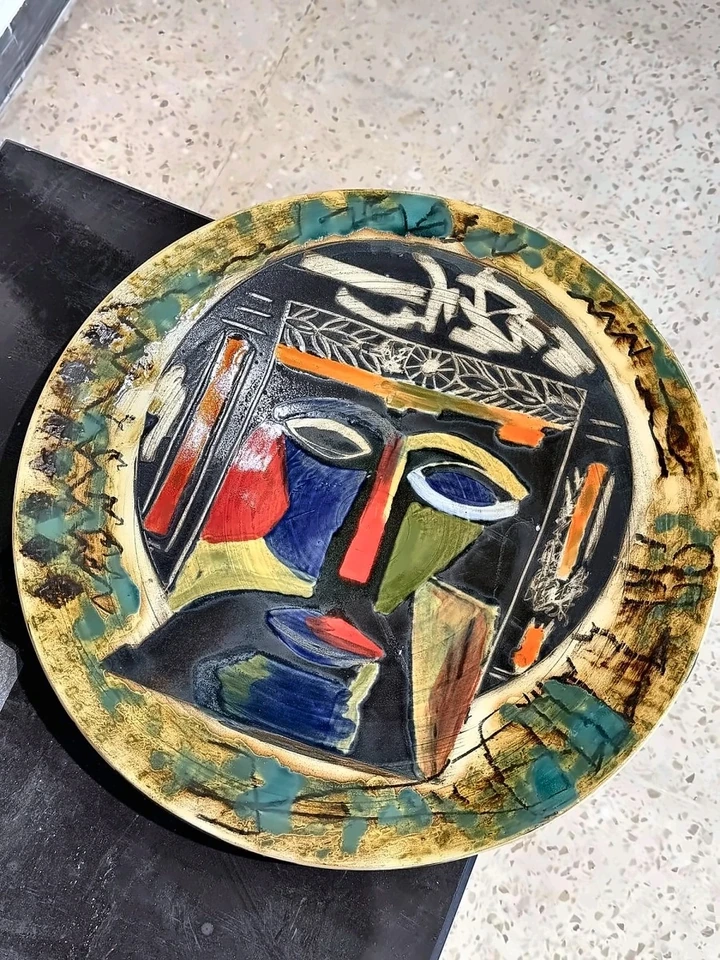
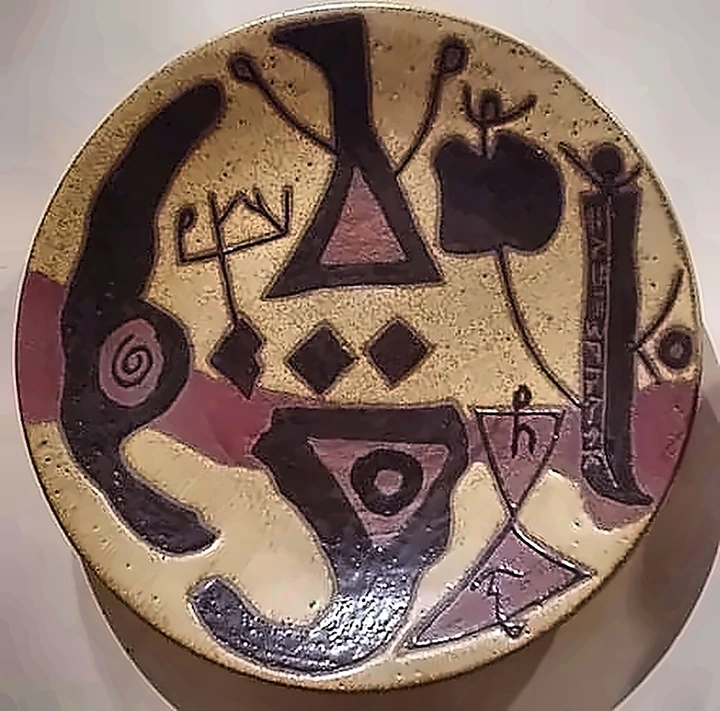
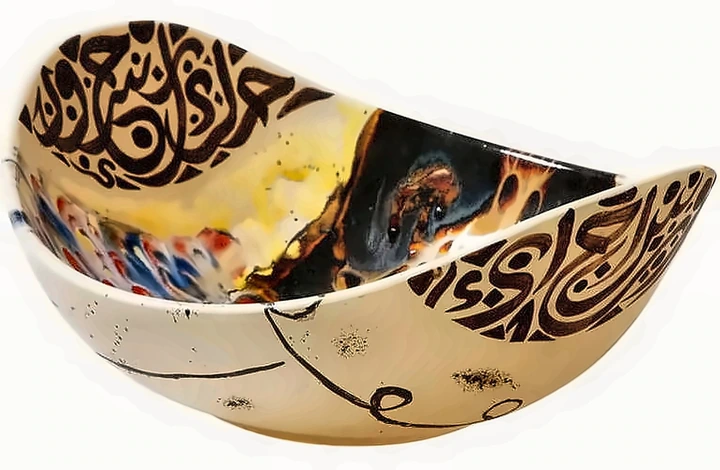
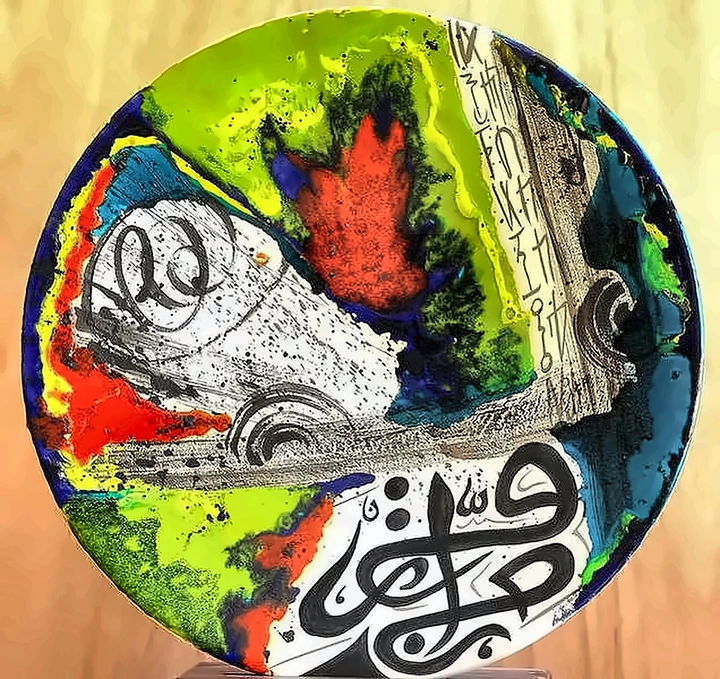
He was a ceramicist before he was anything else, and it never stopped. Glazed heads scratched over with invented alphabets. Plates a metre across in cobalt, oxblood, ochre and turquoise, glaze pooling and running like weather. Walls of small tiles, each carrying one line of Arabic.
People who know only the bronze know half of him.
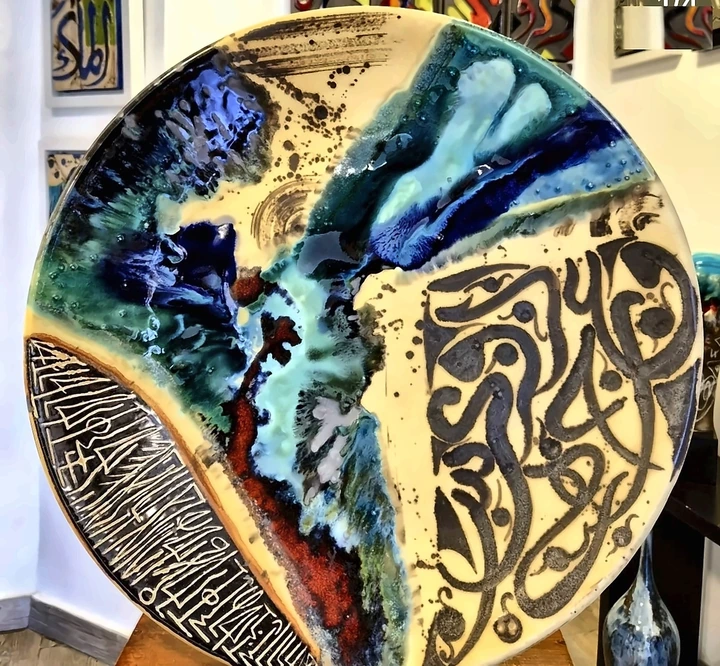
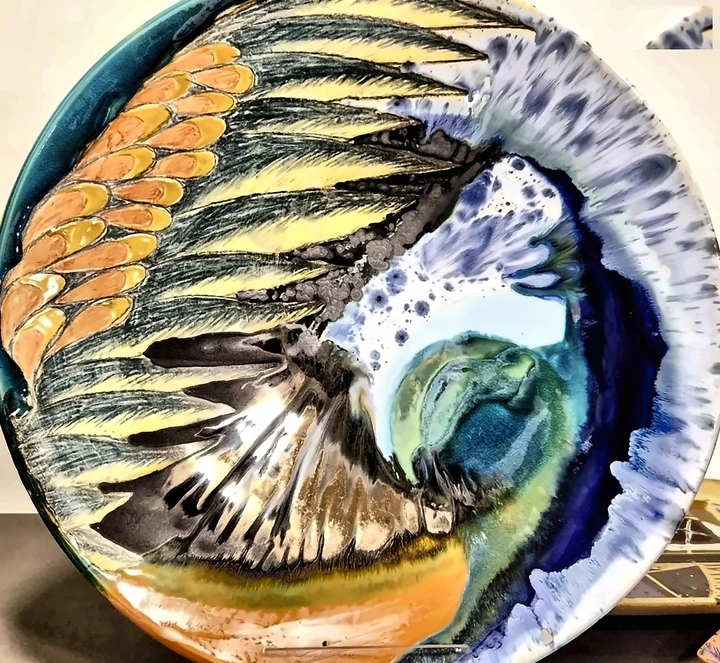
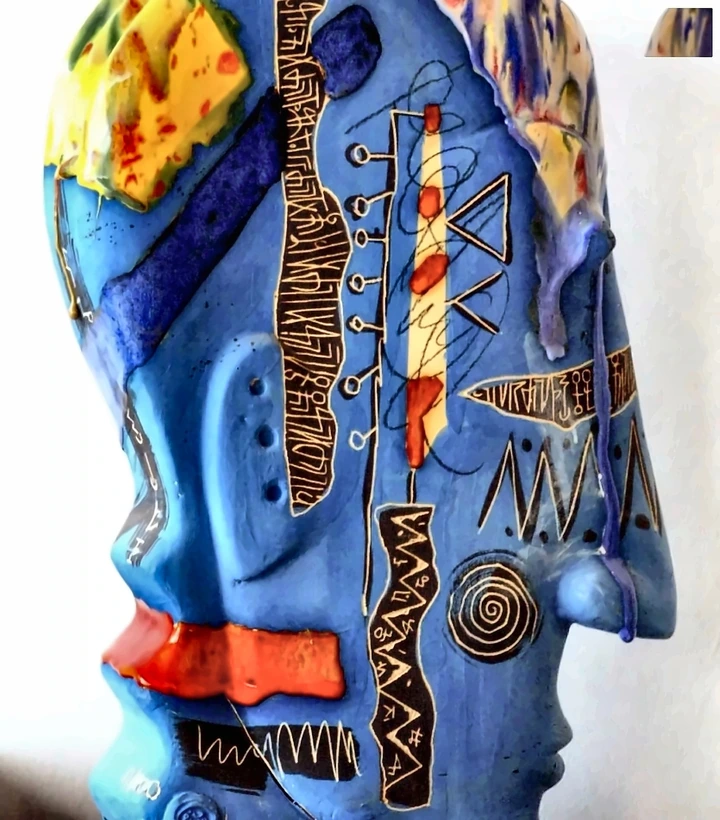
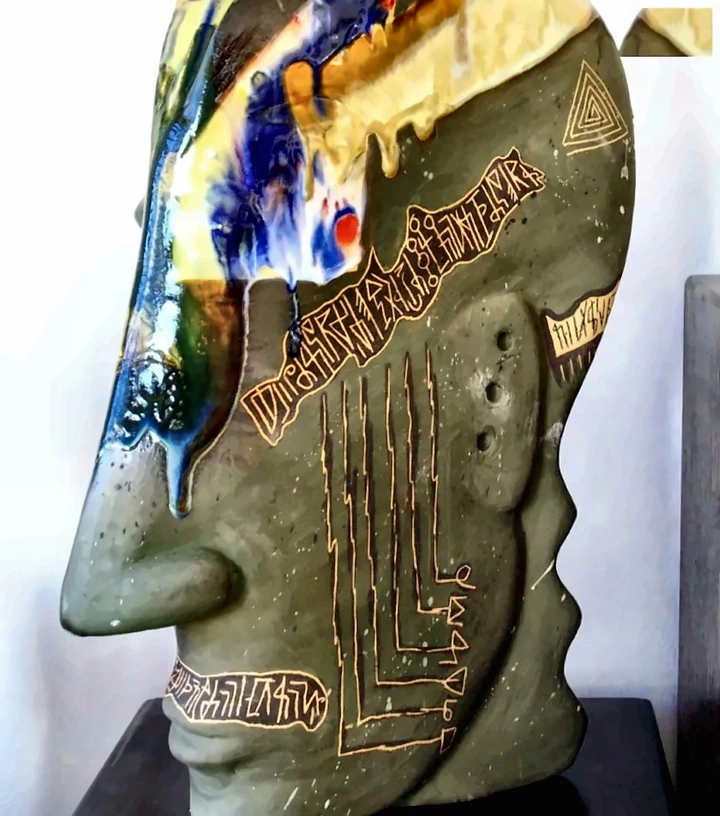
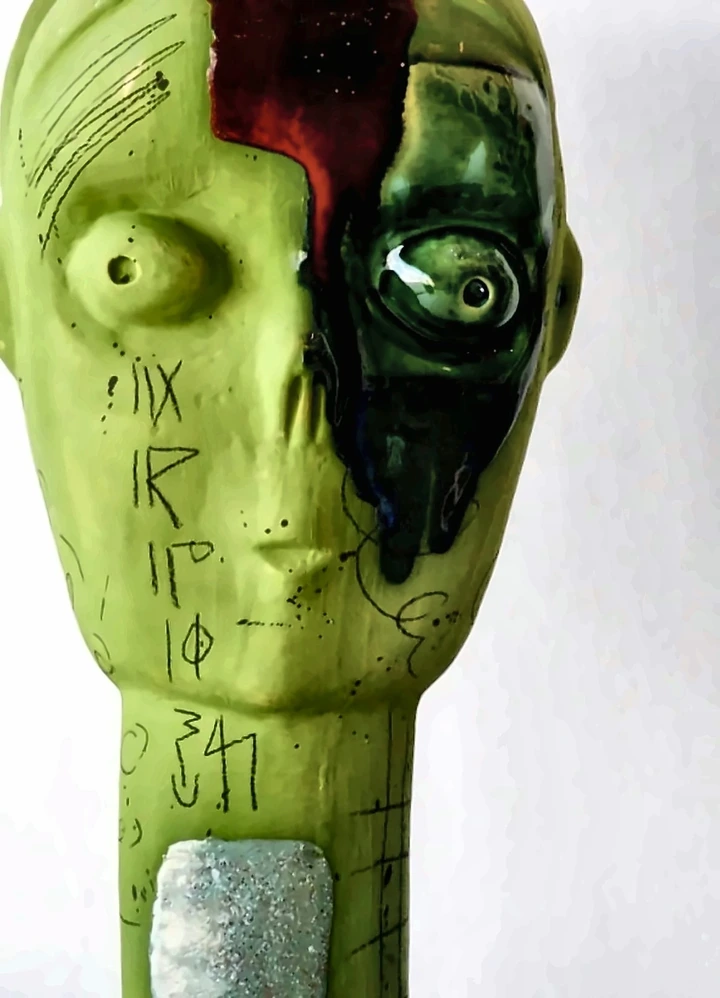
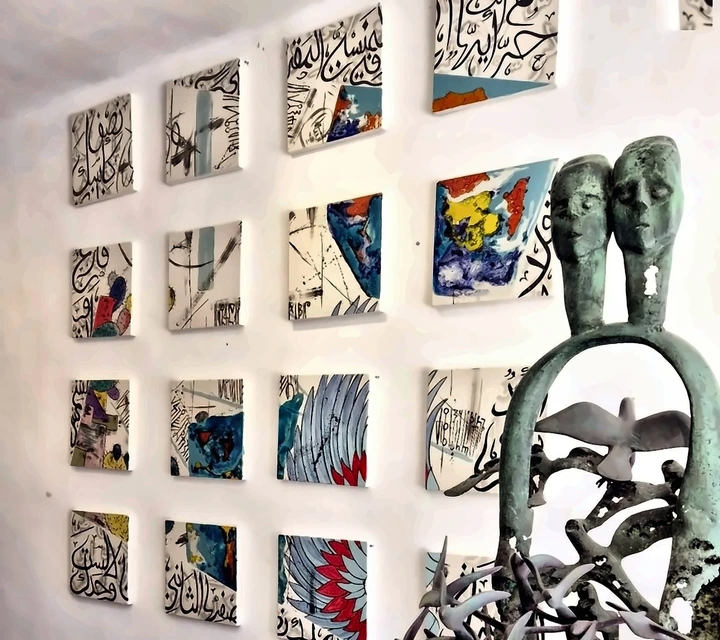
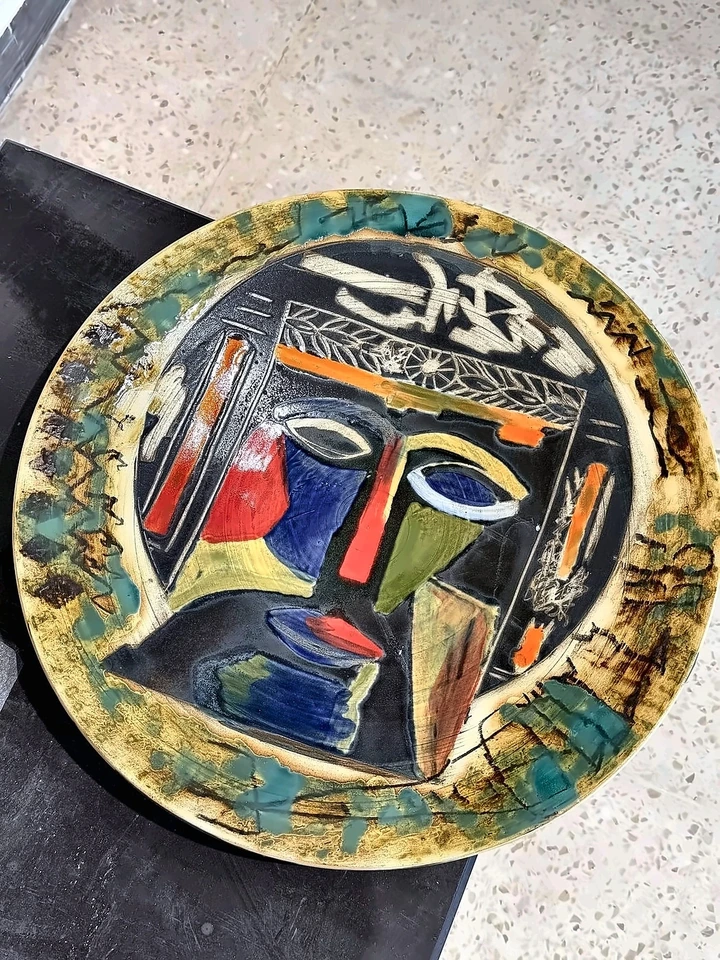
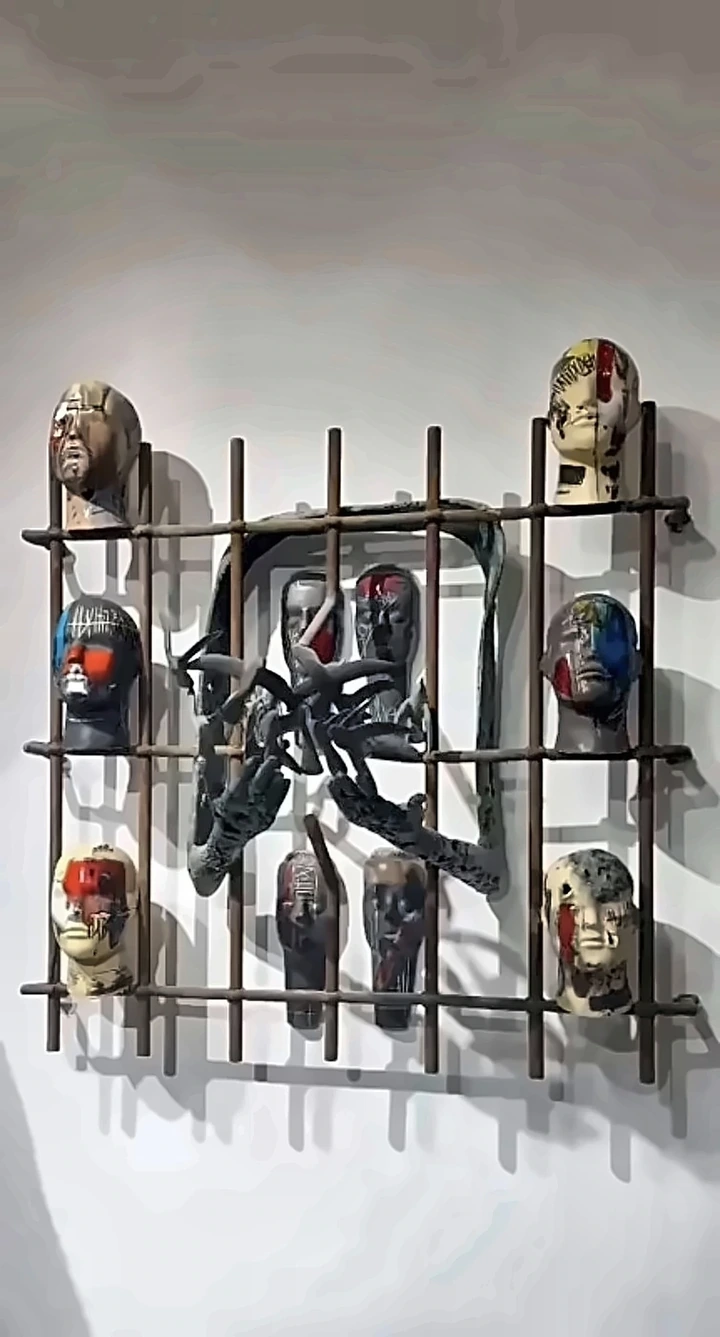
Every one of them is written on.
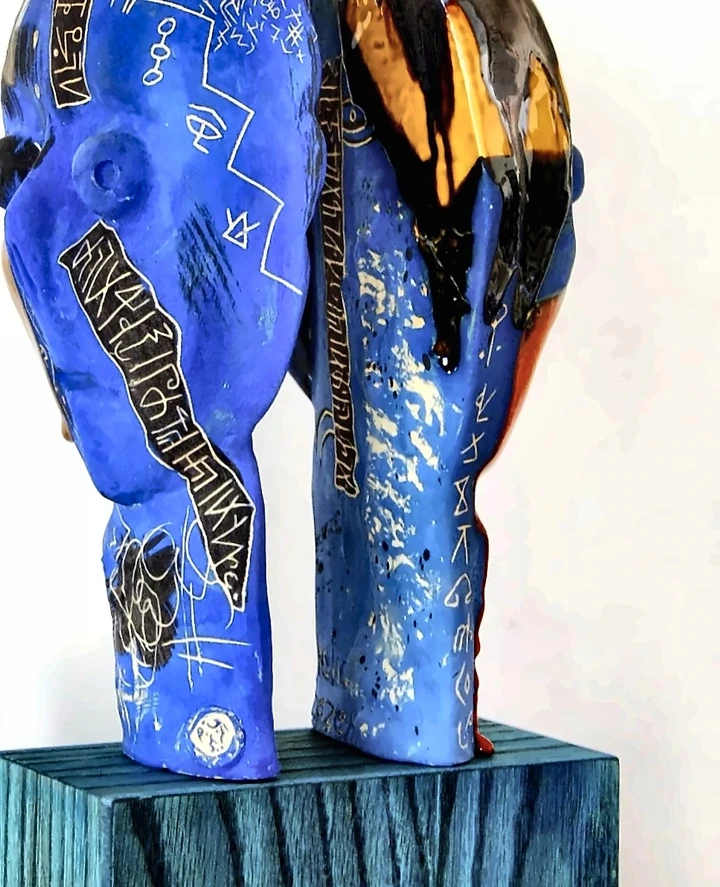
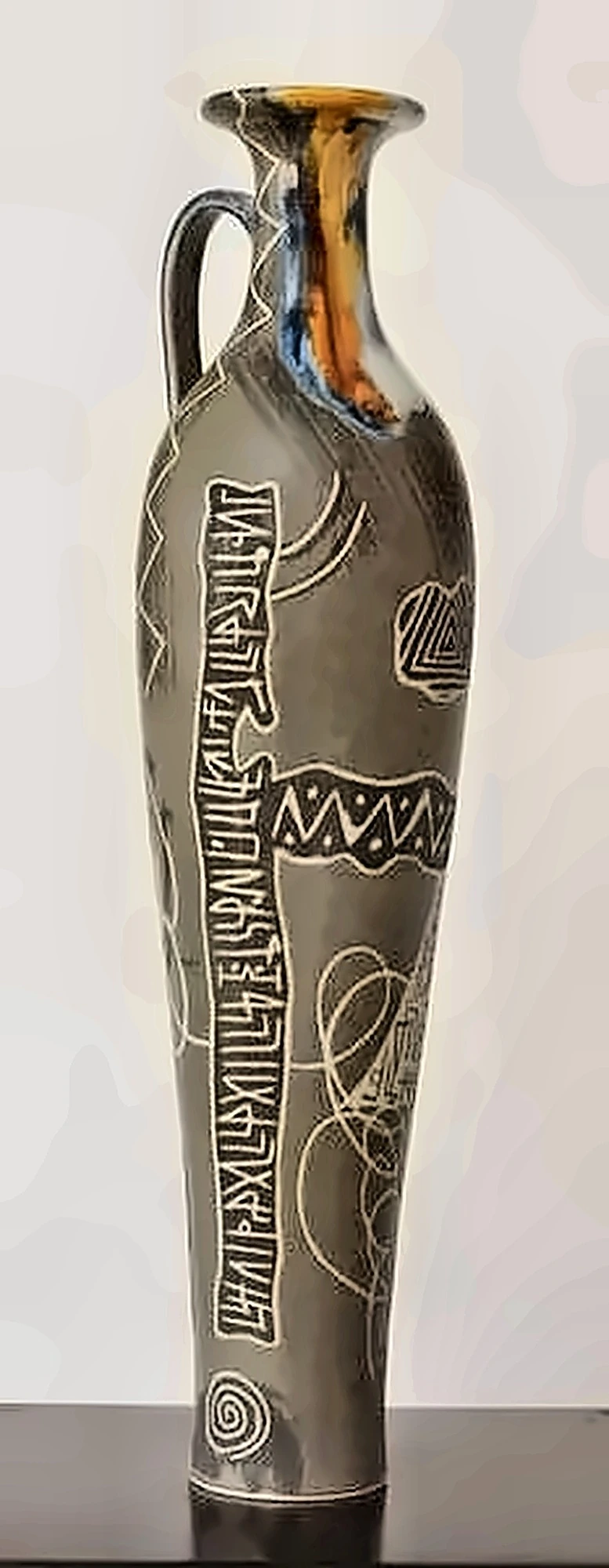
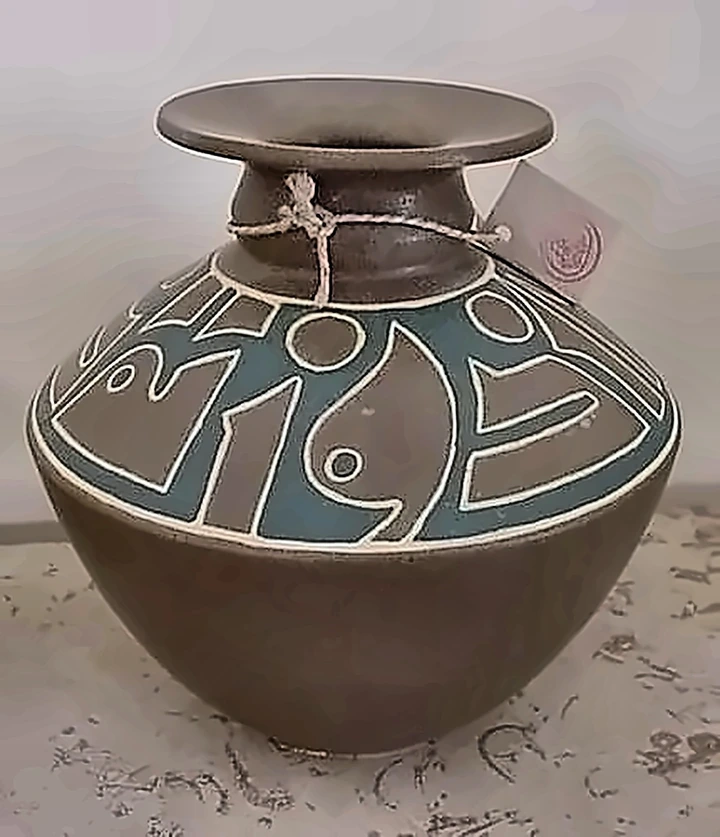
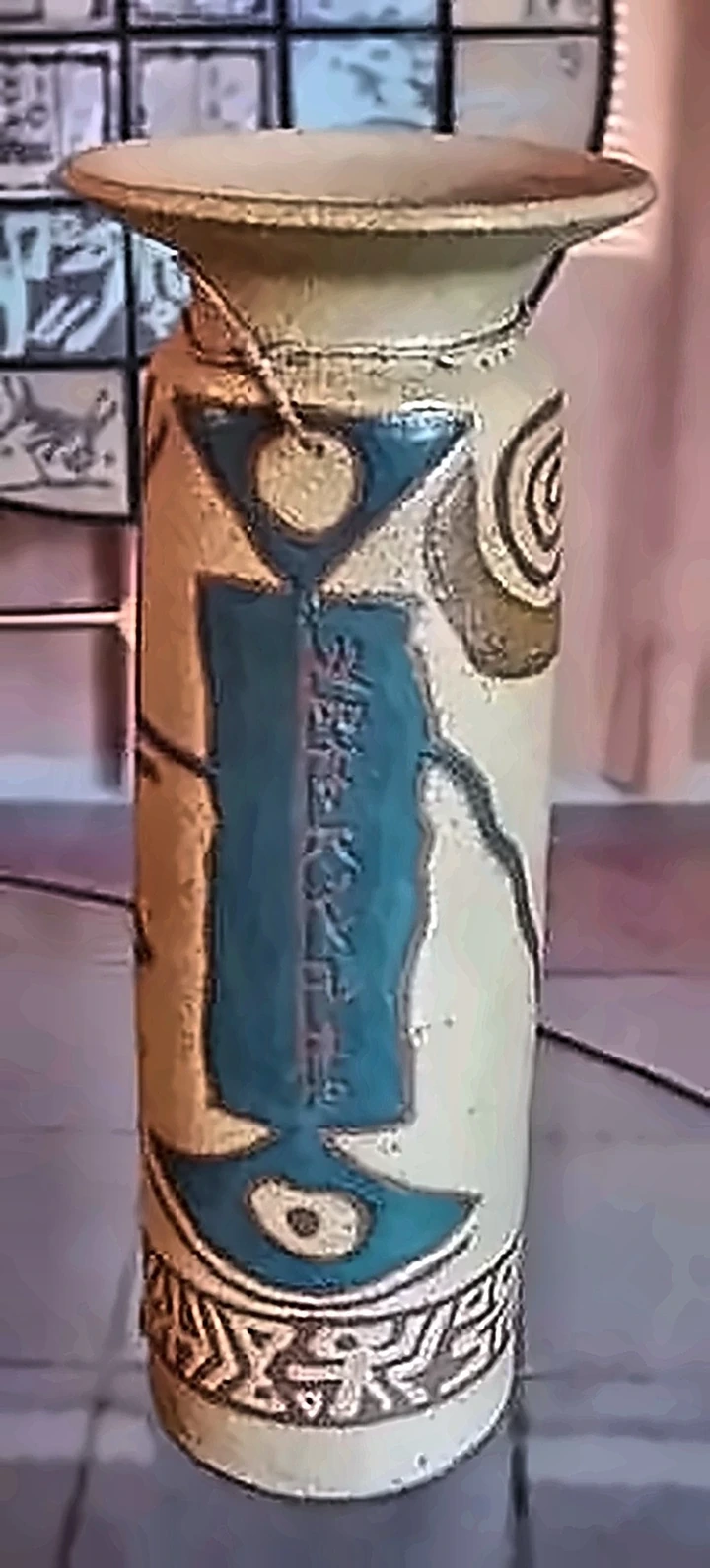
Invented alphabets, numerals, marks that look like a language and are not one. Scratched into the body before the glaze, so the writing survives the fire.
A metre across, and thrown on the wheel.
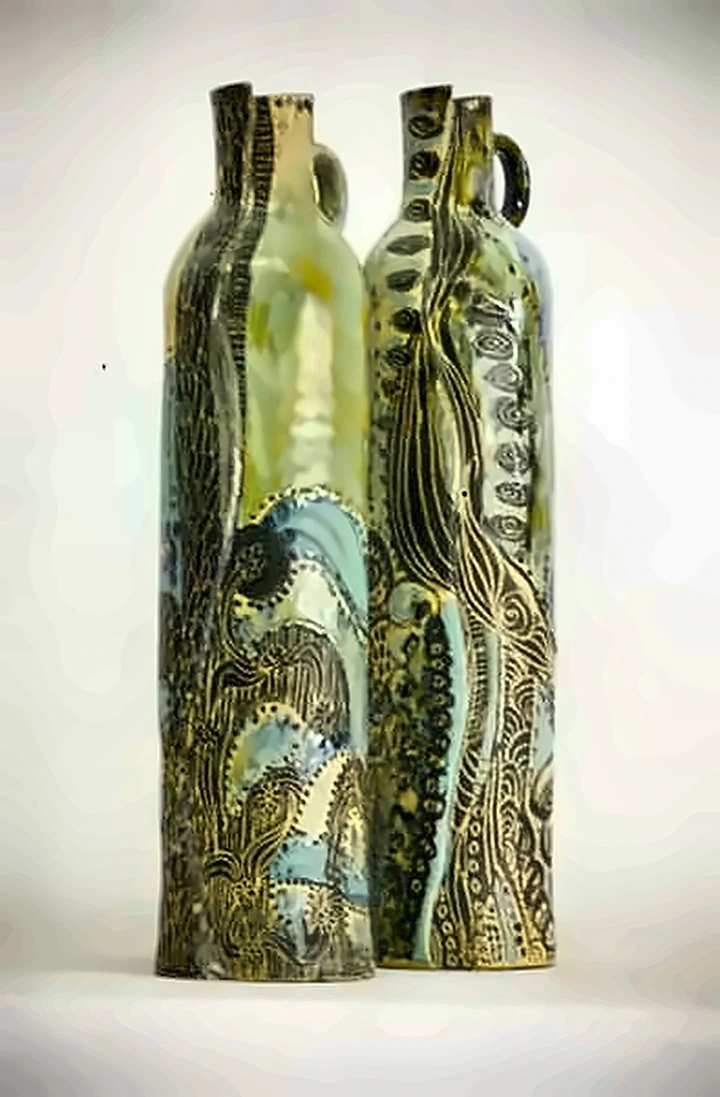
Cobalt, oxblood, ochre, turquoise. The drawing is cut into the surface and the glaze is left to find its own way down.
More of the ceramic work is being photographed and recorded. Dimensions and dates will be published with each piece as the record is confirmed.
He was cutting this script into plates decades before he cast it in bronze.
Incised through the glaze and filled: a running script that is not Arabic and not any alphabet you can read. It sits in bands and blocks, ruled and spaced like text, and says nothing you can check.
In 2022 he cast a bronze cube, covered every face in codes that never repeat, and called it أبجدية الزمن — the alphabet of time. Same idea, same hand, forty years apart.
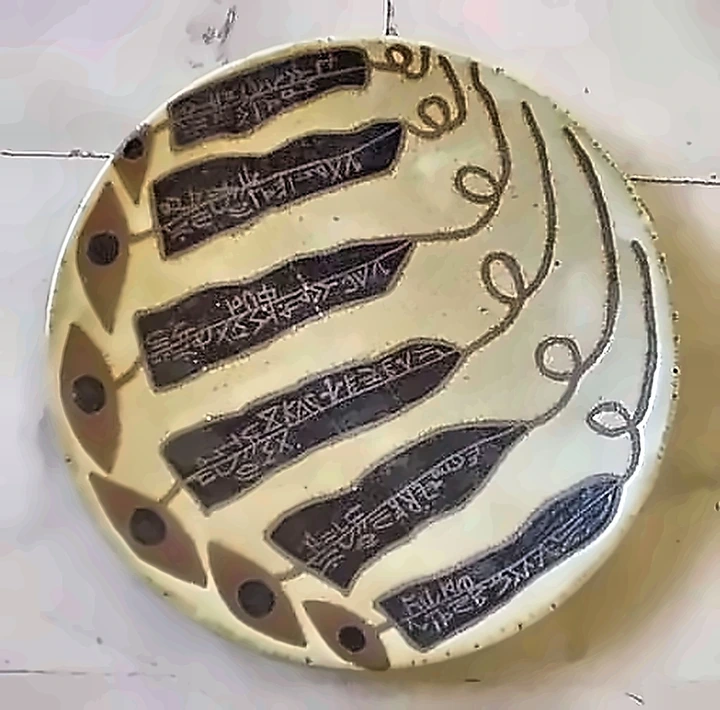
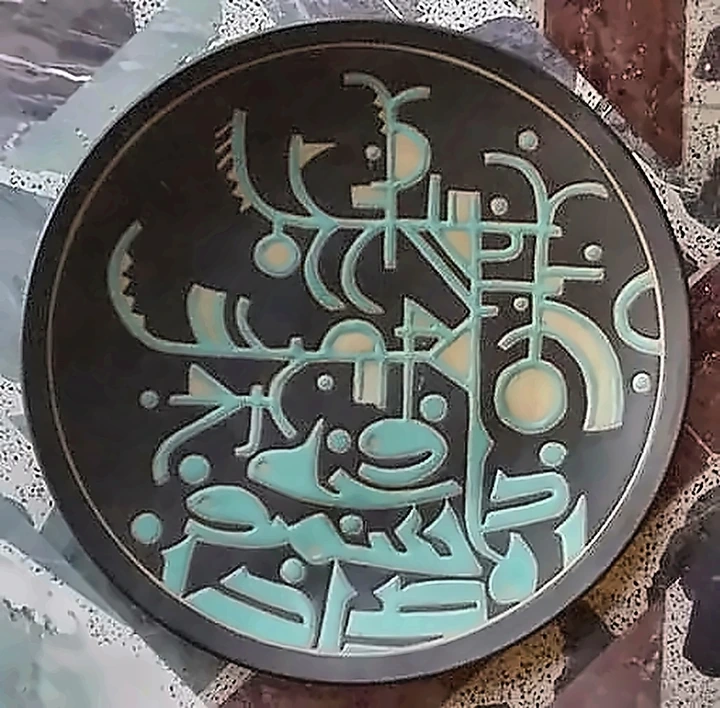
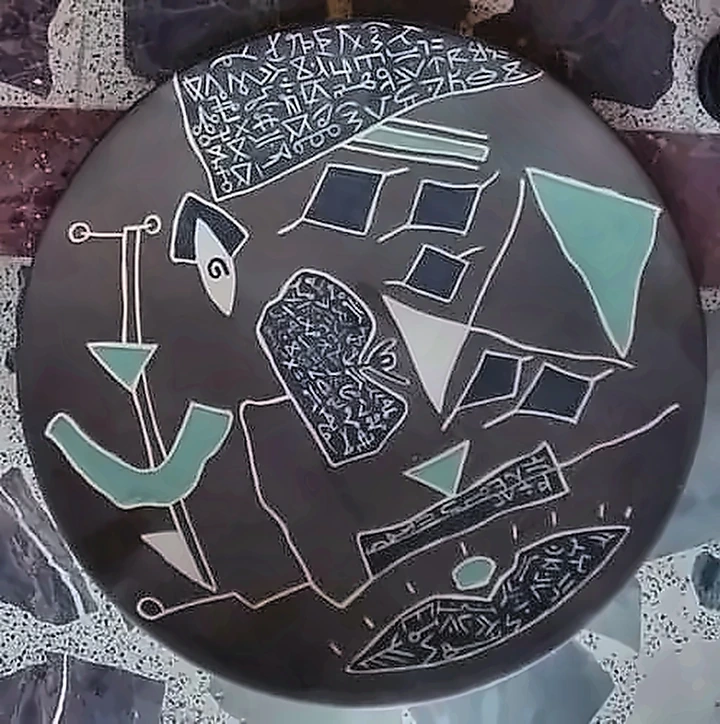
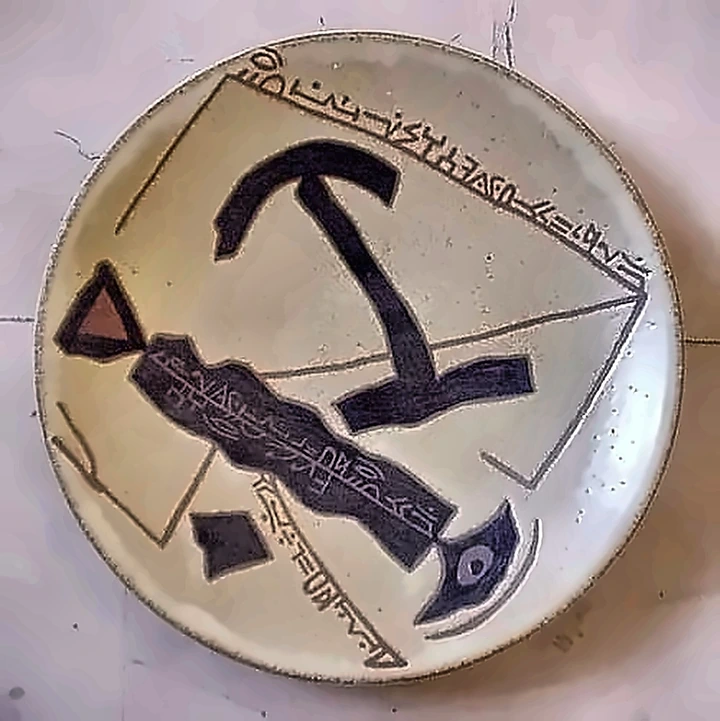
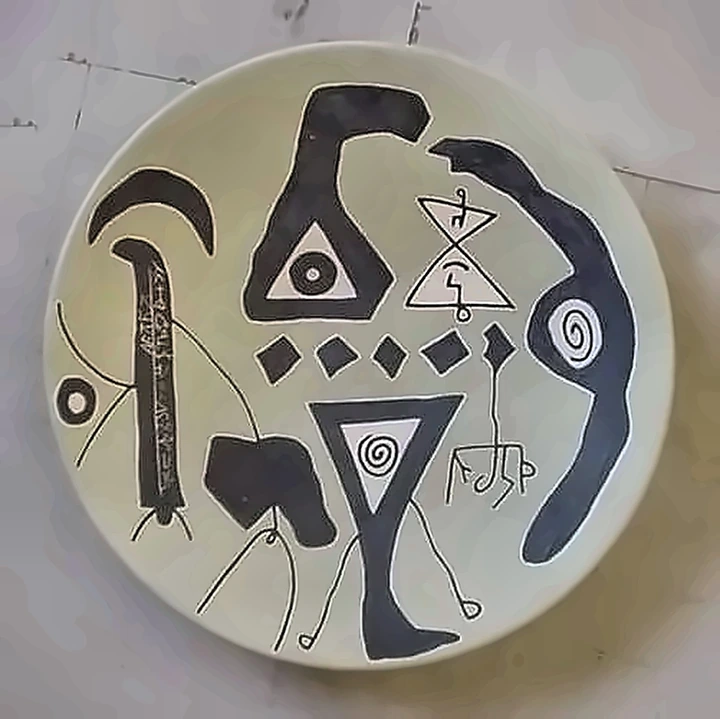
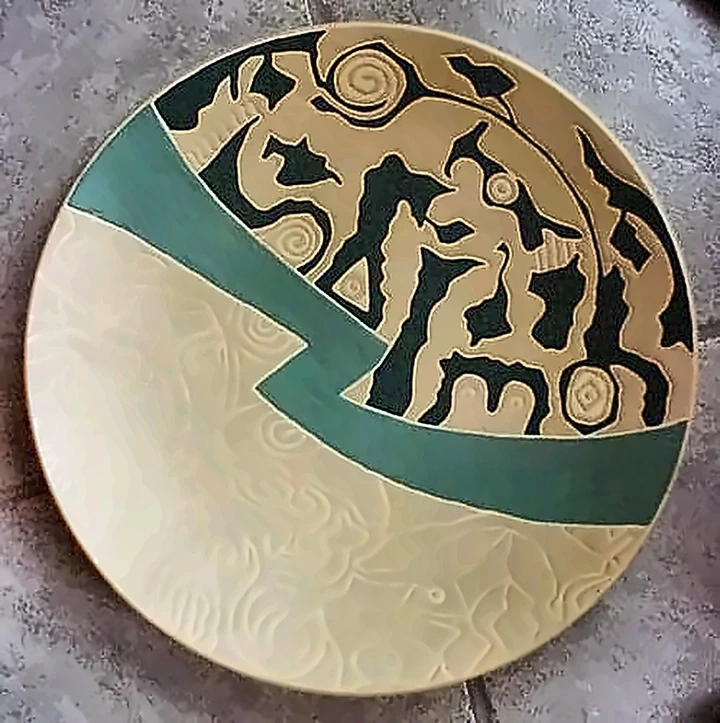
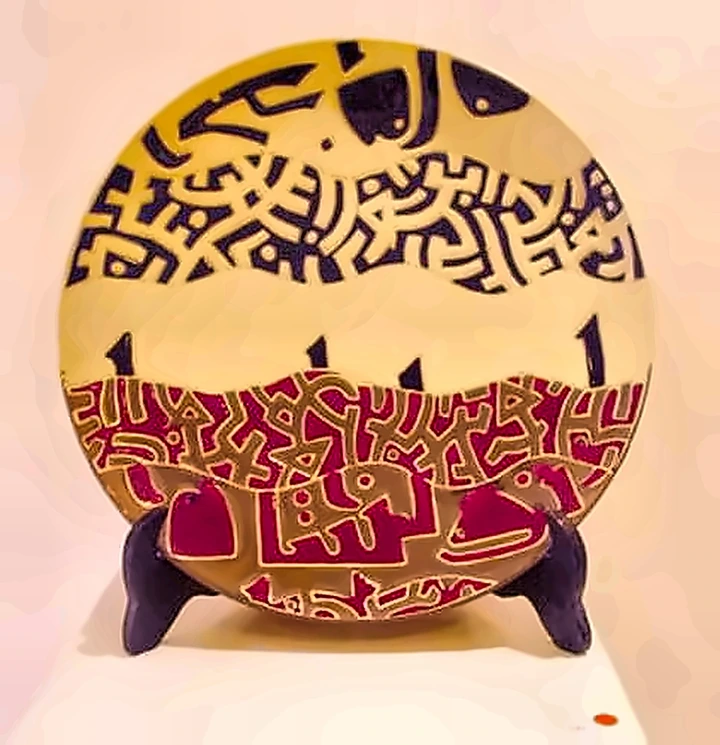
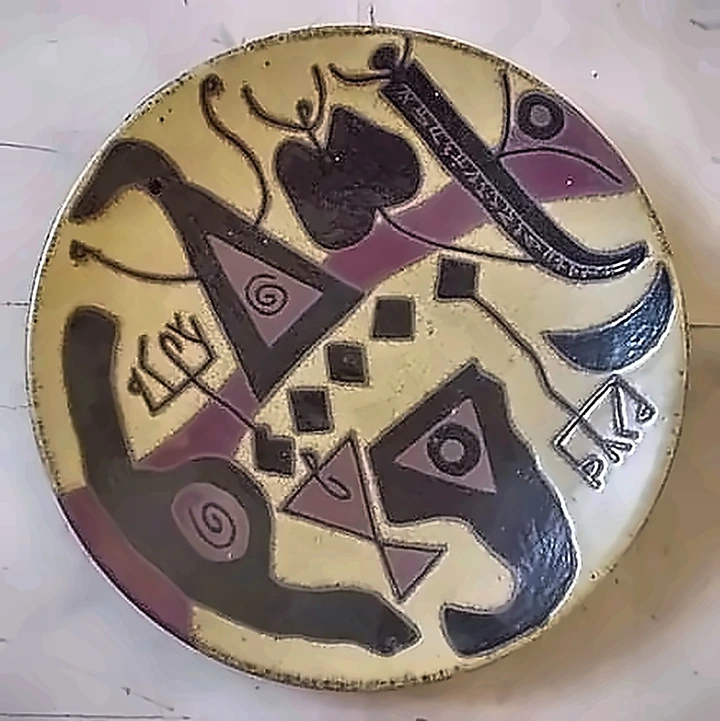
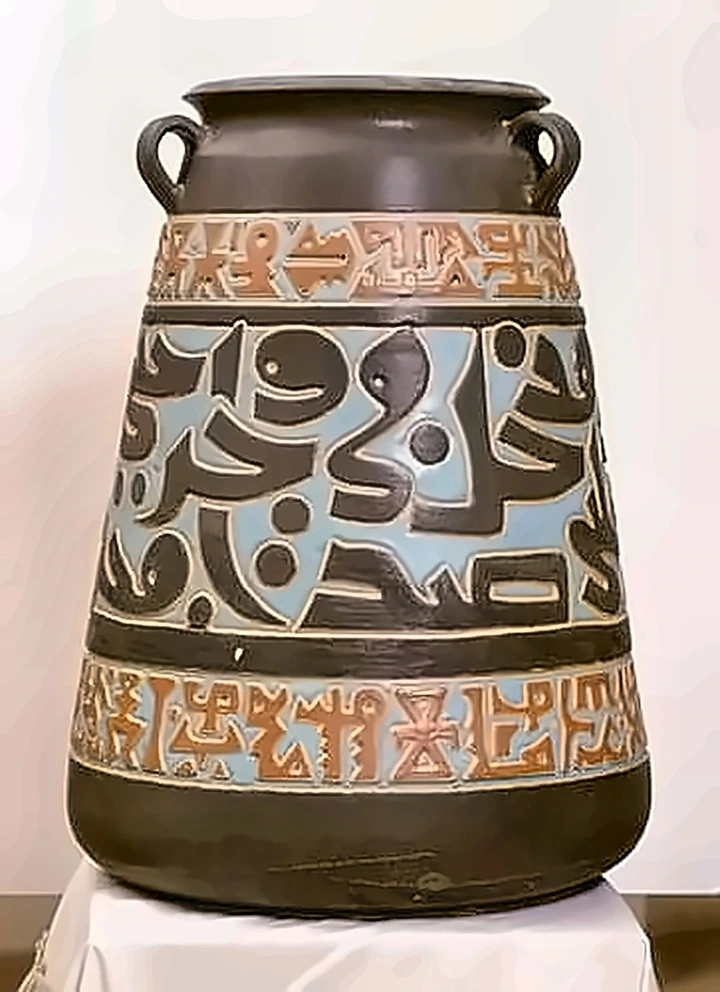
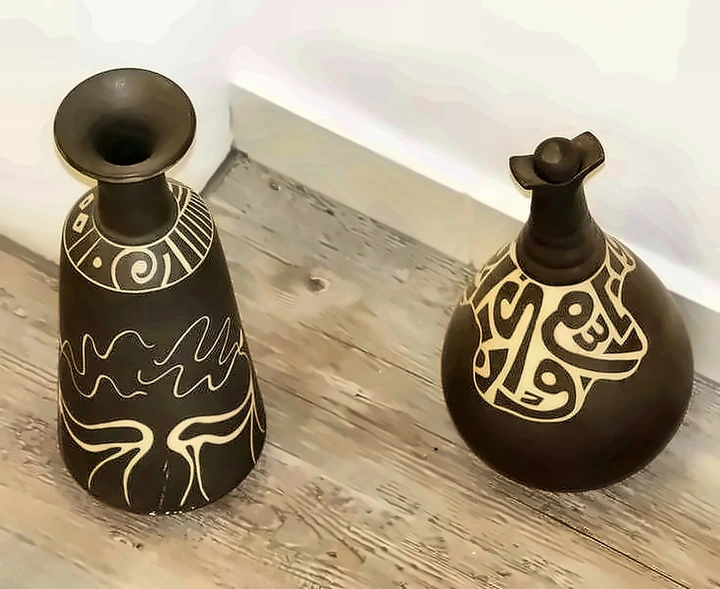
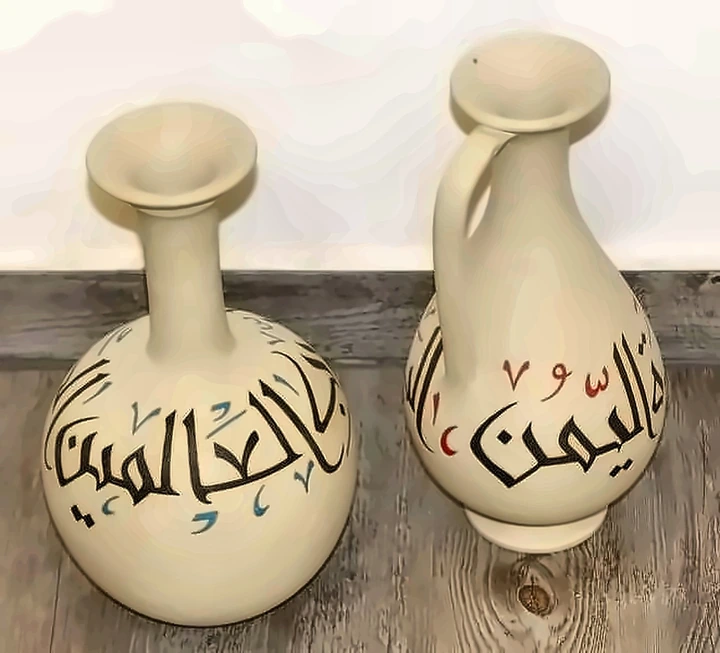
And on the pots he writes properly, in Arabic, and means it.
Same hand, same clay. Here the script is Arabic, it reads, and it is cut through a dark slip to the pale body underneath so the letters are the clay itself.
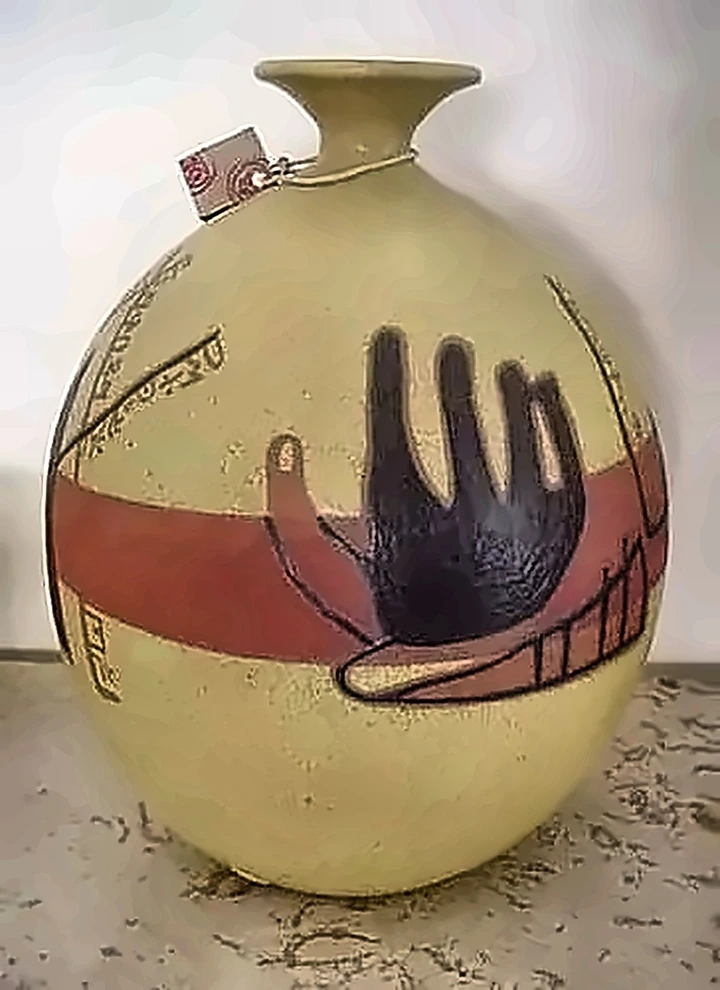
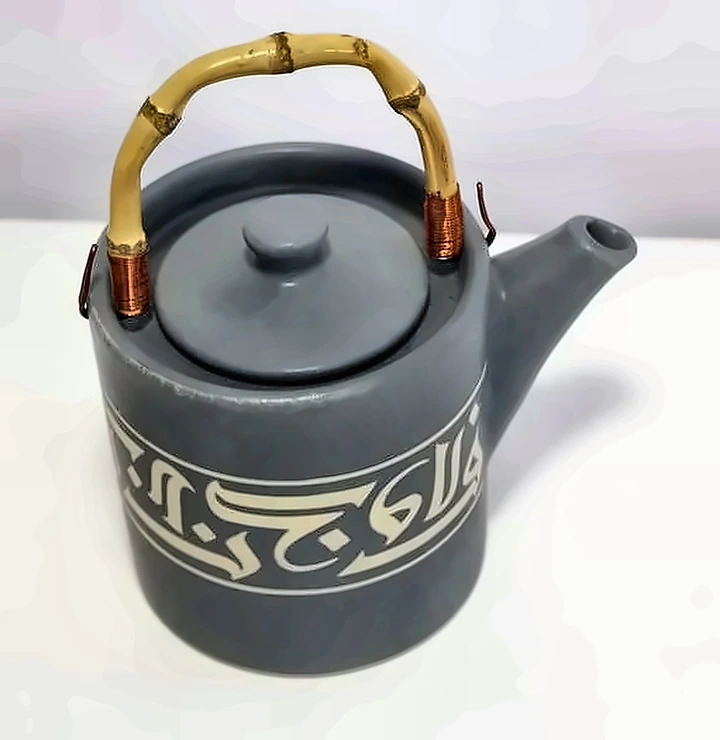
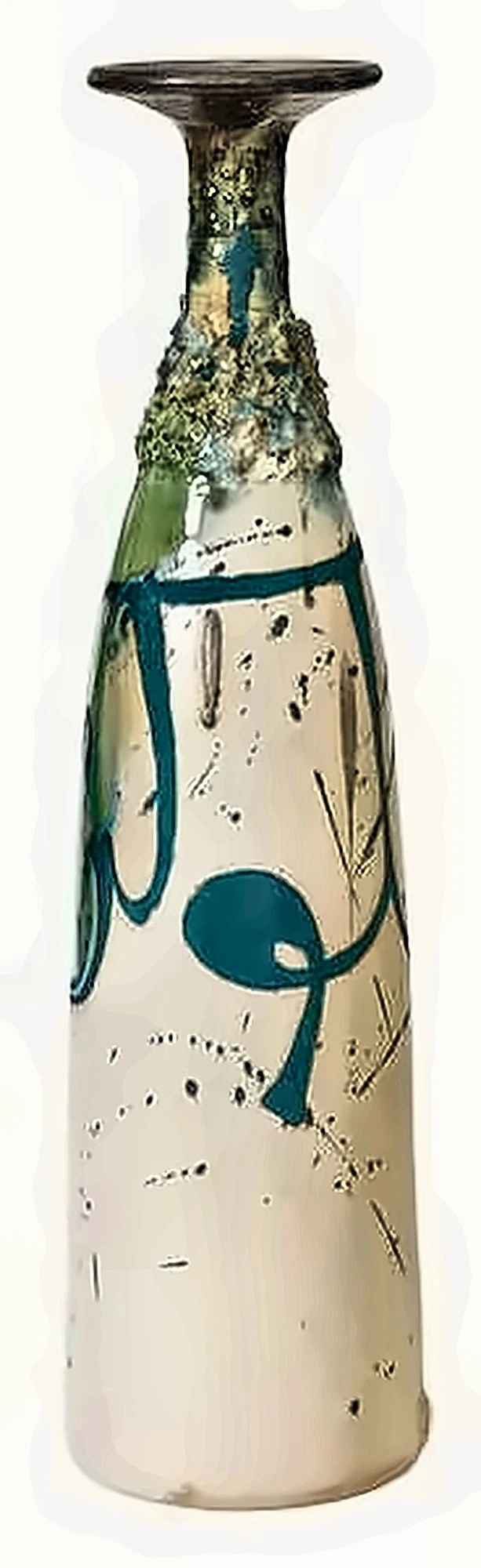
A jar four hand-spans high banded in invented script. A teapot with a bamboo handle. And one round jar carrying a black hand — from a man who digs his own clay and mixes it by hand.
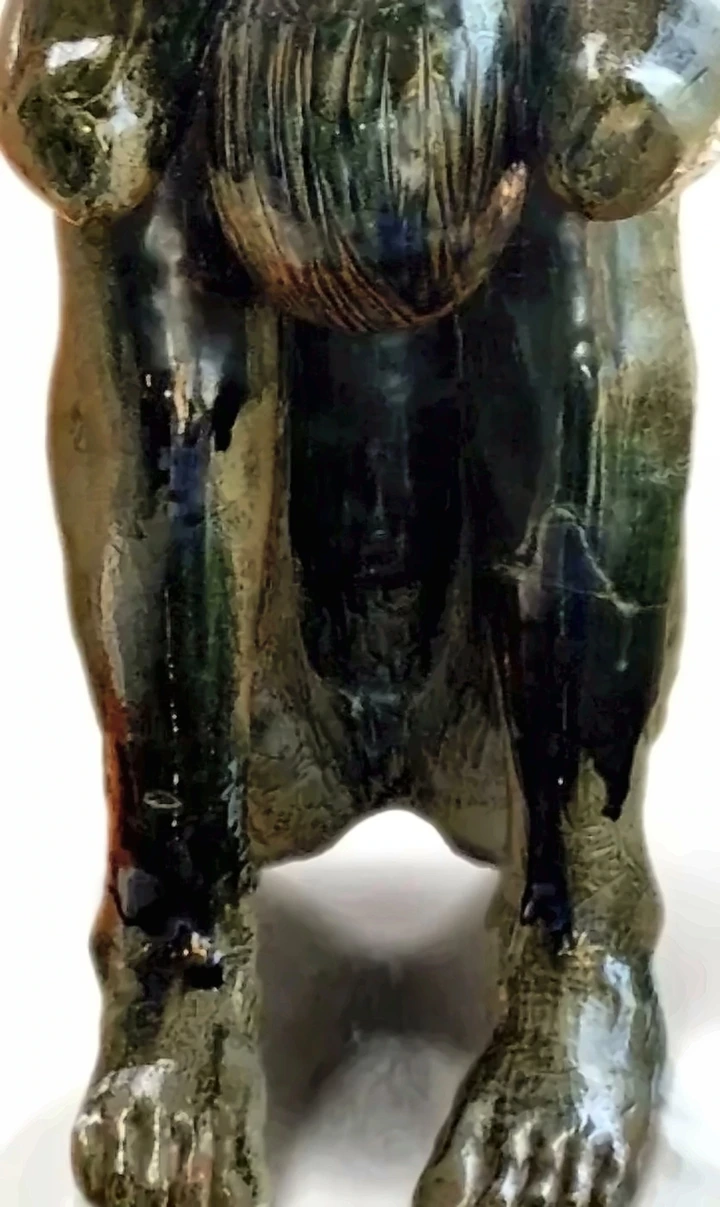
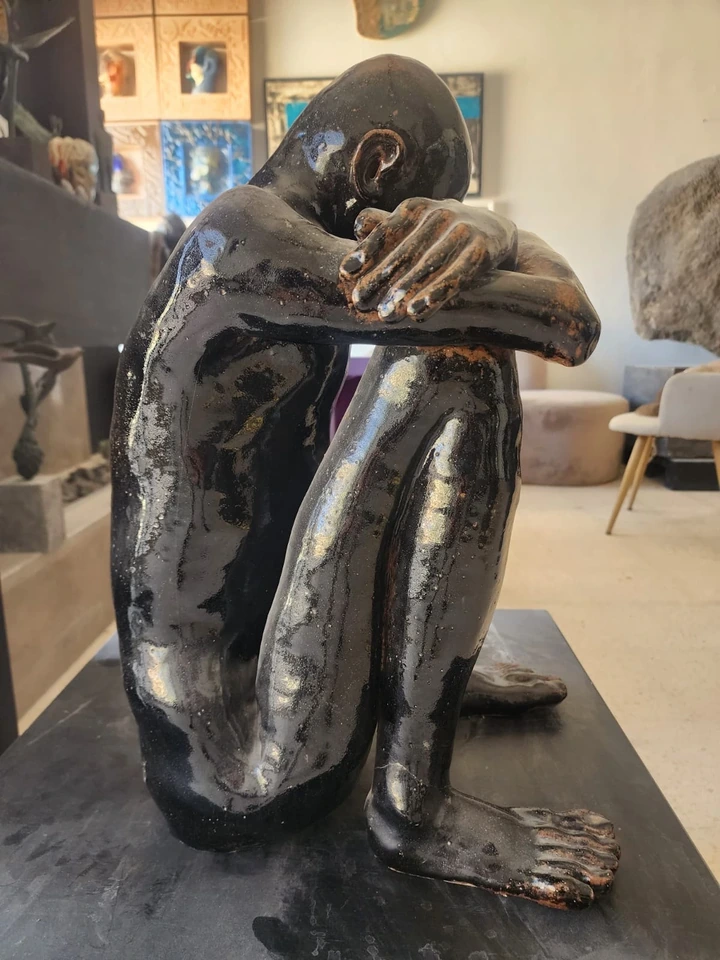
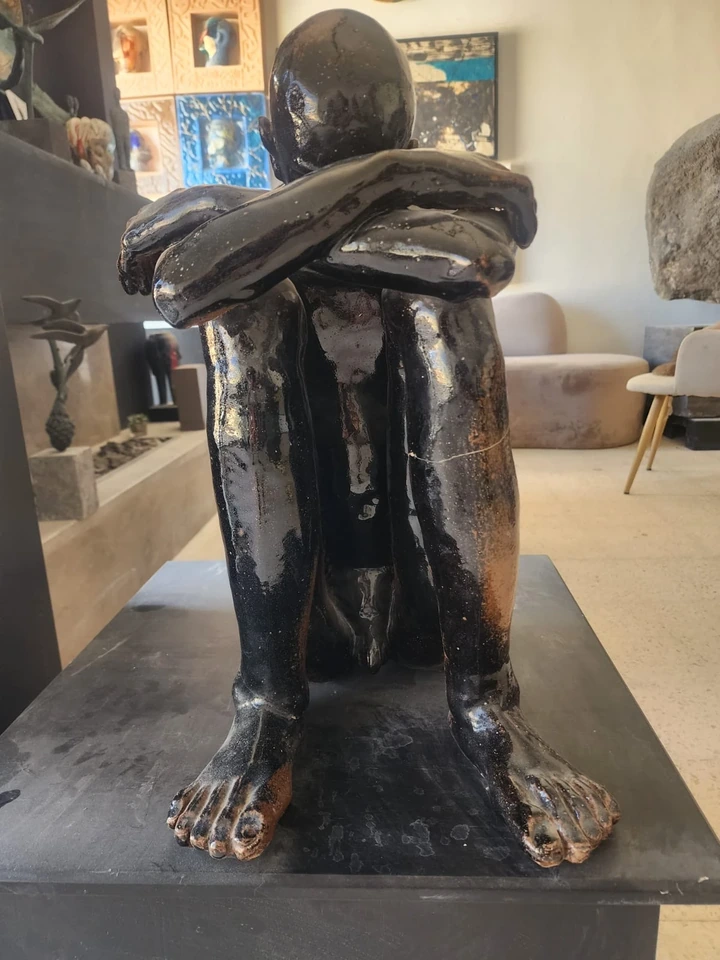
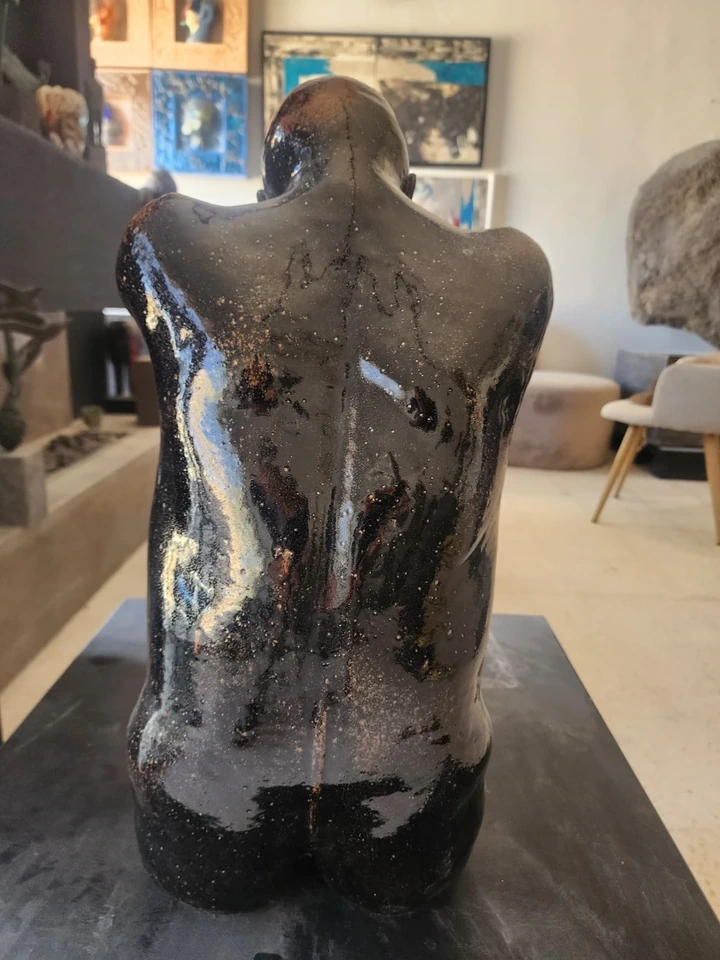
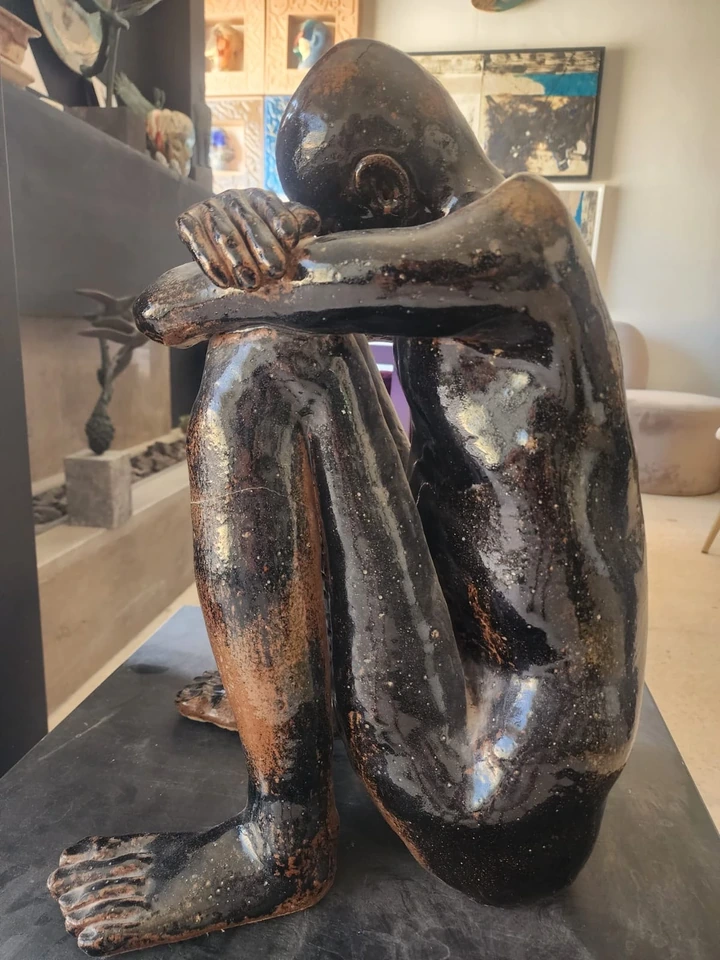
One of the earliest. A figure that holds itself.
Stoneware, 1984 — one of his oldest surviving pieces, and already the whole vocabulary is there: a body folded down onto its own knees, the glaze running black over the red clay, the hands and feet worked to the nail. Fired ceramic sculpture, not cast.
36 works, measured and sourced.
Recovered from his own published captions, not written here. Dimensions in centimetres as he gave them. Where a year or a title was never published it is absent rather than estimated.
and 17 more in the same room, all recovered with the same fields.