Bronze
Everything he makes in bronze says the same thing twice: something is held, and something is released. Cast in the one material that will outlast everybody who reads this.
Figures and multiple heads · 10 photographsBronze, 180 × 70 × 70 cm, 2019.
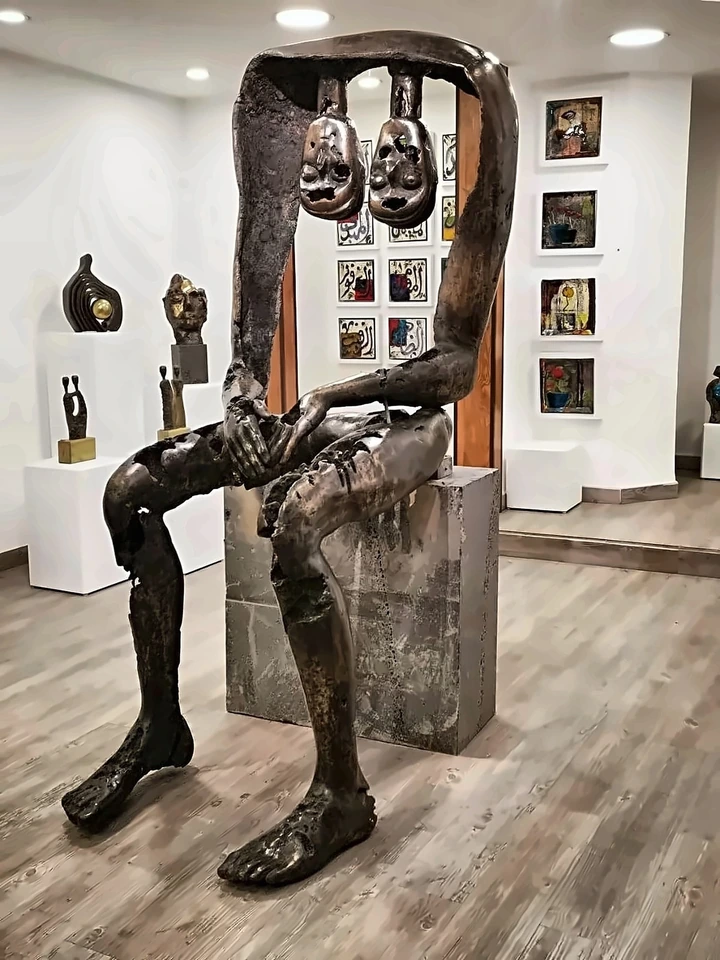
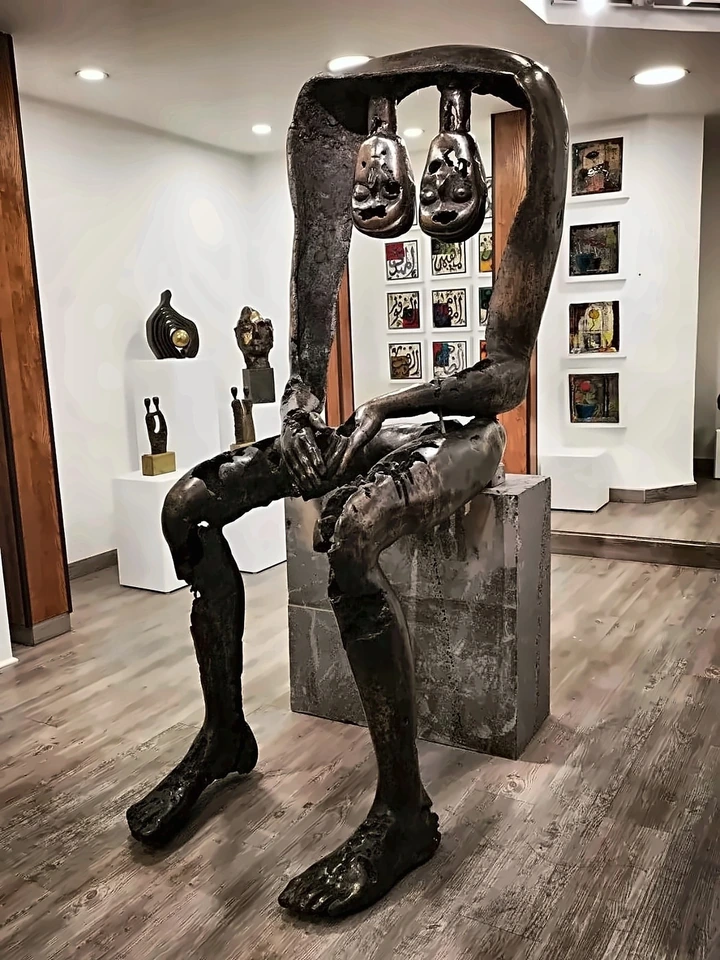
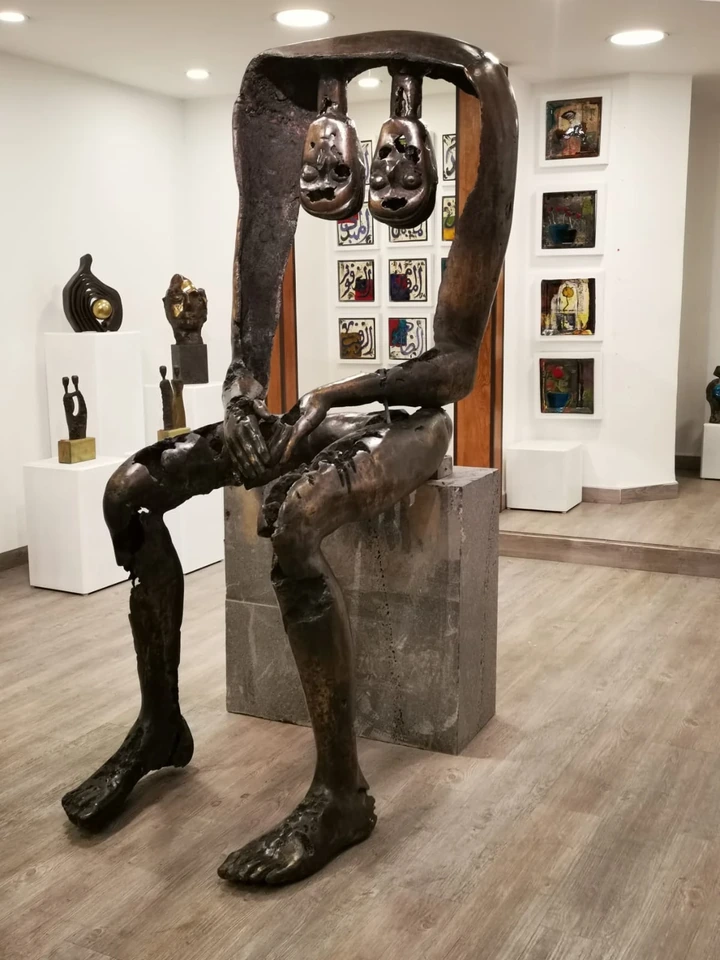
A seated figure with two heads hanging from the crossbar above it, cast in bronze and set on a block of stone. He gave it the name of the site: the first work in this record that carries the title outright.
Figures and multiple heads.
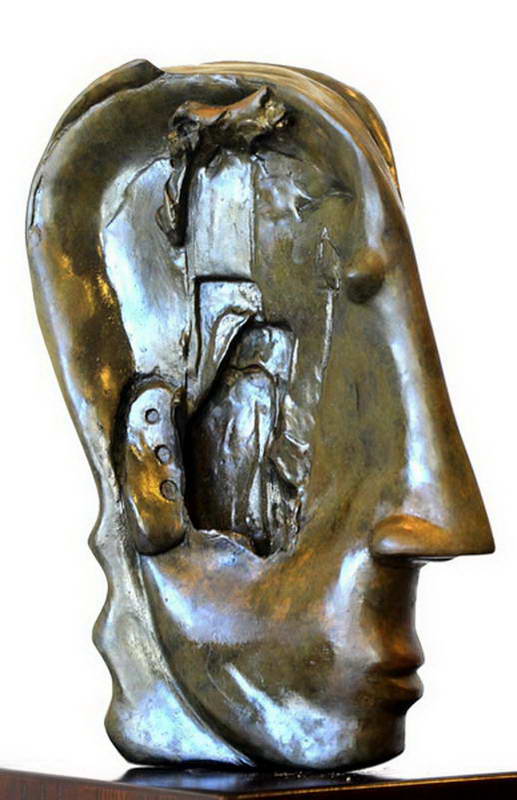
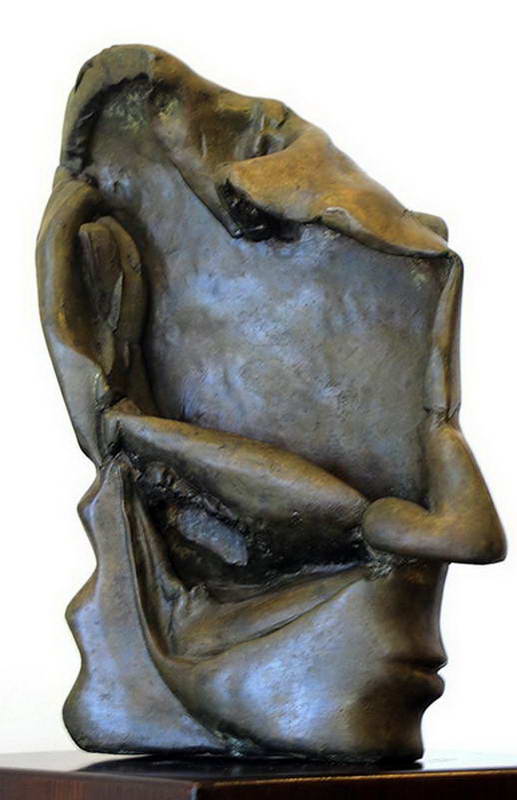
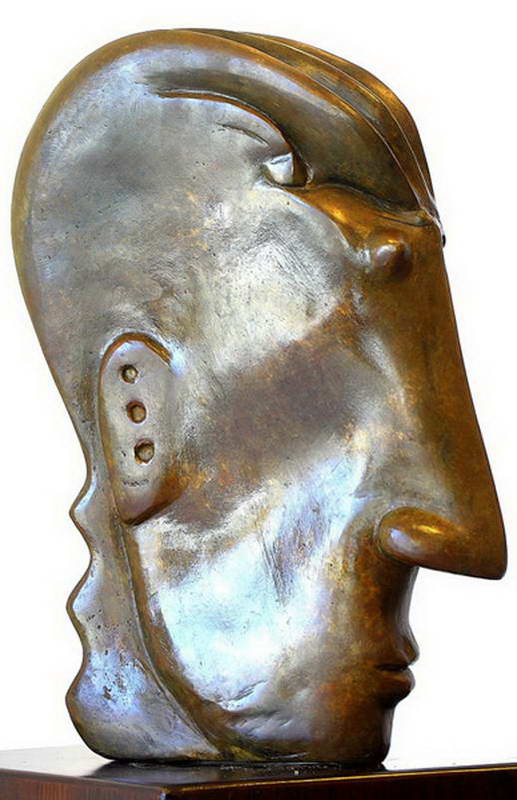
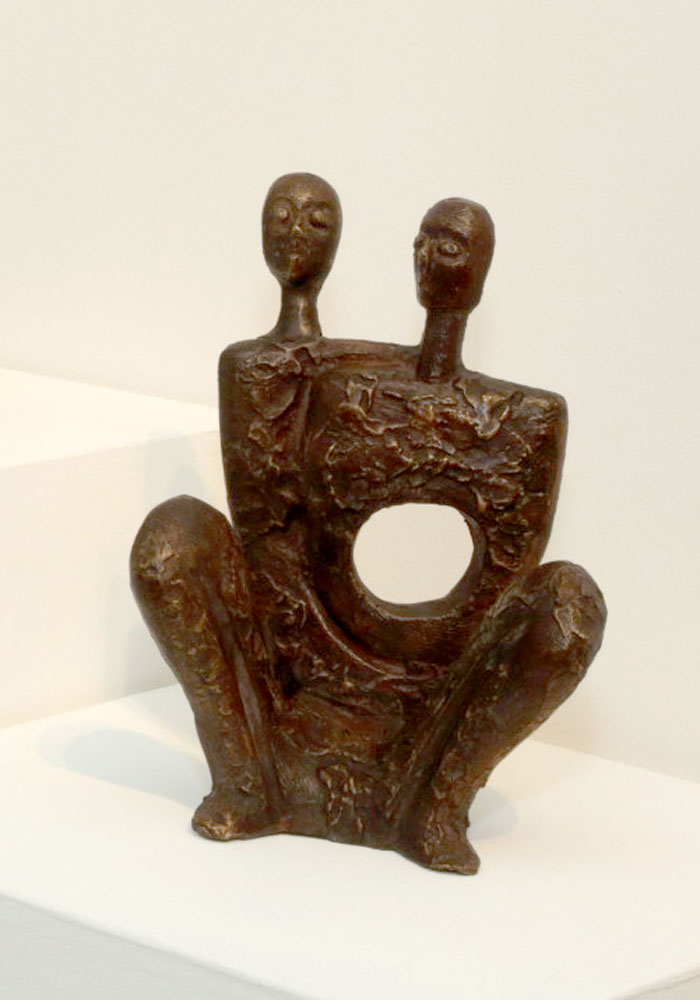
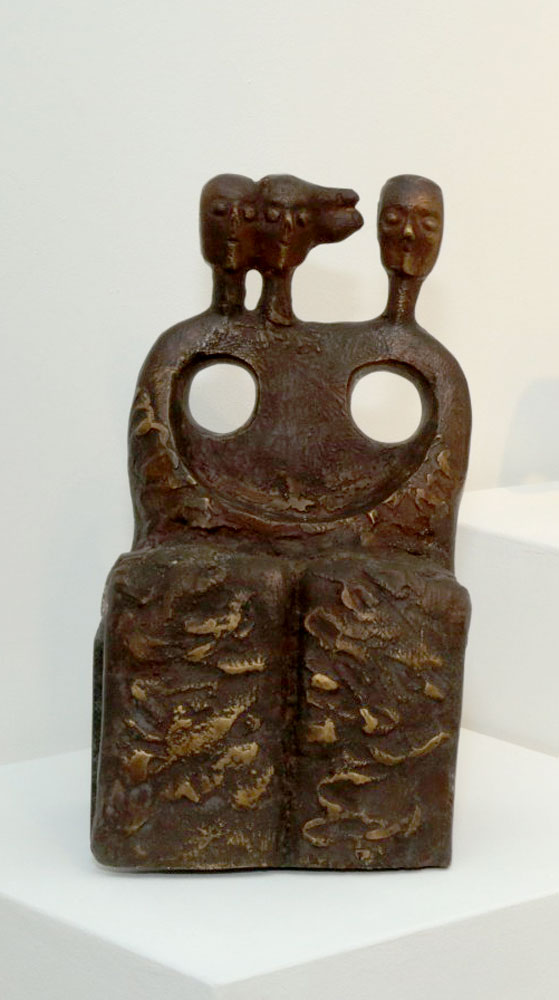
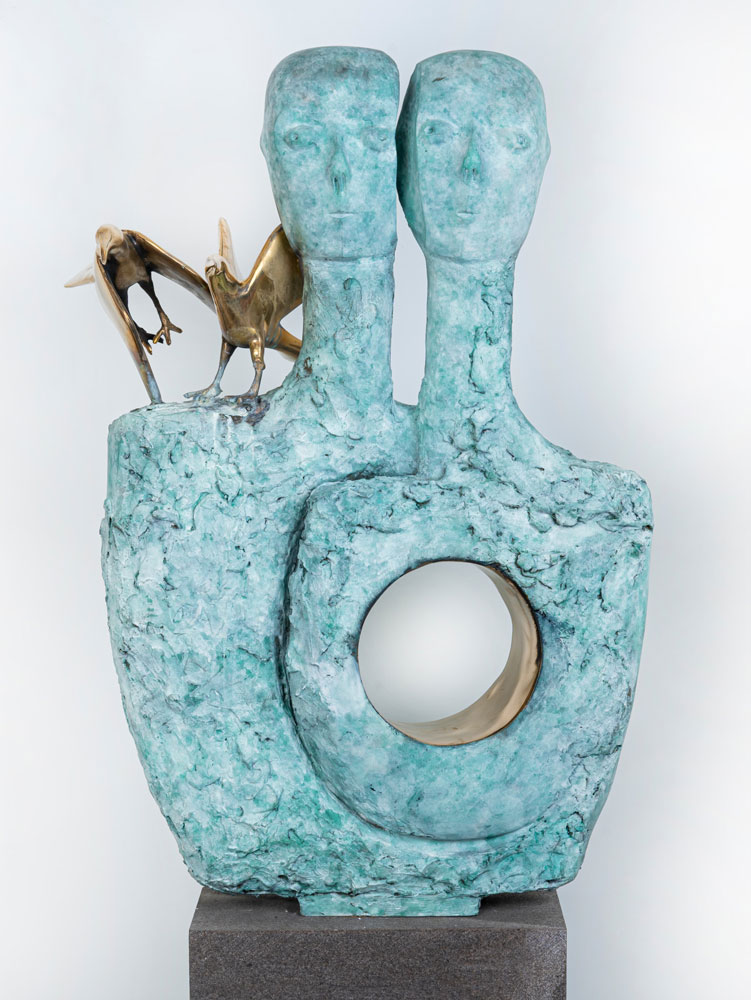
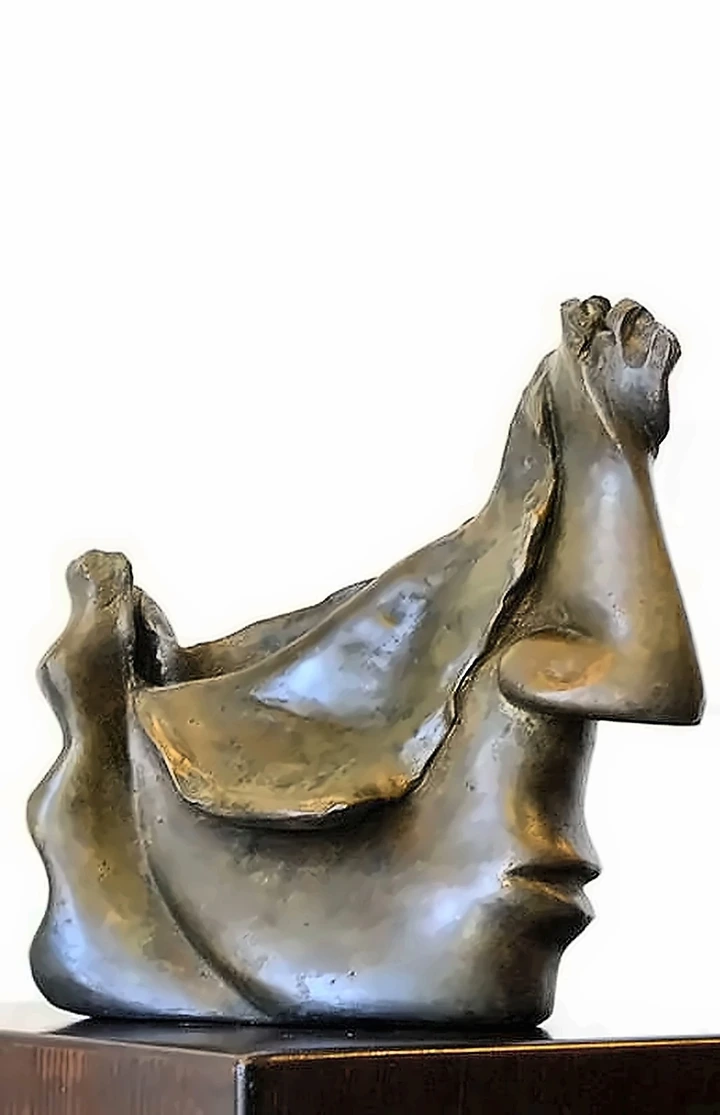
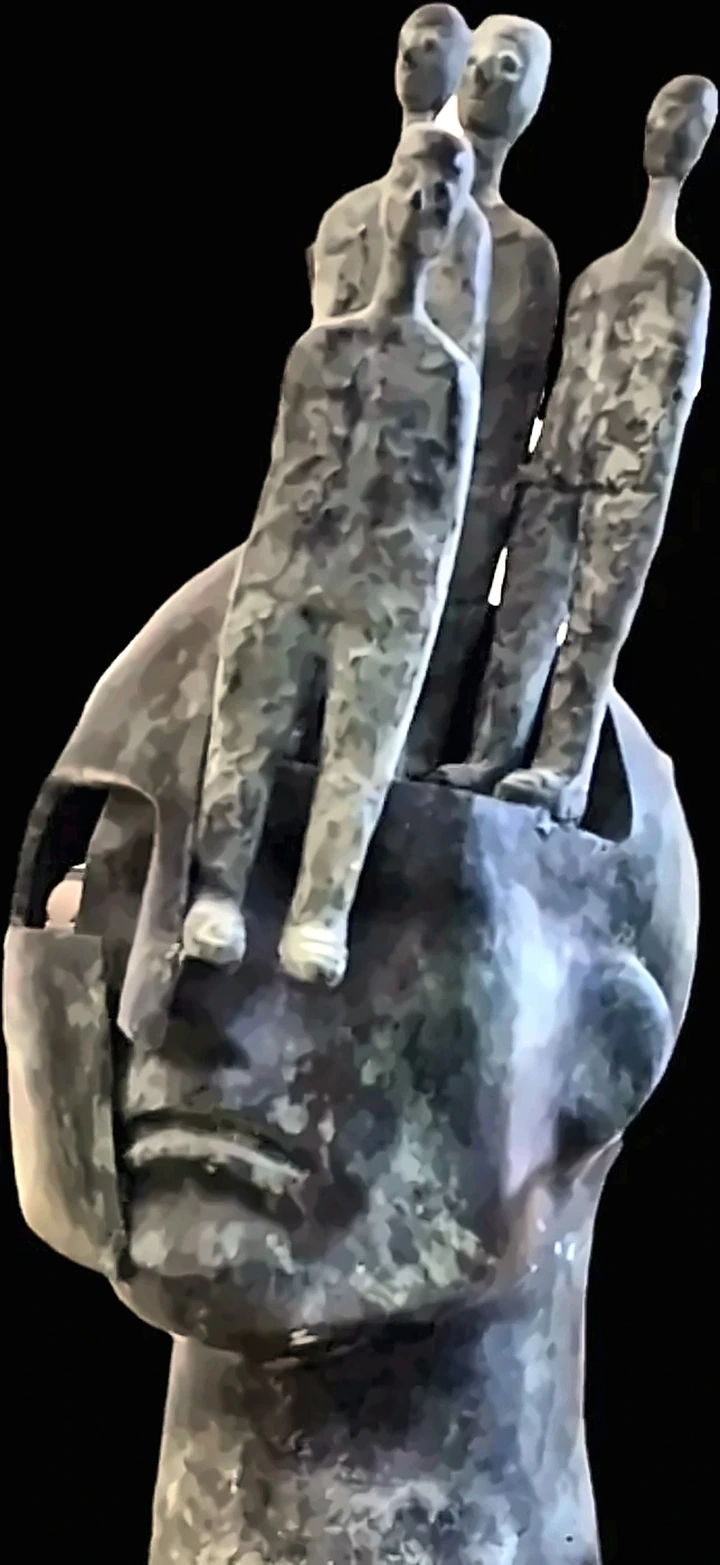
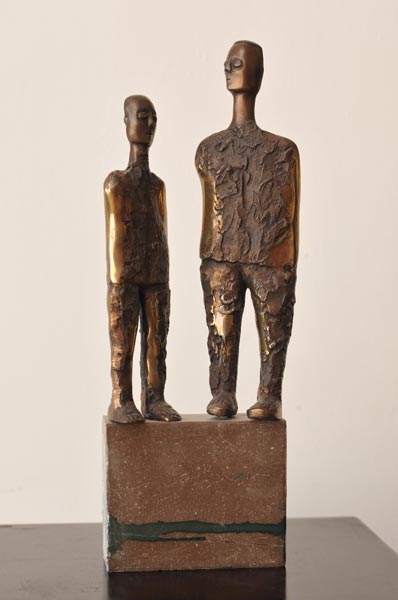
Standing and seated figures. Heads side by side or sharing a body; openings that become part of its form. Ten photographs of the works and their details.
Select any photograph to see it in full and open the original file.
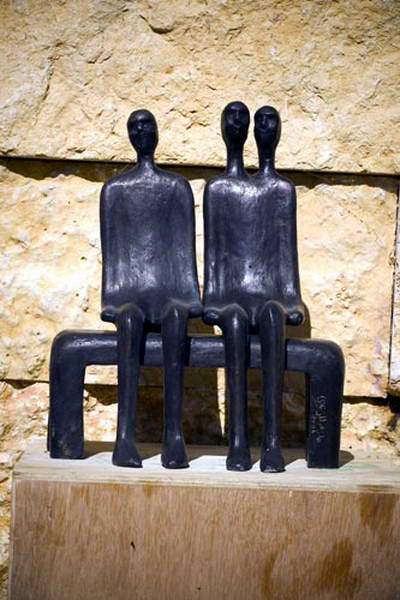
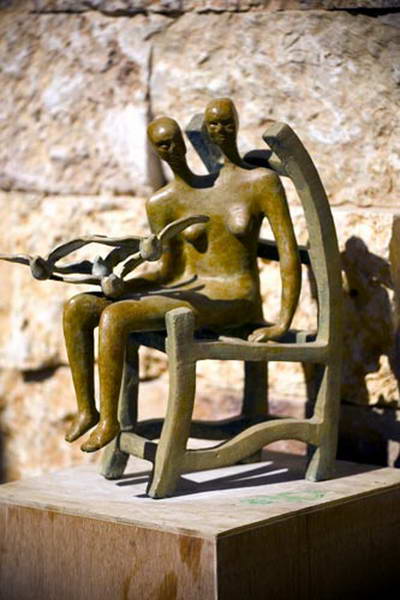
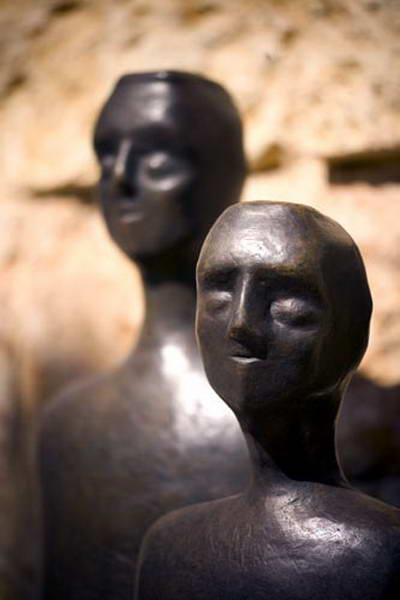
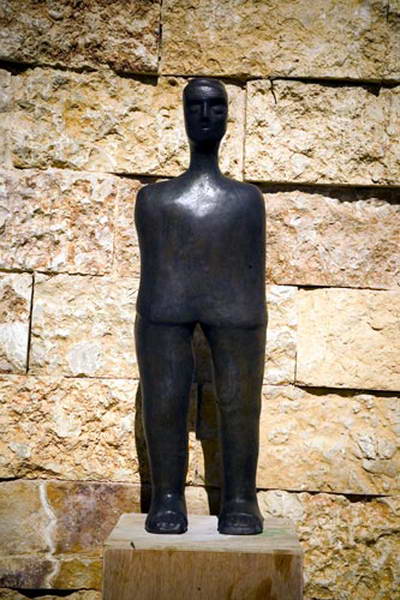
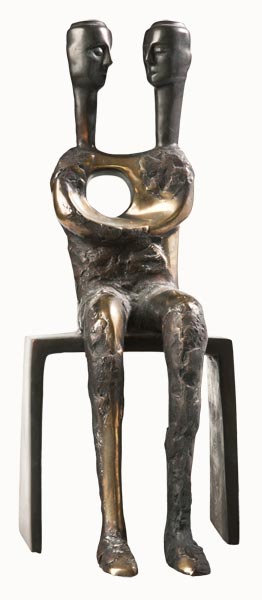
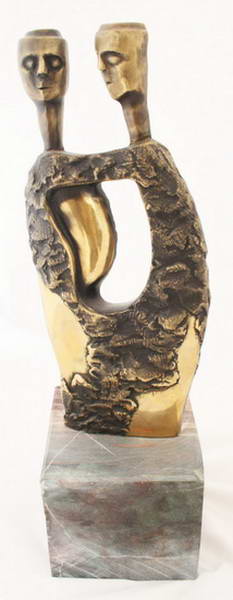
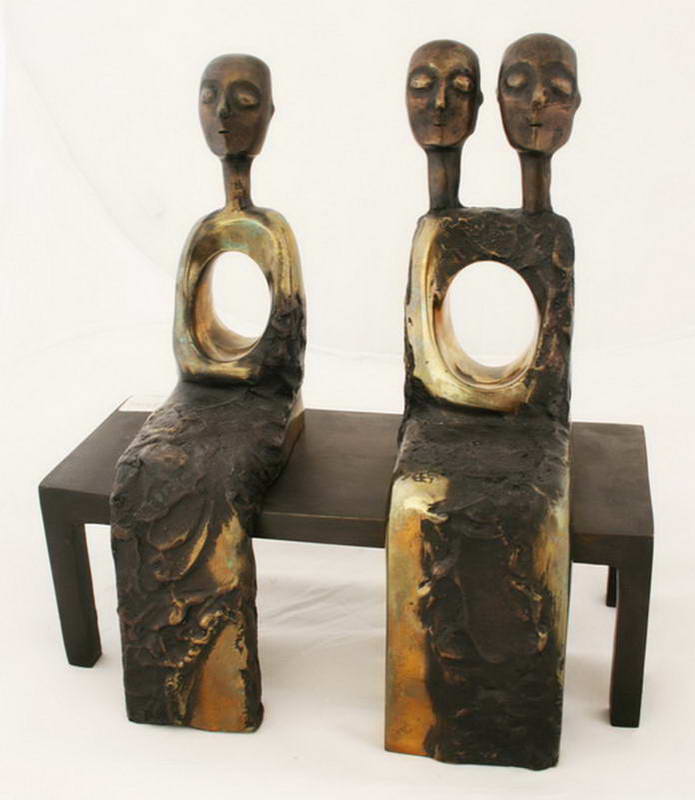
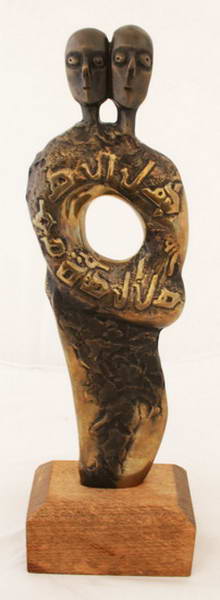
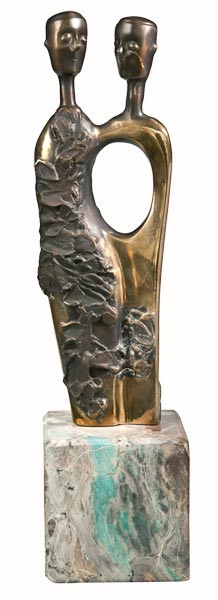
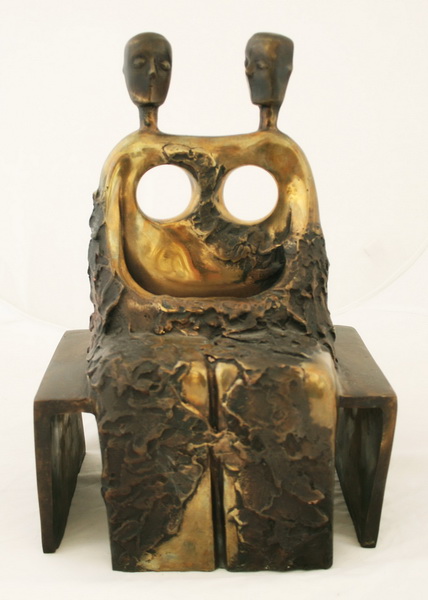
Figure and void.
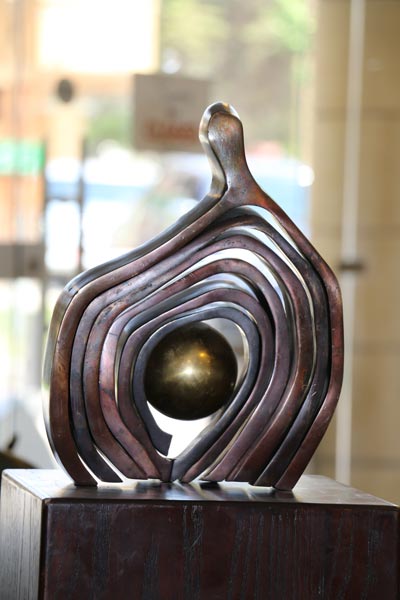
Layers of metal around a sphere. Heads side by side, with openings through the body.
Select any photograph to see it in full and open the original file.
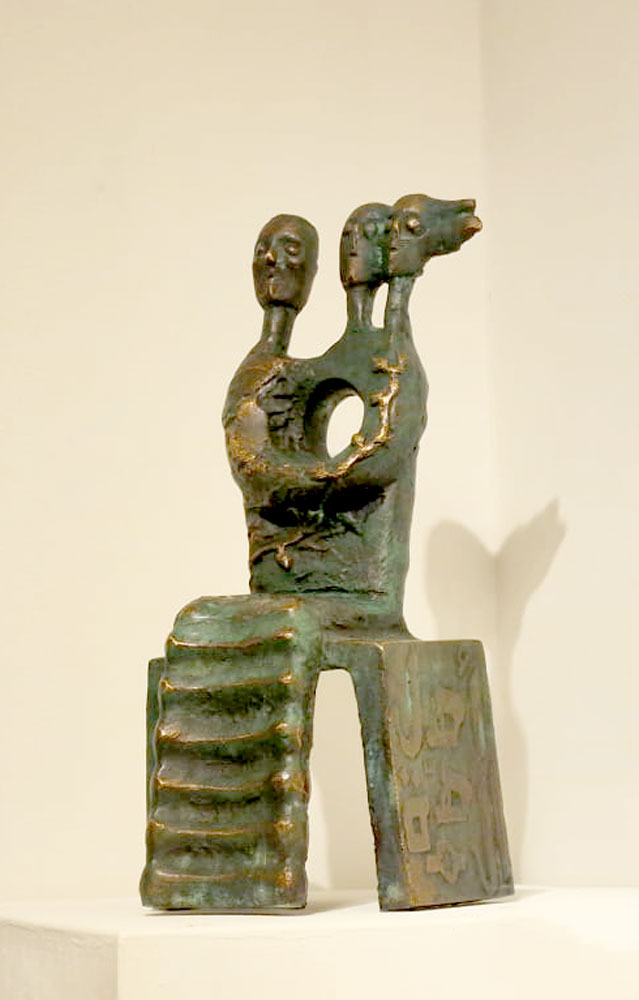
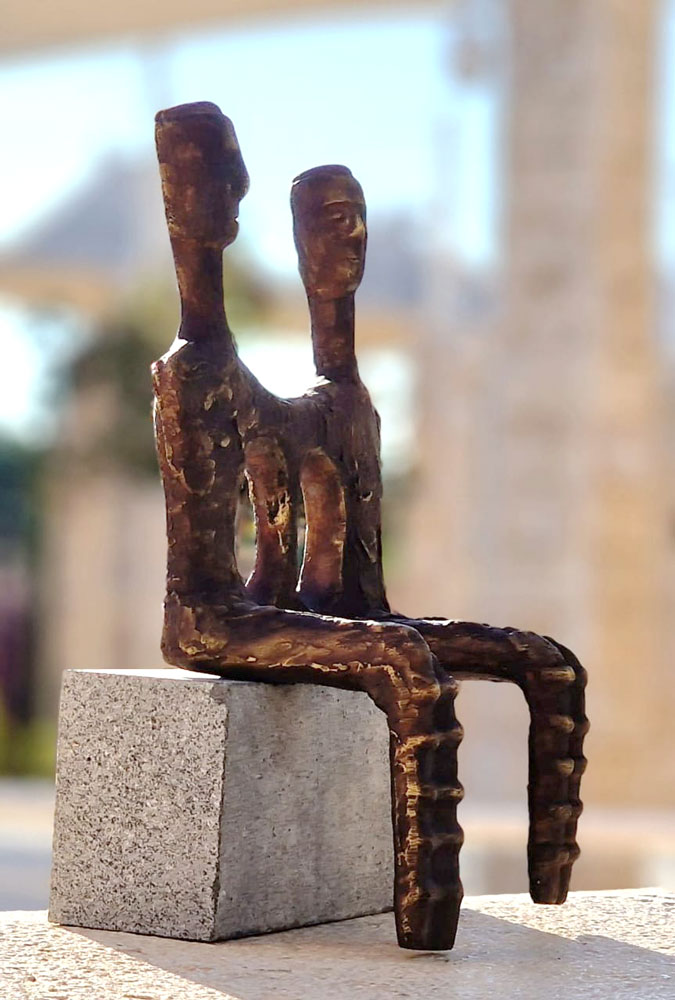
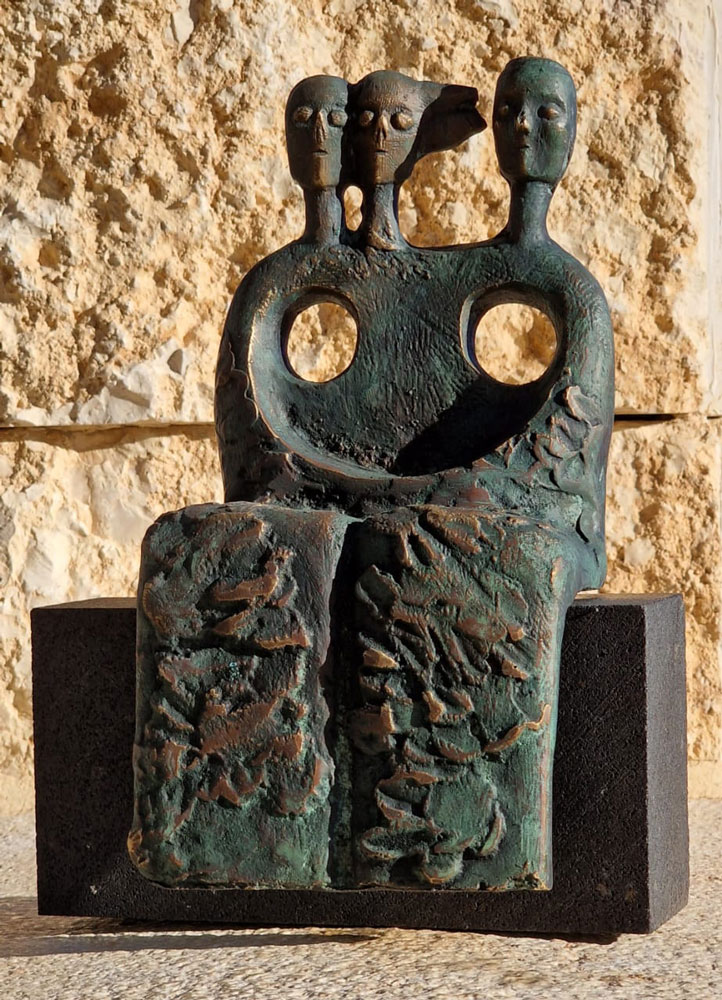
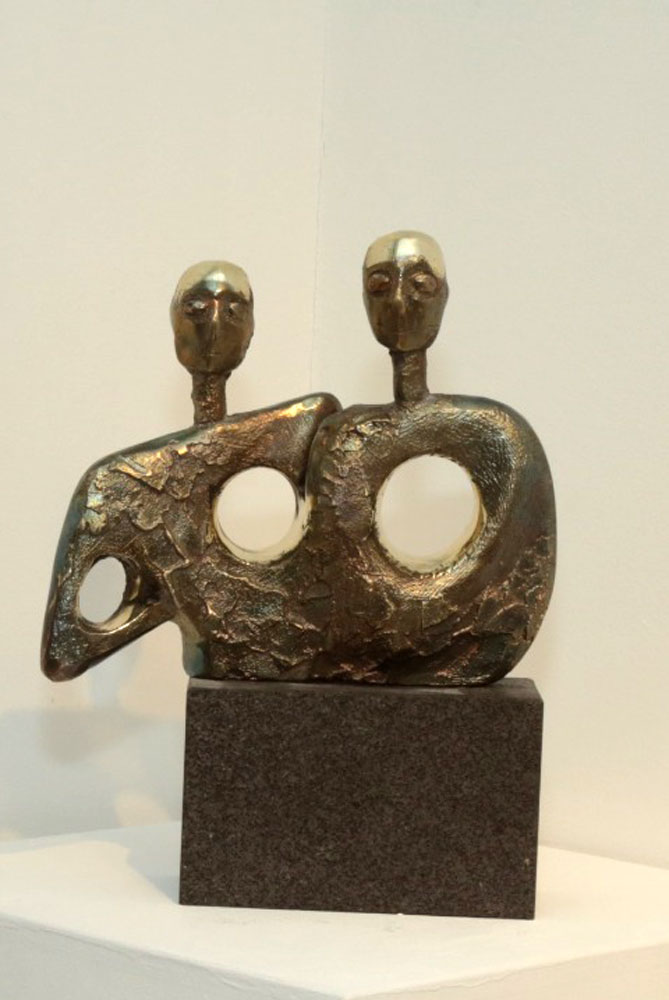
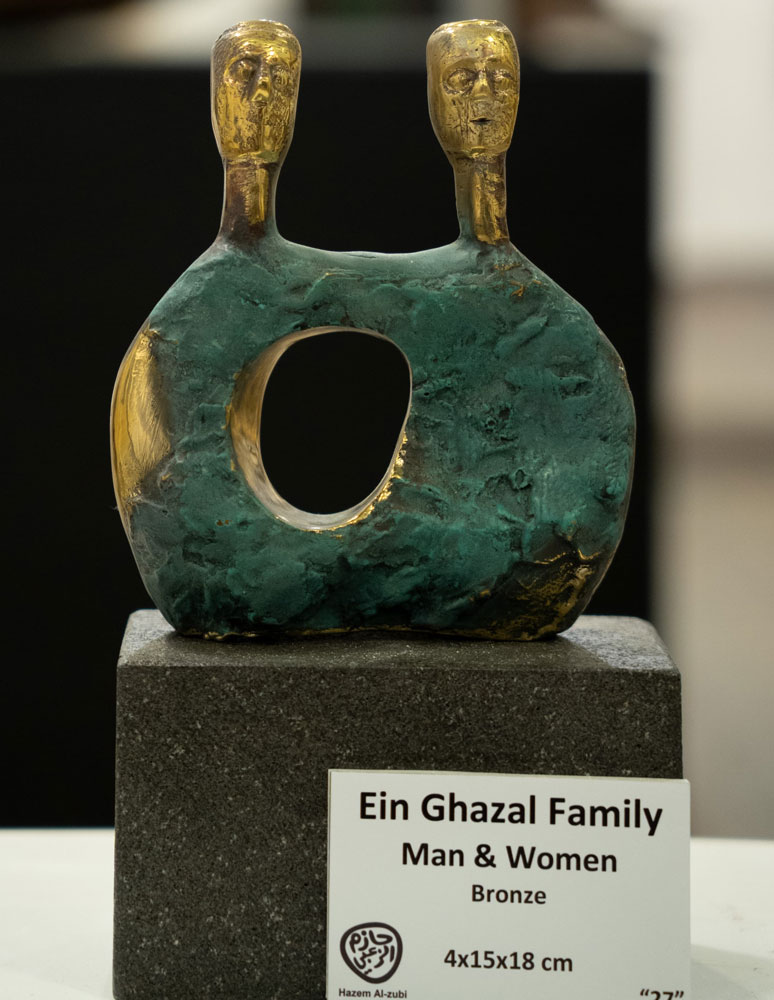
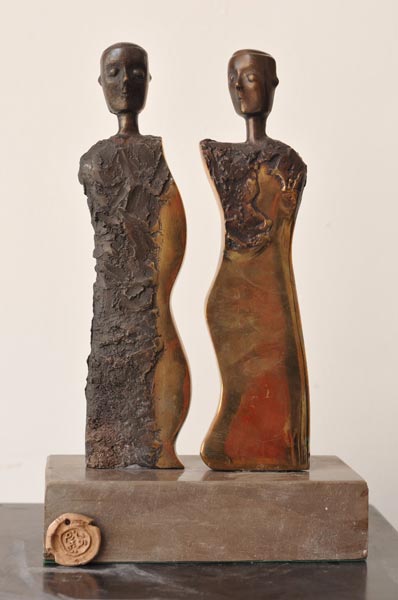
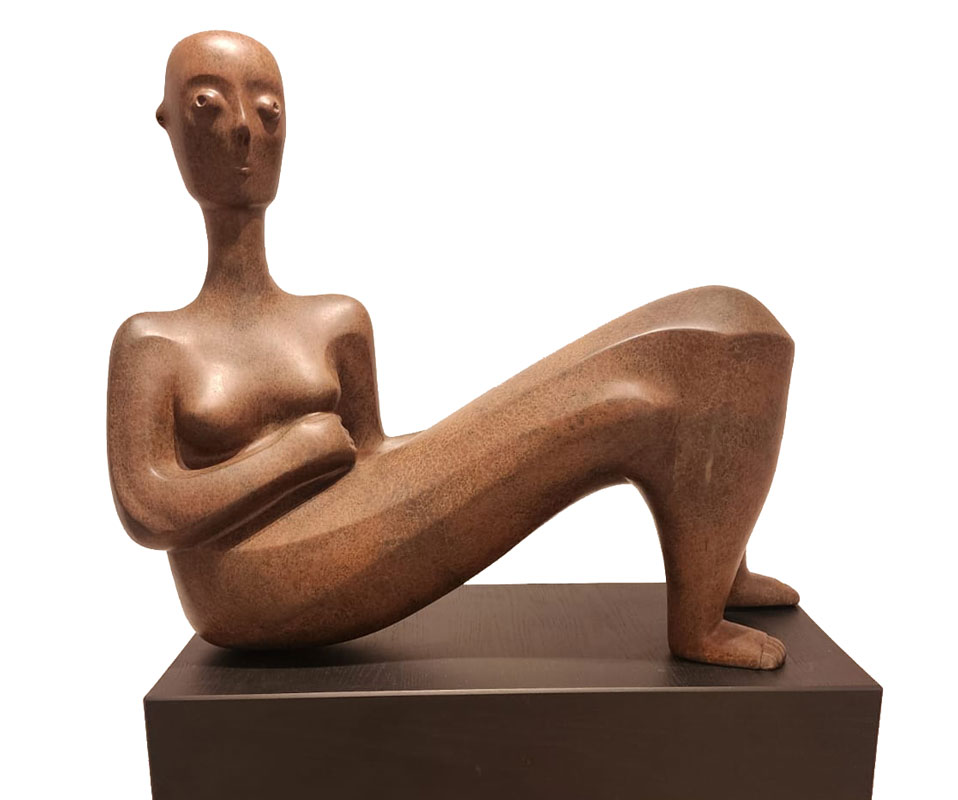
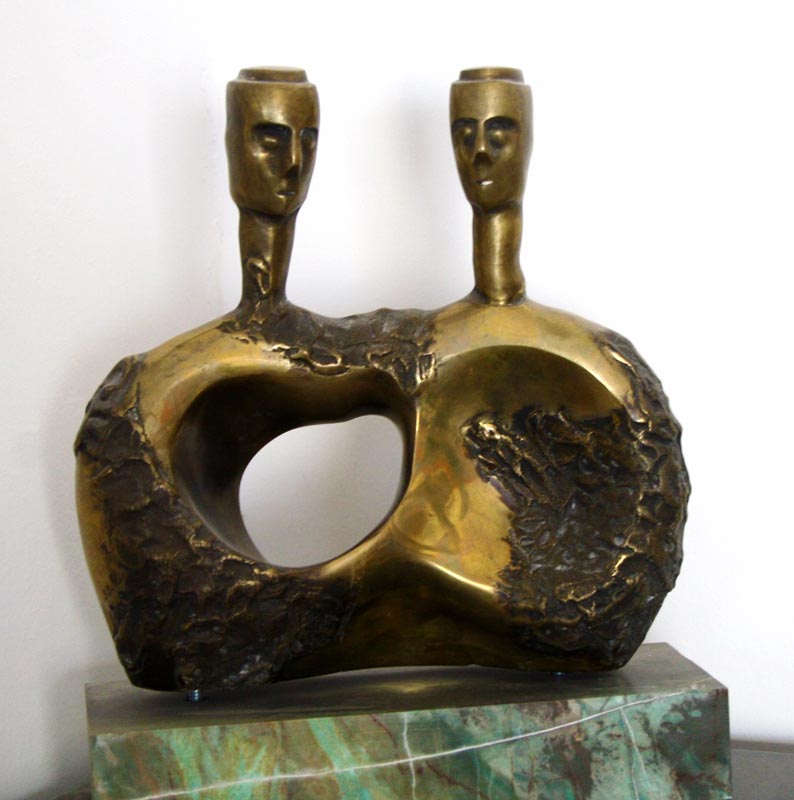
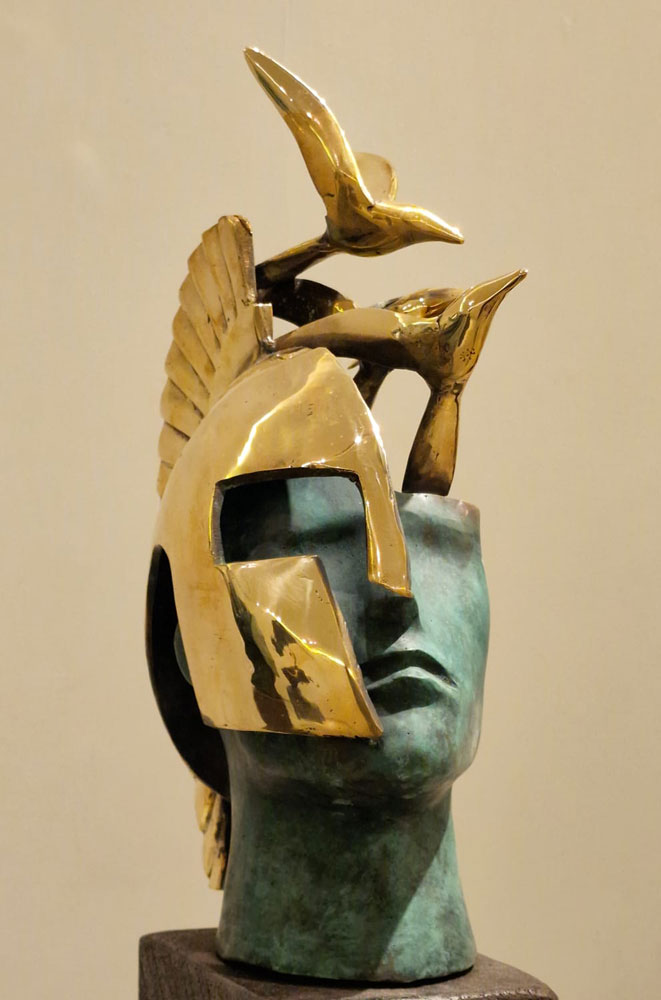
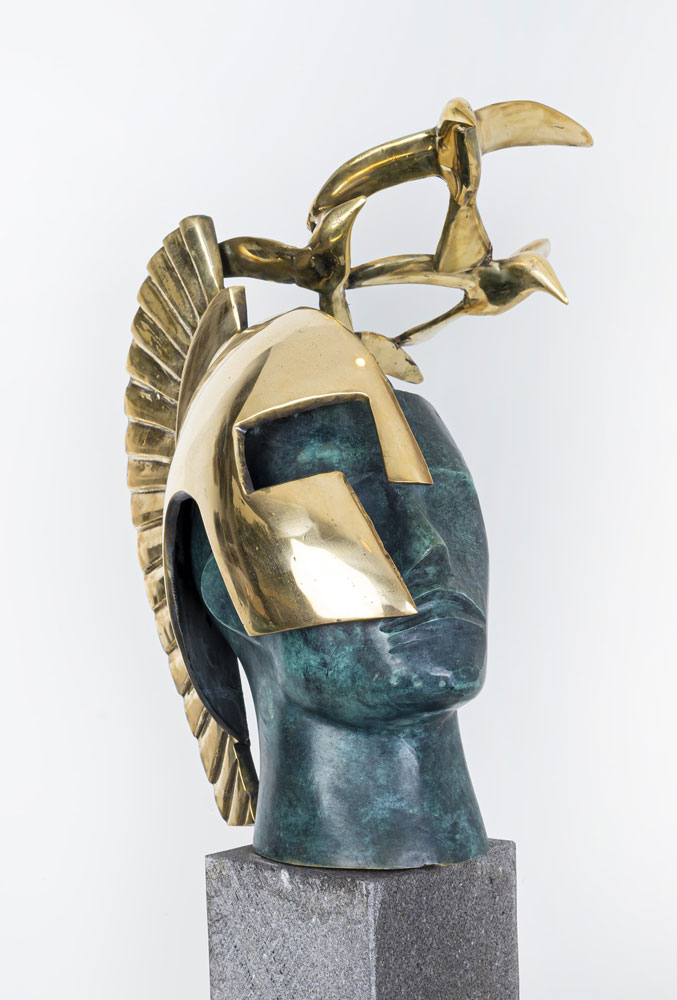
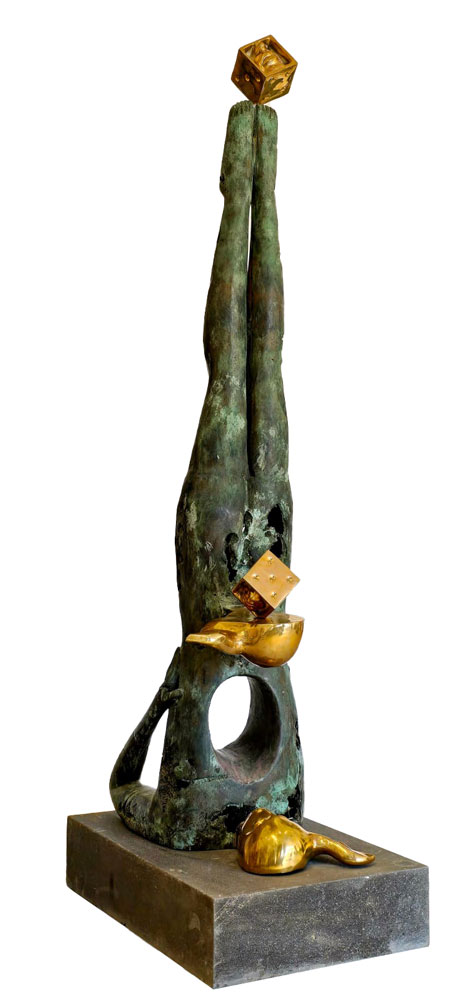
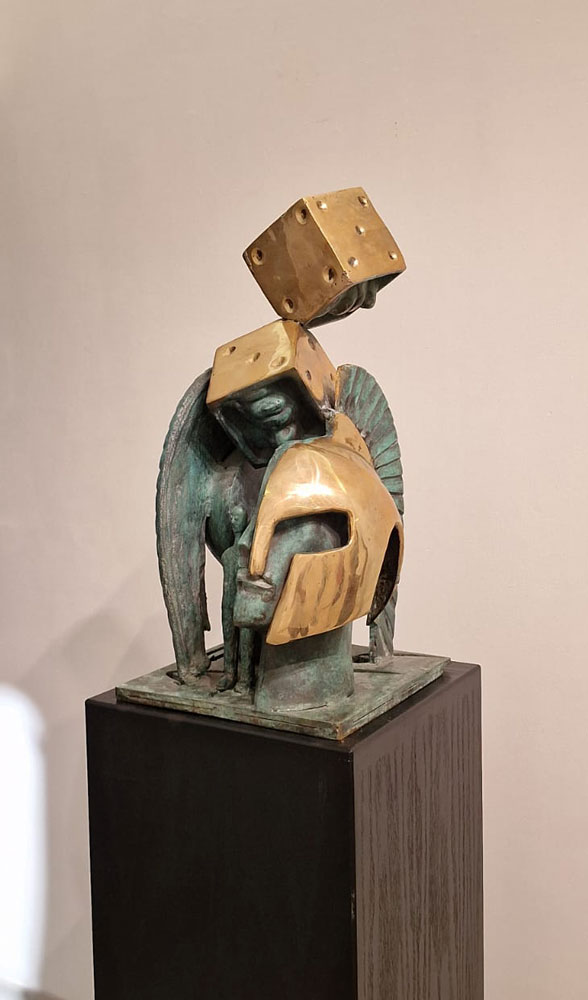
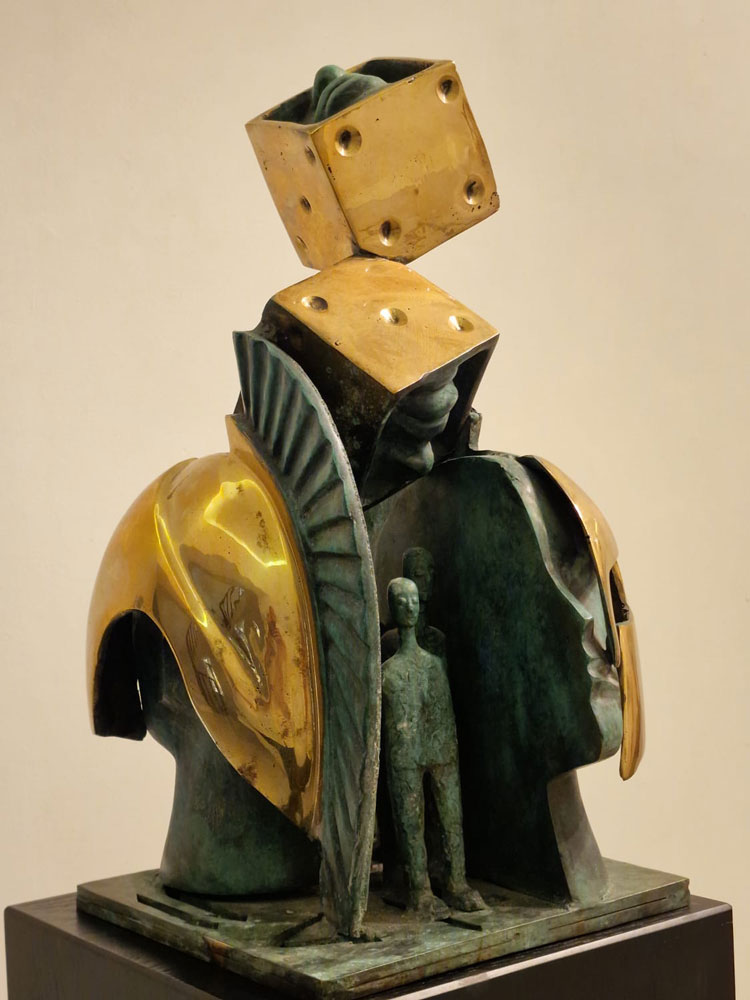
Heads, figures, helmets and dice.
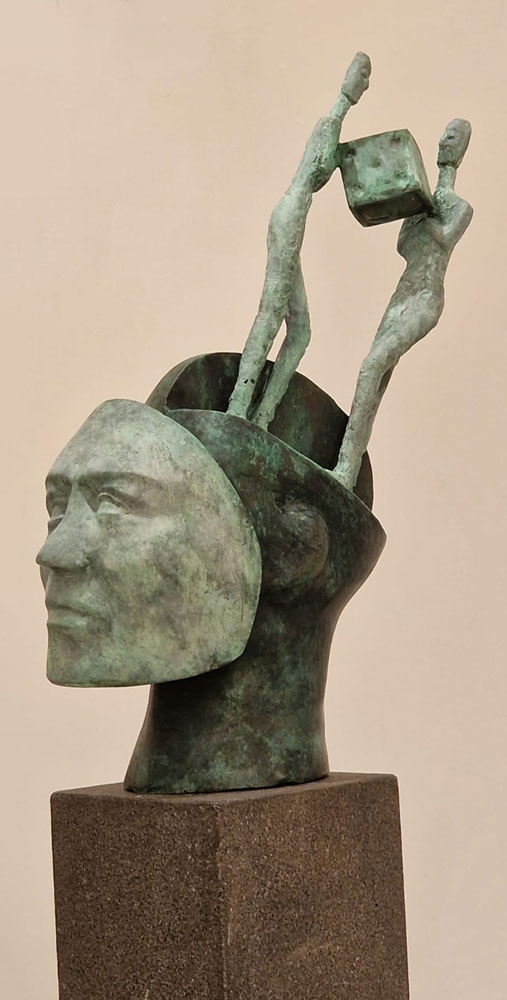
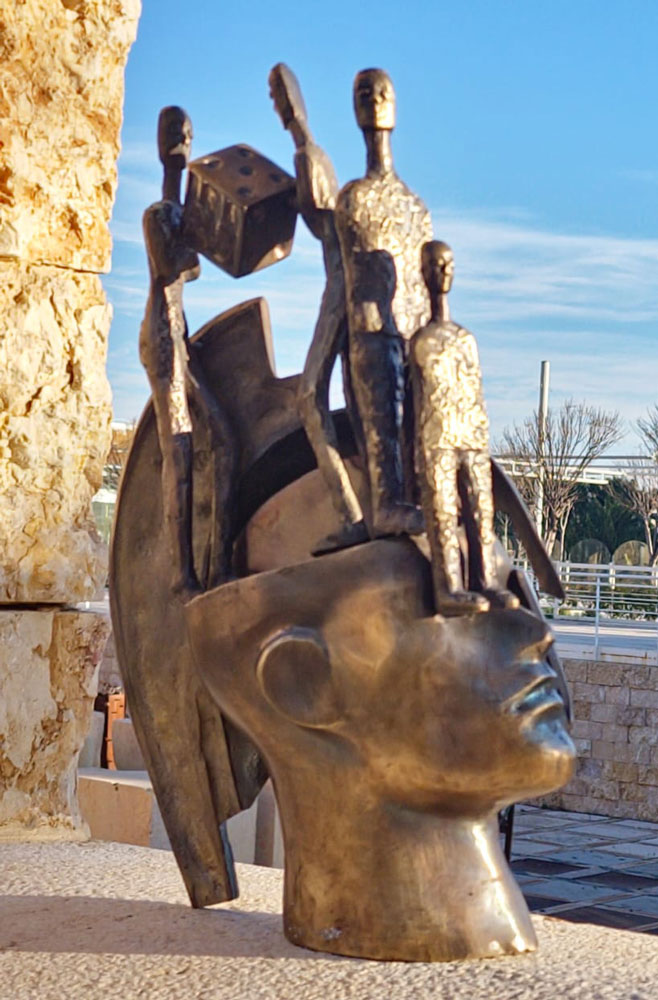
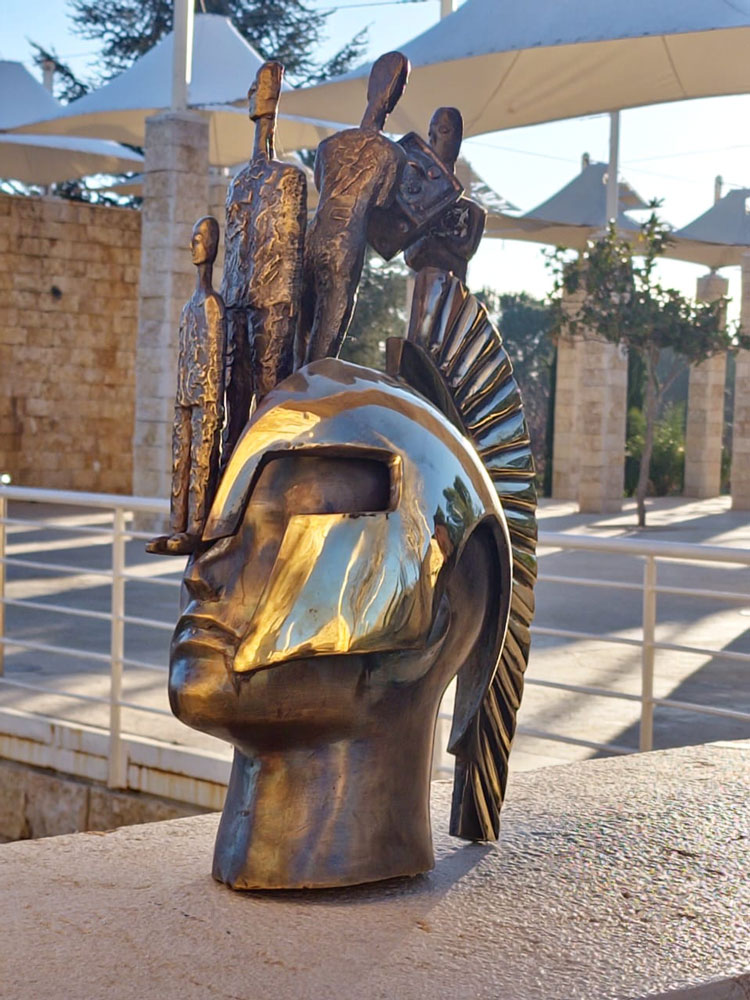
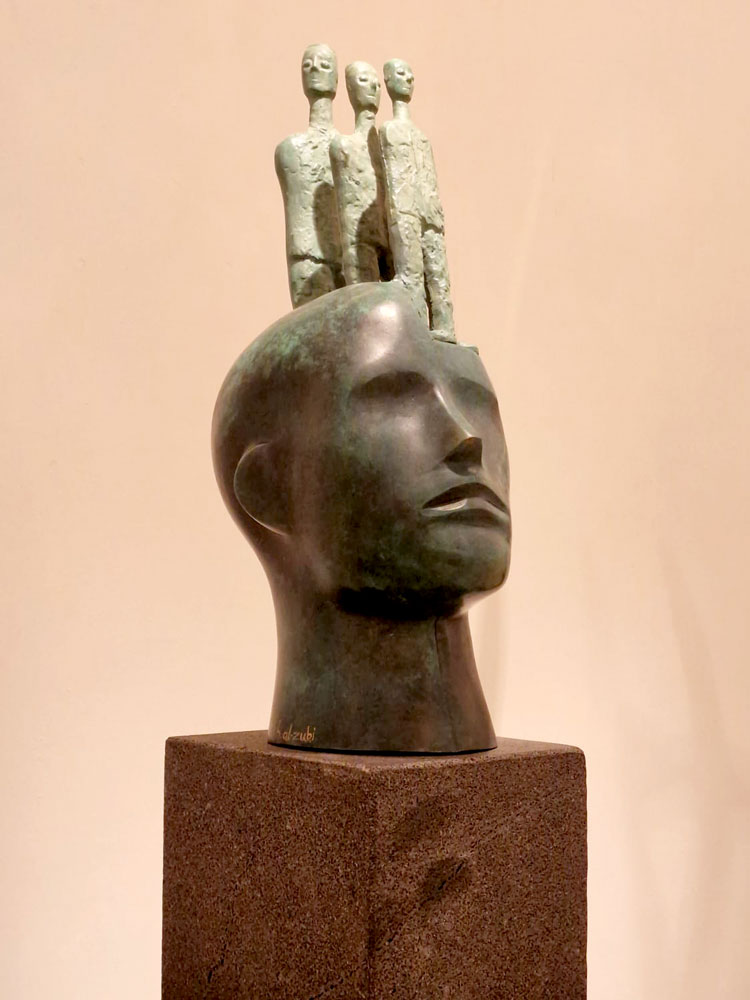
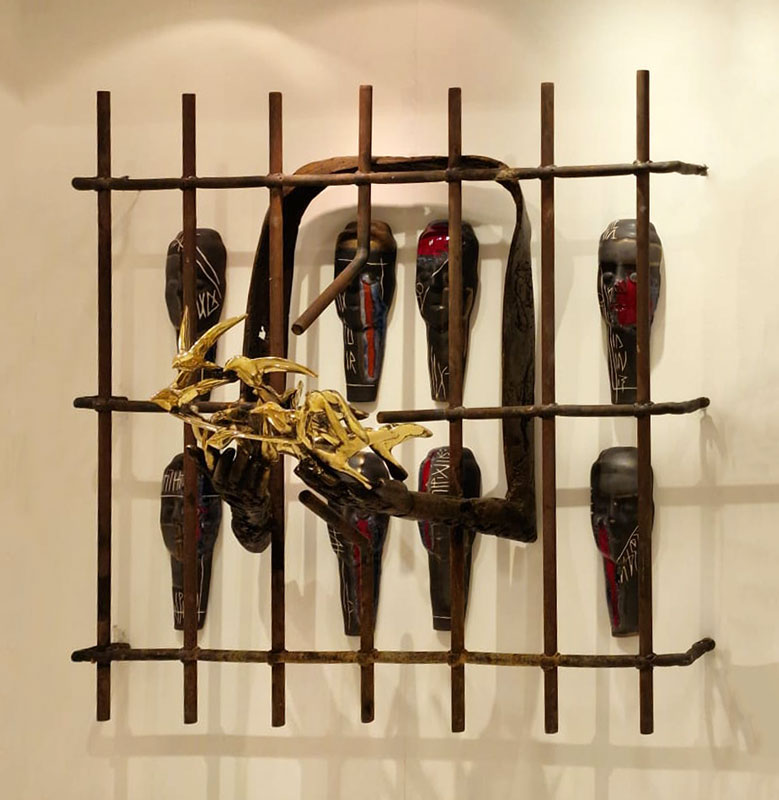
An olive tree holding a cube of letters, with the birds already leaving.
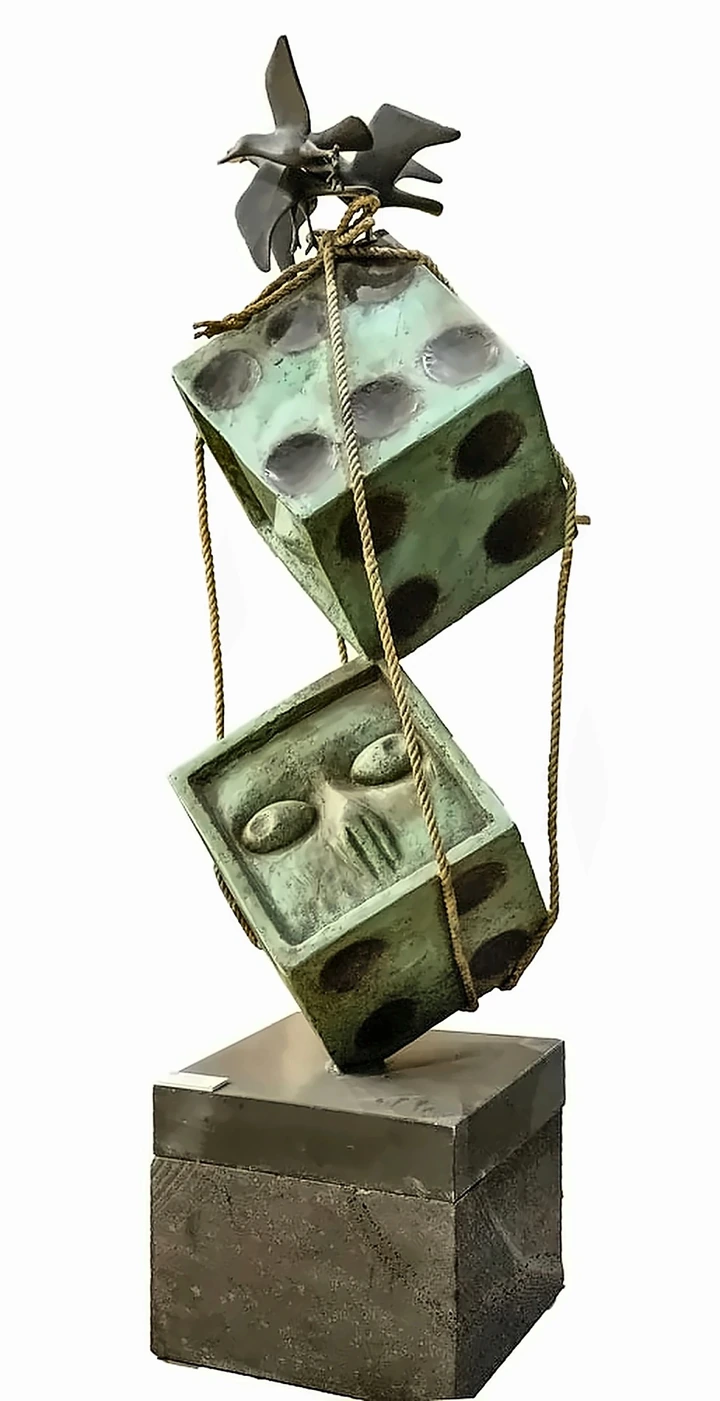
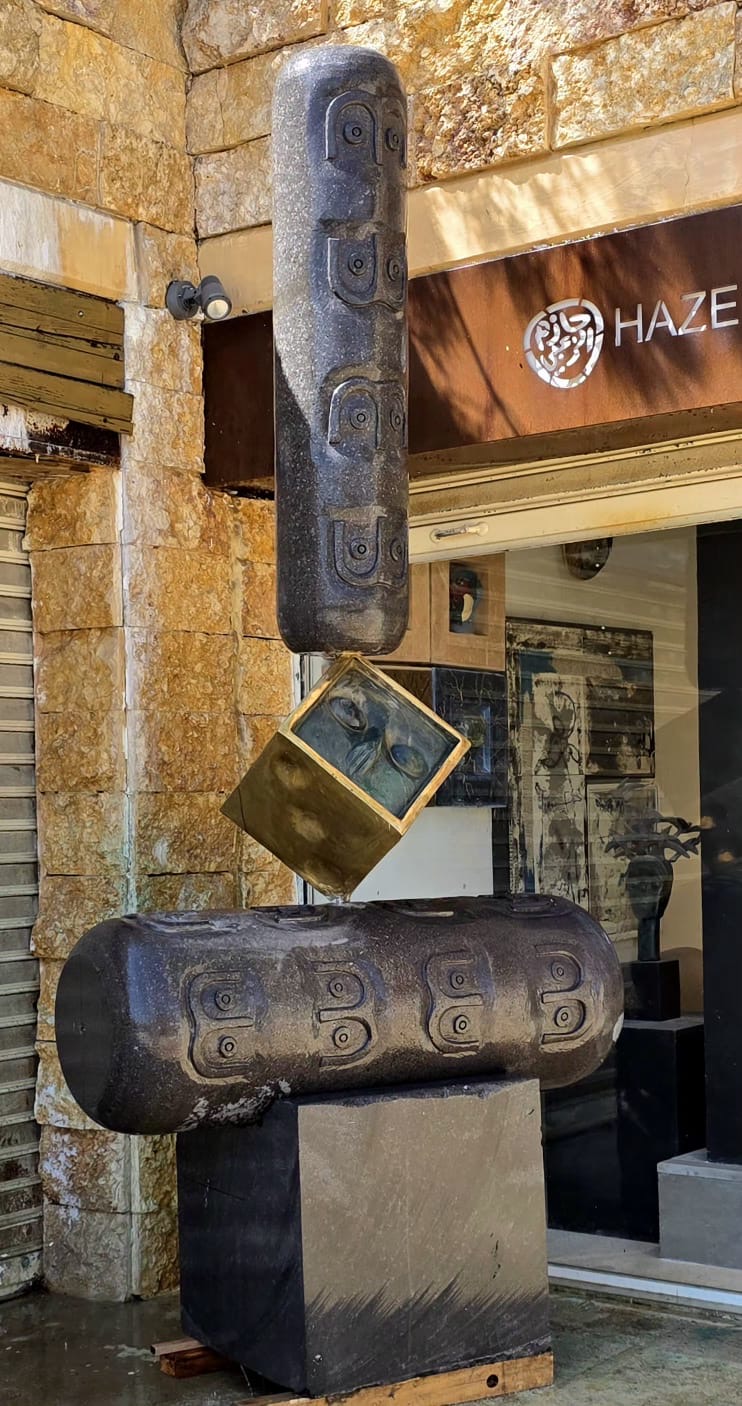
أبجدية الزمن — Alphabet of Time. The trunk is bronze, the cube is bronze, the birds coming off the top of it are bronze. One object, three states of the same idea.
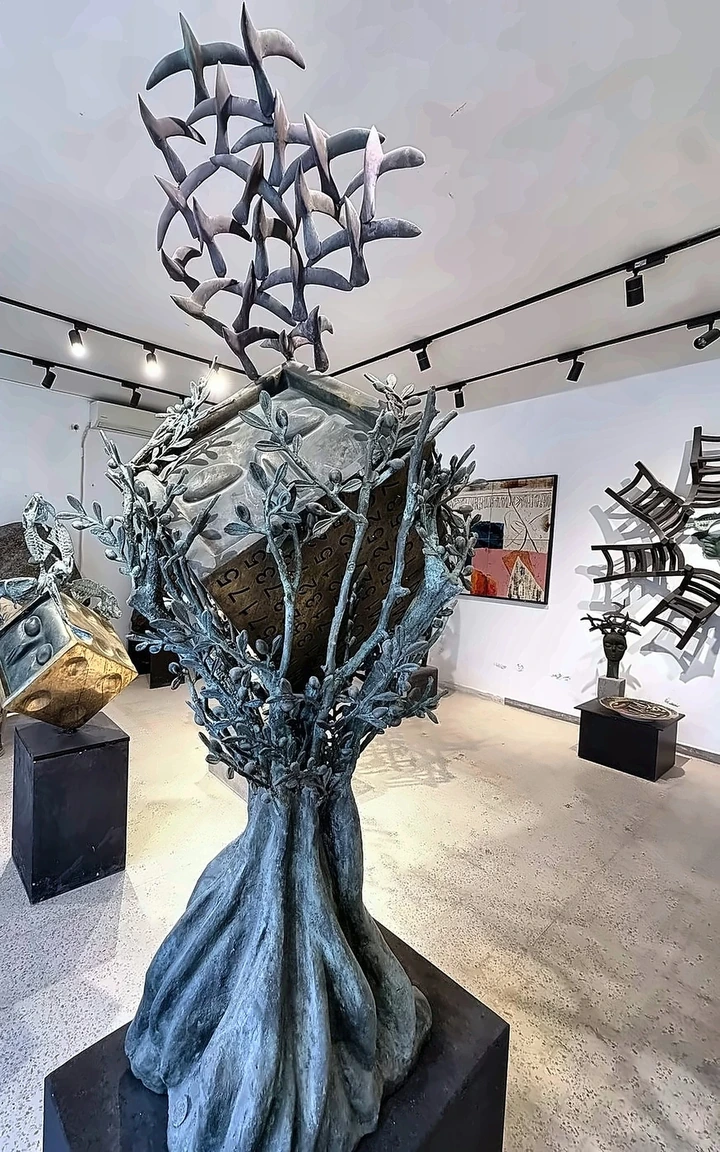
An olive tree holding a cube of numbers, and the birds leaving it.
Cut into every face of the cube are strings of letters and digits, set out in a grid — two letters and eight figures, over and over, in the format of a serial number. The Central Bank of Jordan bought the work from him directly and it stands inside the building.
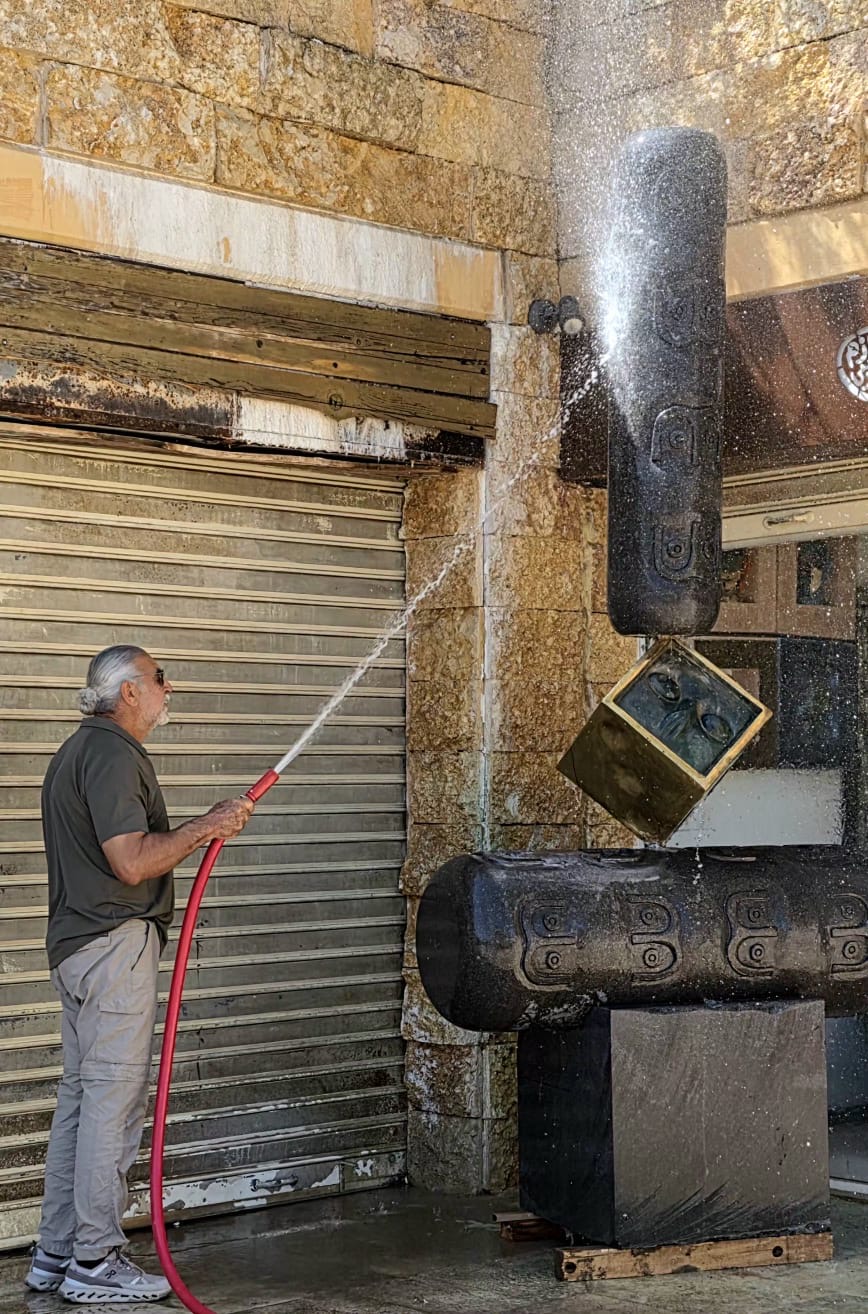
The same cube, carrying the same numbers, was cast again for the University of Jordan’s sixtieth anniversary. So the numbers are not addressed to the bank. They are his own — an alphabet made of figures, which is what the work is called.
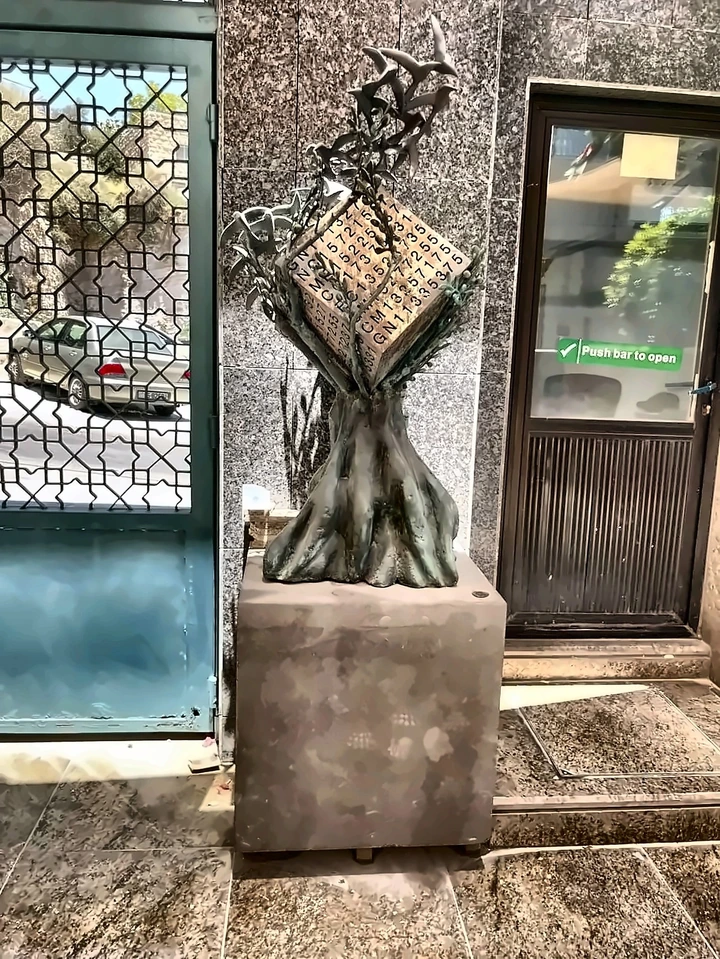
Cast again, for the university where he teaches.
The plinth carries the crest of the University of Jordan and two dates, 1962 and 2022 — the sixtieth year. He has taught ceramics there since 2003.
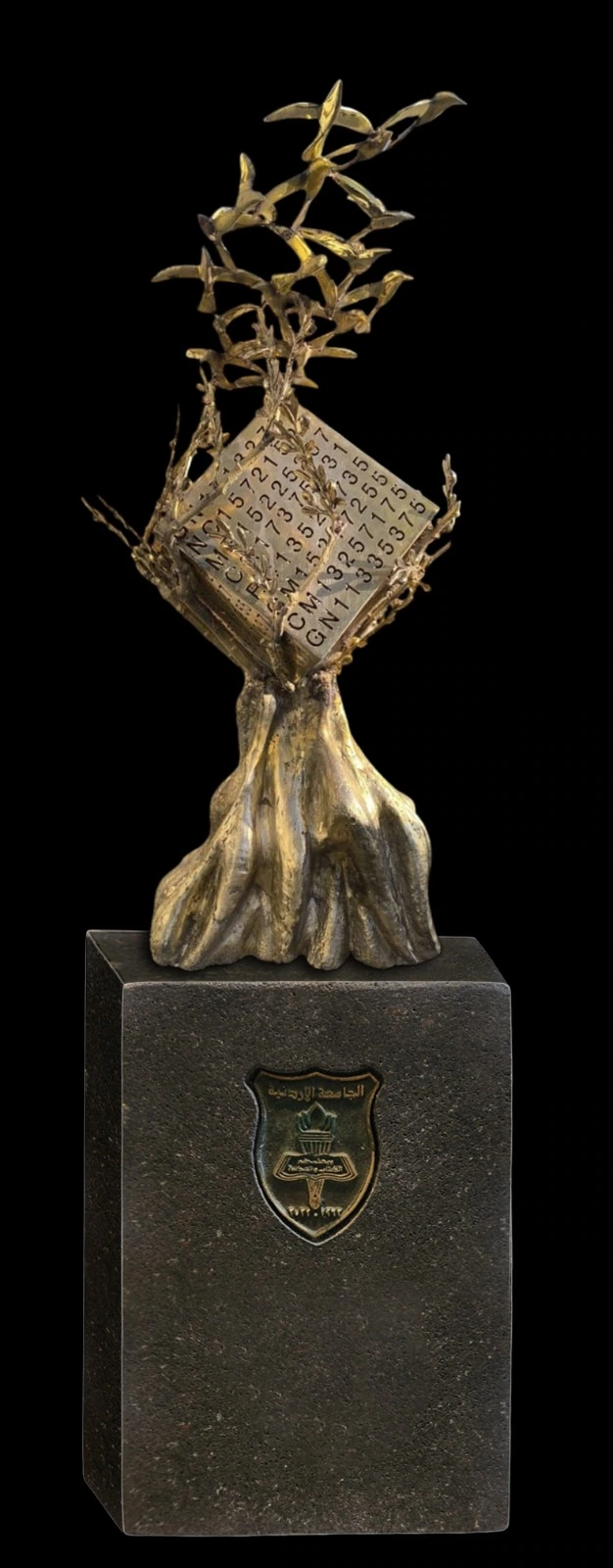
Turn it and the codes change. No string repeats — every face carries a different set, in the same two-letter-and-digits shape. A grid of them, held in the branches, which is where the title comes from.
.jpeg)
.jpeg)
.jpeg)
Three faces of one casting, photographed. No code appears twice.
Another view. A closer detail.
.jpeg)
.jpeg)
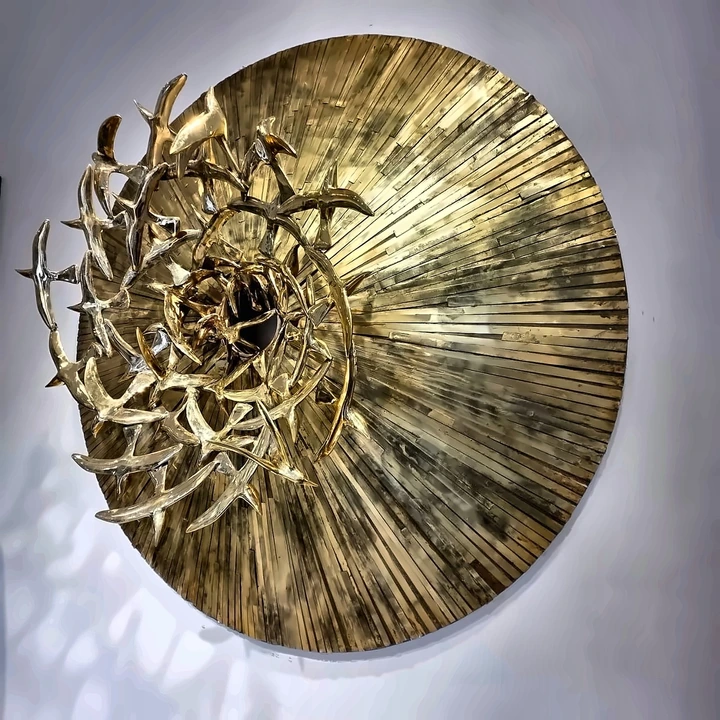
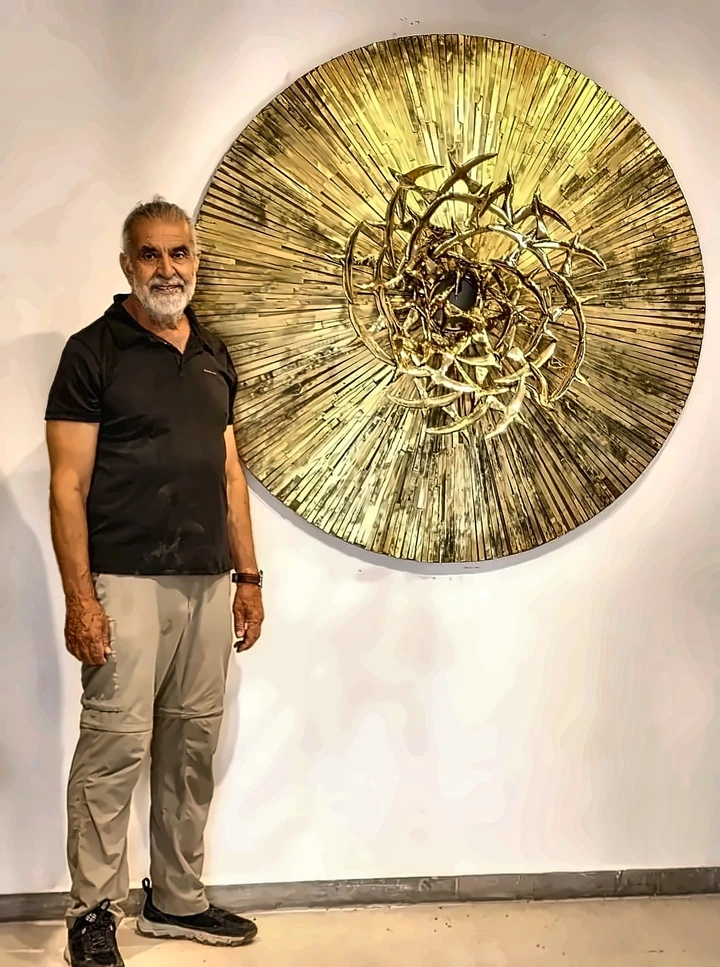
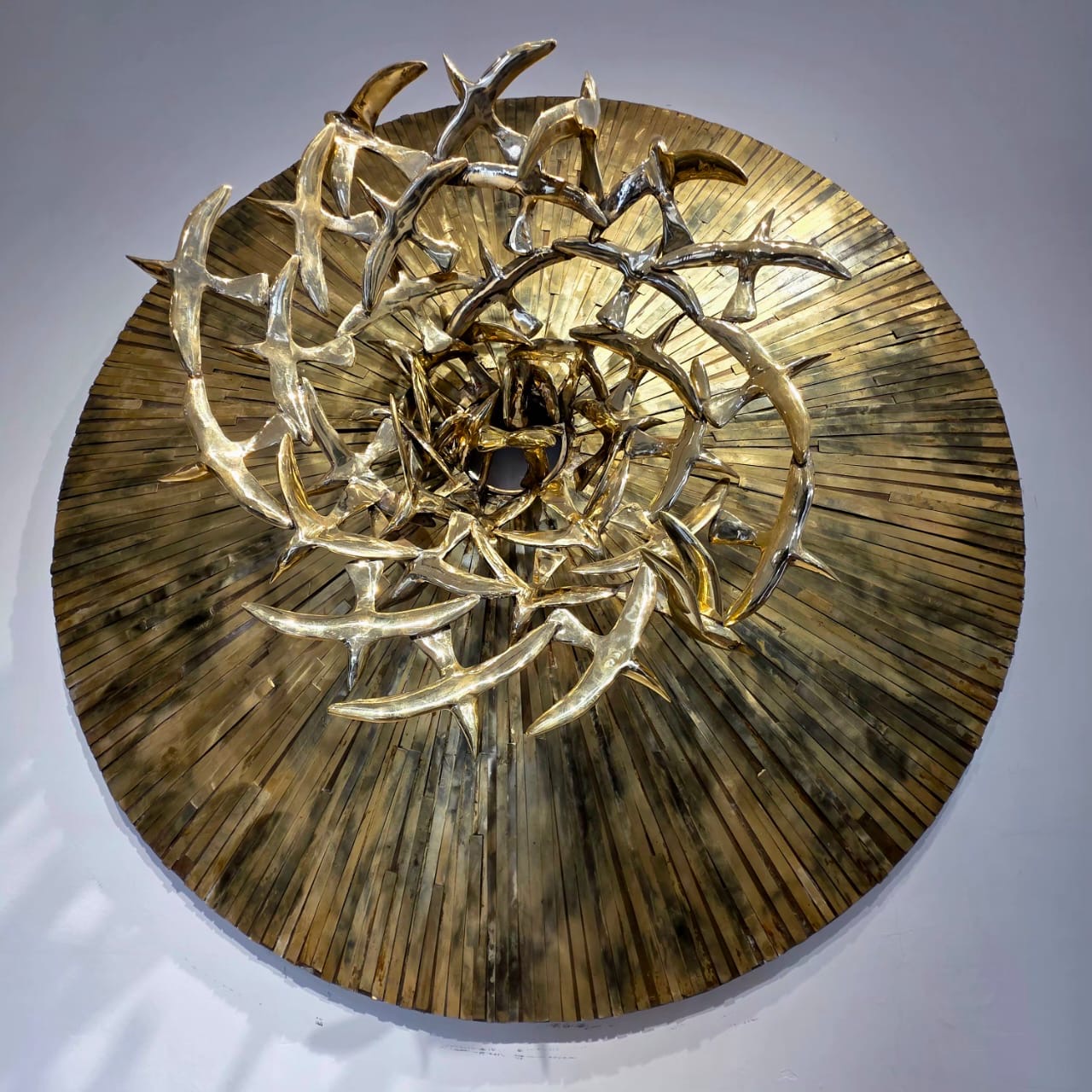
A sun built out of brass offcuts, with the birds spiralling into the middle of it.
Hundreds of narrow brass strips laid down like rays, darkening as they run outward, and a spiral of cast birds turning in on a hole at the centre. Everywhere else the birds are leaving. Here they are going in.
.jpeg)
The birds, closer.
He gave it a body the size of a doorway, and left the head empty.
The torso is an open arch. Where the face should be there is nothing, and hanging inside that gap are two heads, small, pierced through, swinging free of the frame that should have held one. Below it the legs are cast at full human length and the hands are folded, patiently, over a knee.
Everything else he makes is head-sized or wall-sized. This one is a person, and it is sitting down in the room with you.
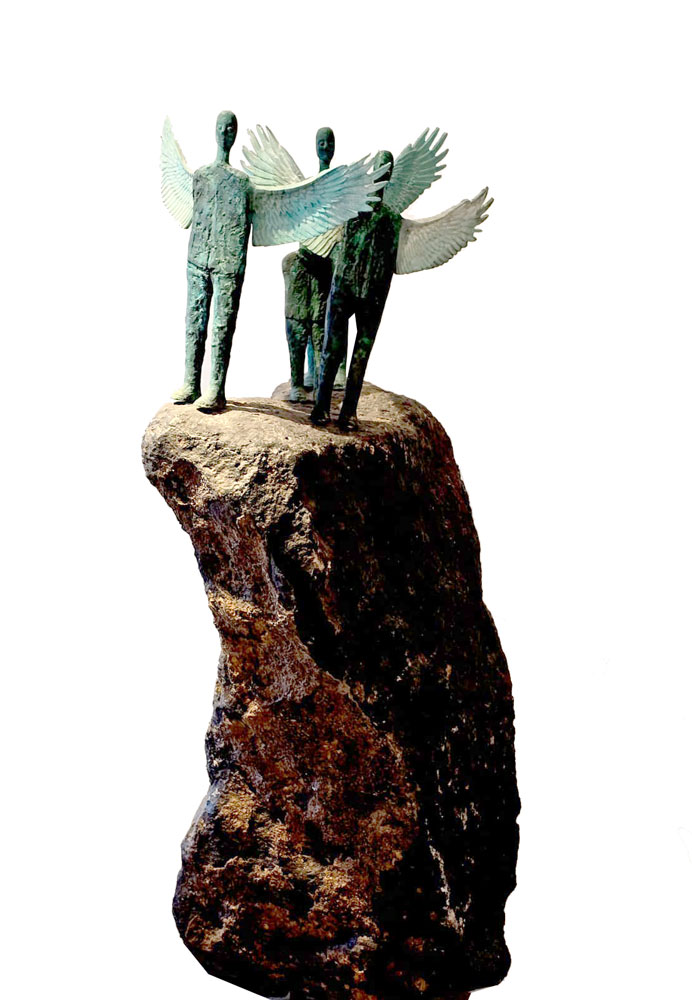
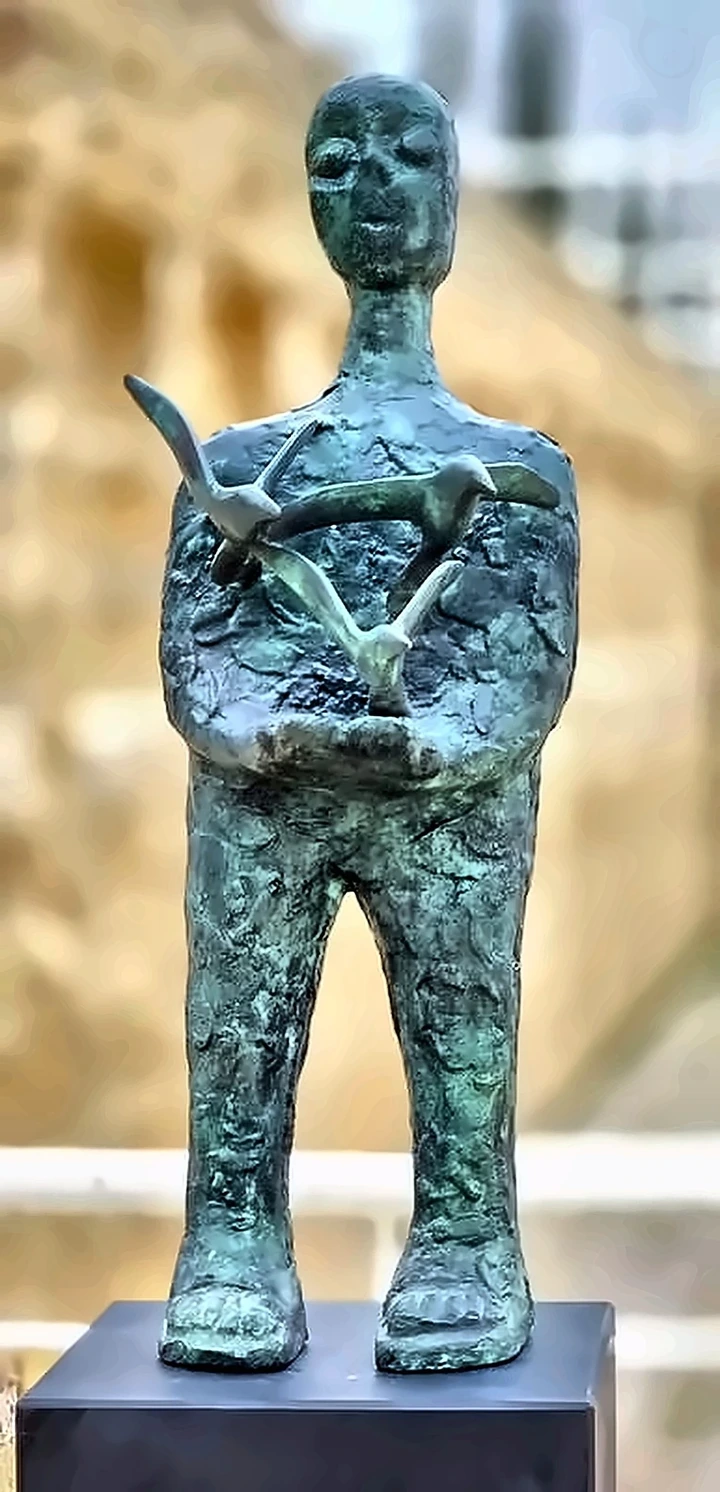
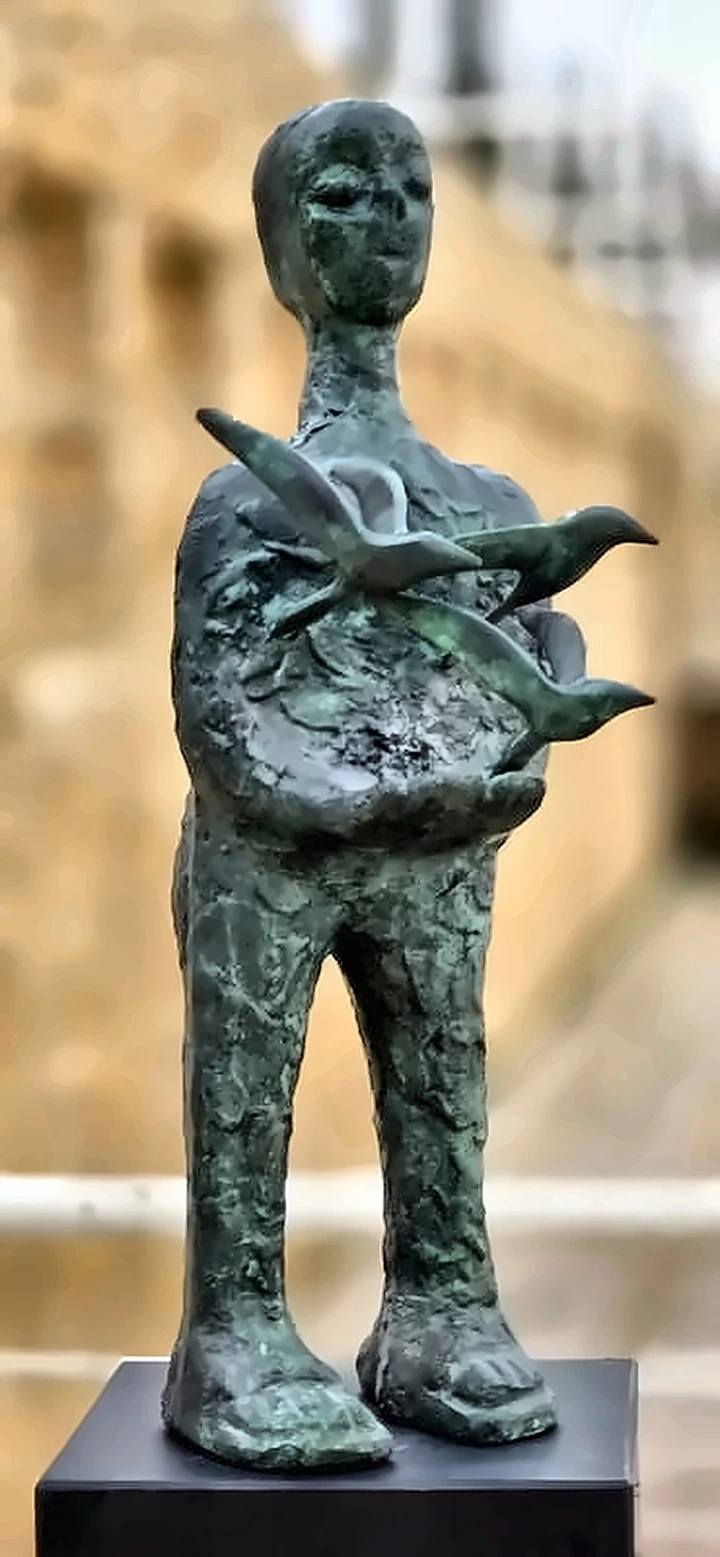
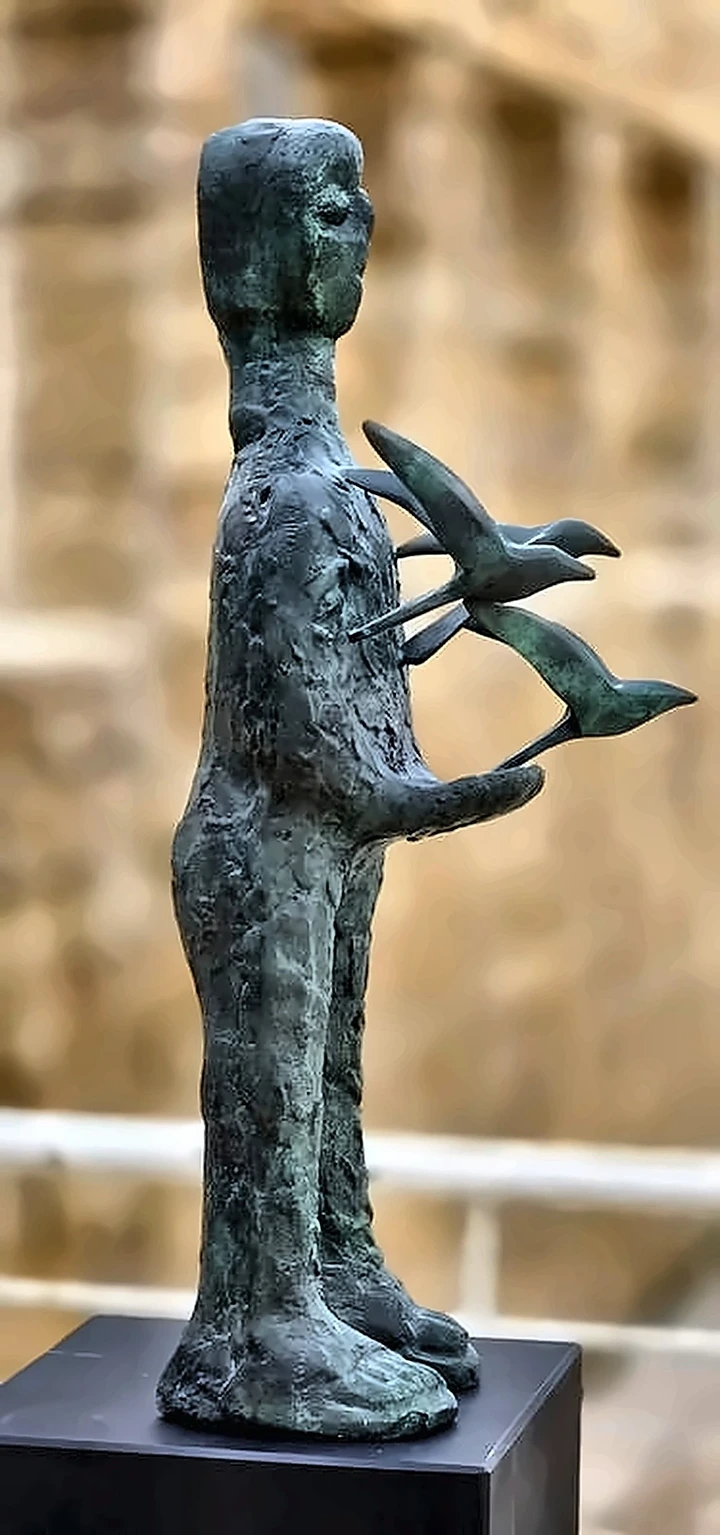
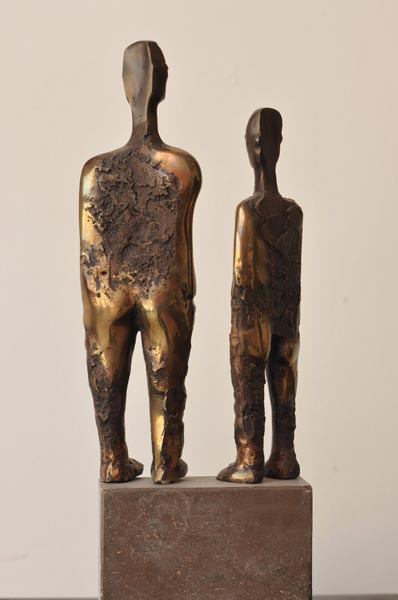
A man stands still and holds a handful of birds that are already going.
The body is rough, pitted, barely finished — feet planted flat, arms curved into a bowl at the waist. What sits in the bowl is smooth, and it is leaving. He has cast this figure again and again.
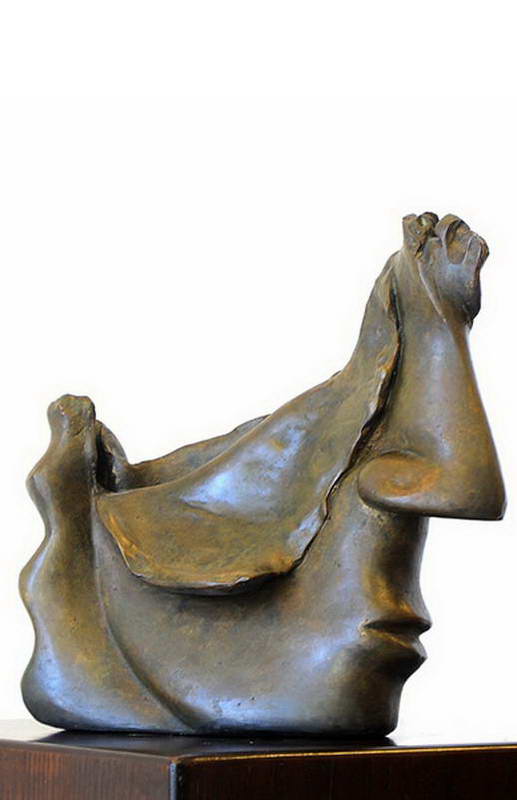
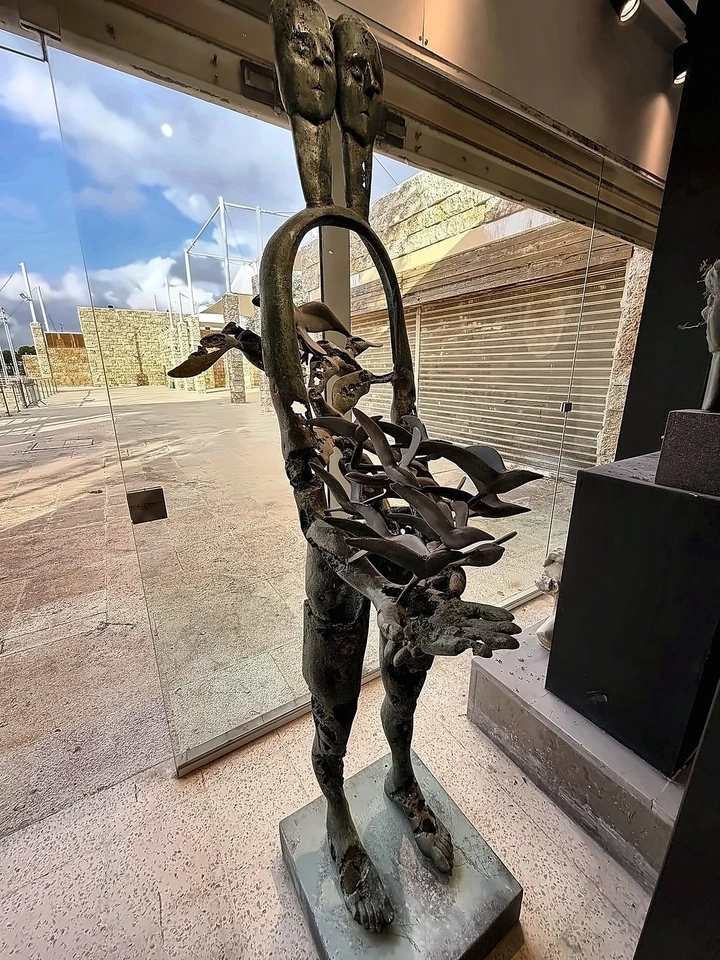
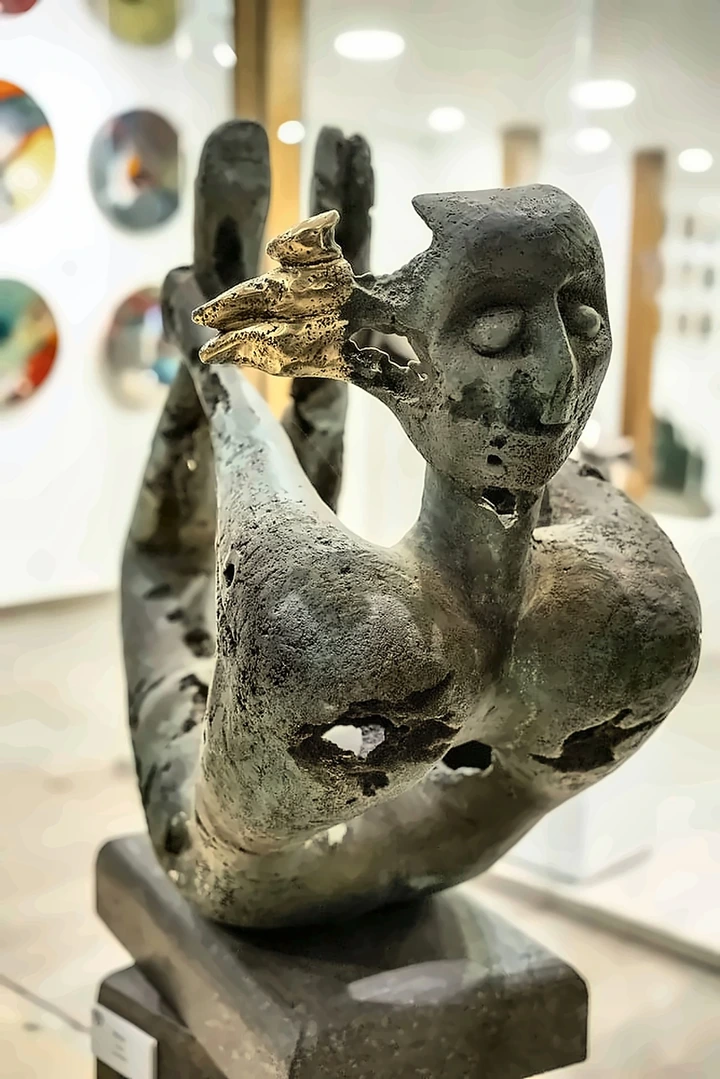
Then he split the head in two and let the metal go.
One figure, two heads on one neck, the torso opened into an arch. The bronze is eaten through — holes where the casting failed or was made to fail — and the birds held in both hands are gilded, the only clean thing on it.
It is the same argument as the standing bearer, taken apart.
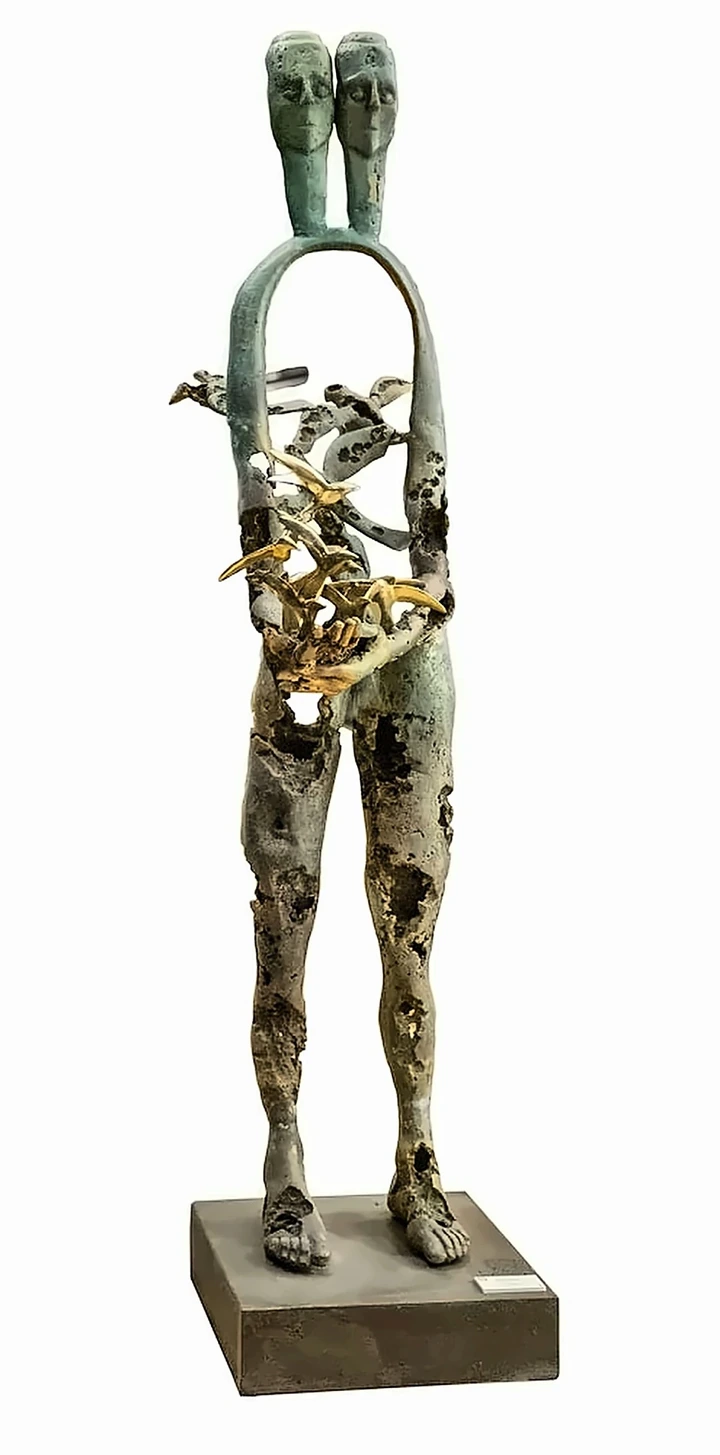
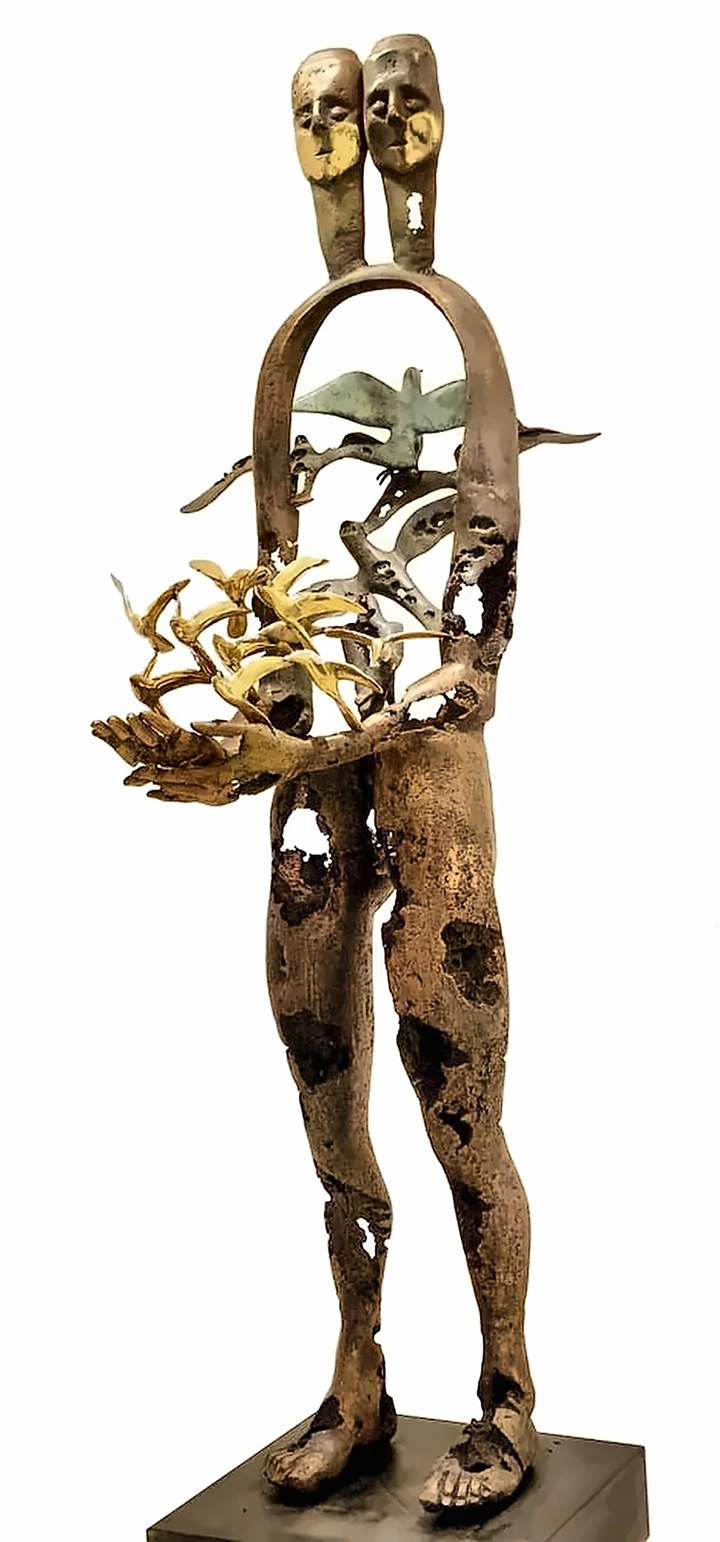
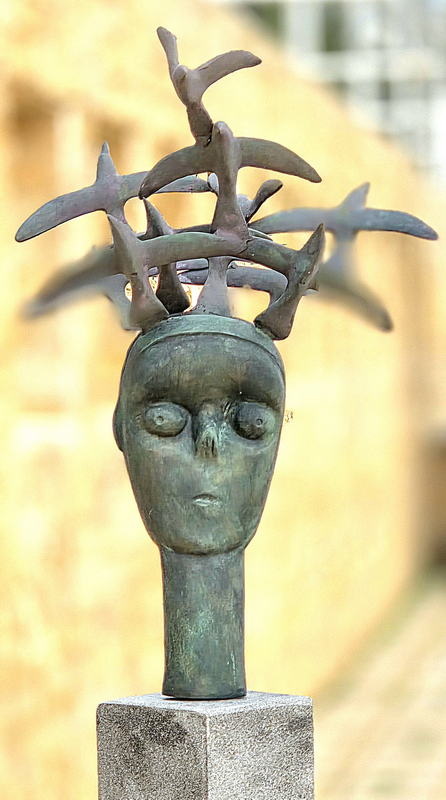
And when they will not sit in the hands, they land on the head.
A ring of birds set flat around the skull like a diadem, wings crossing. The face beneath is closed and expressionless, which is what makes it work.
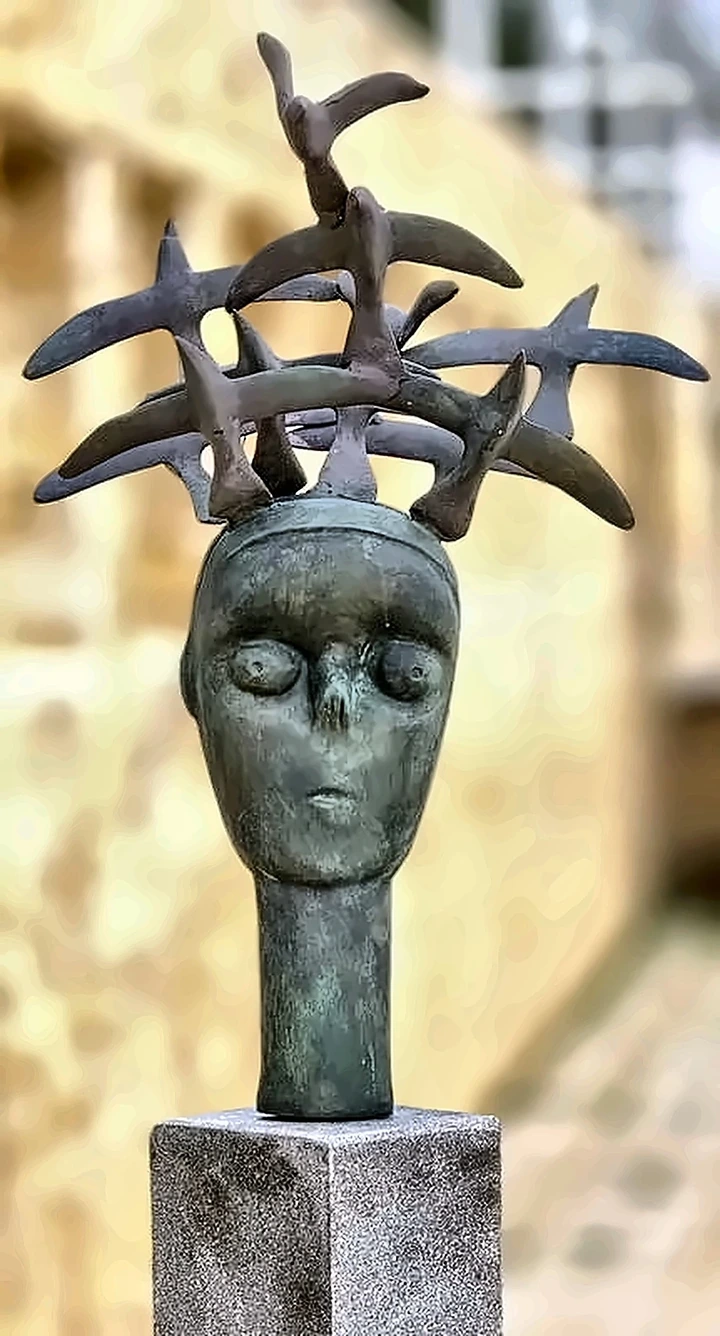
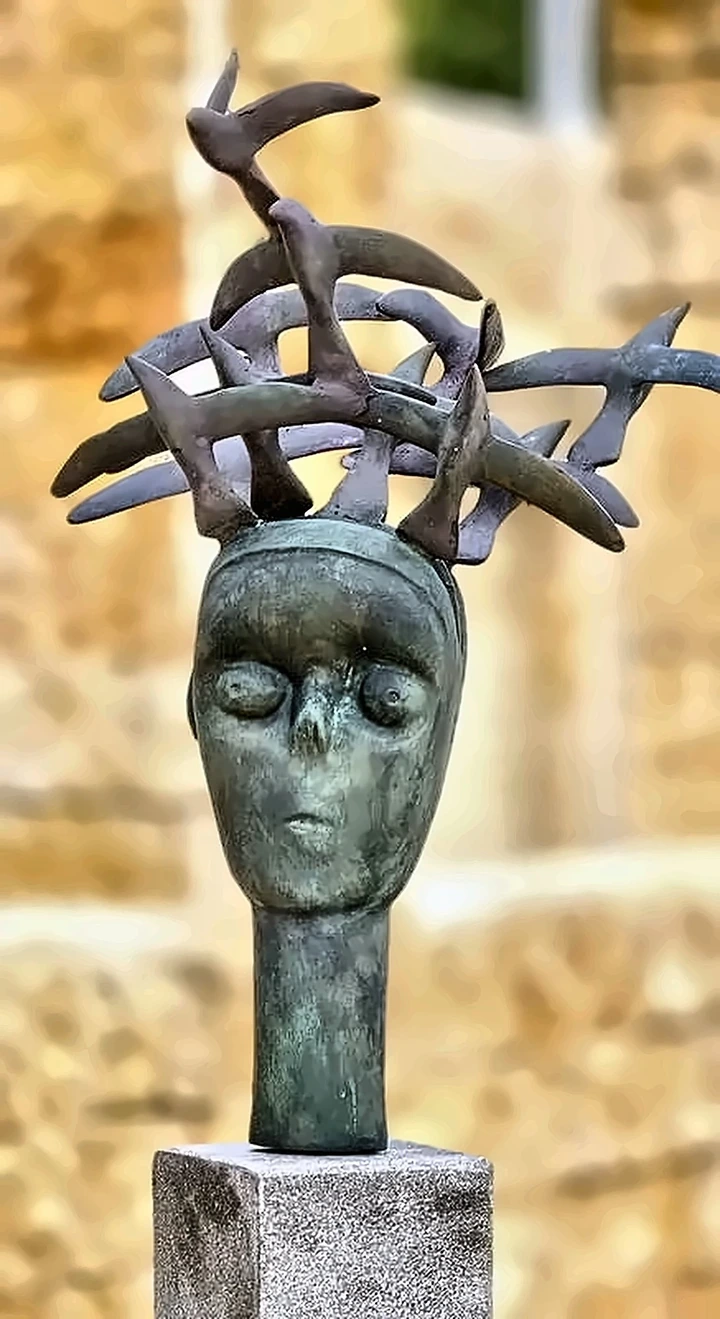
The die, up close.
Select any photograph to see it in full and open the original file.
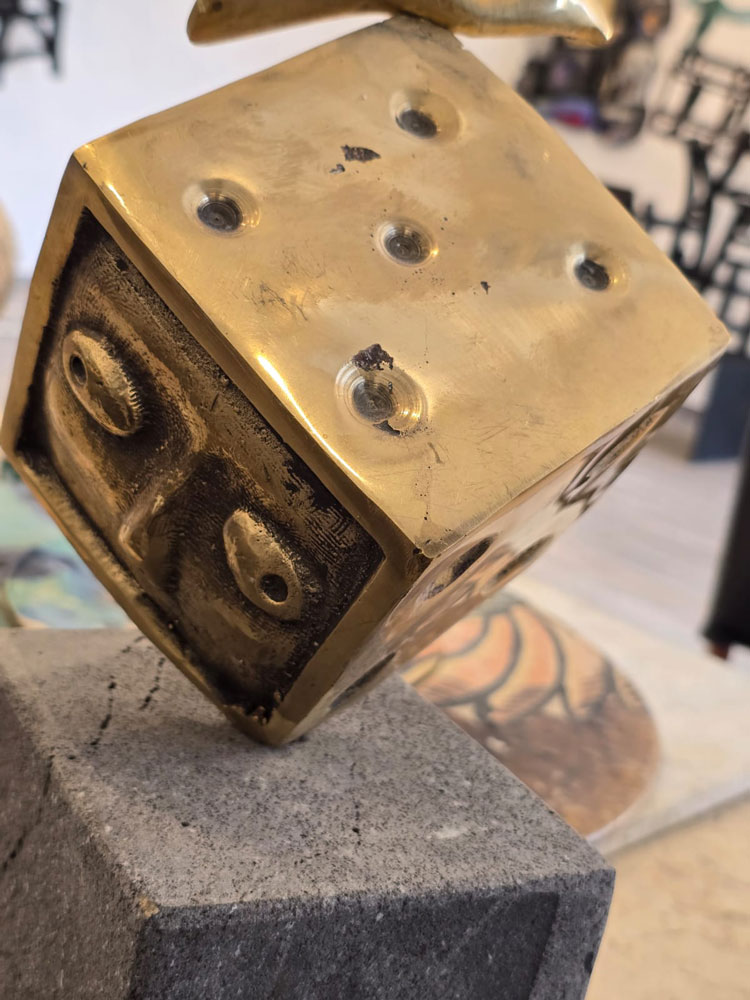
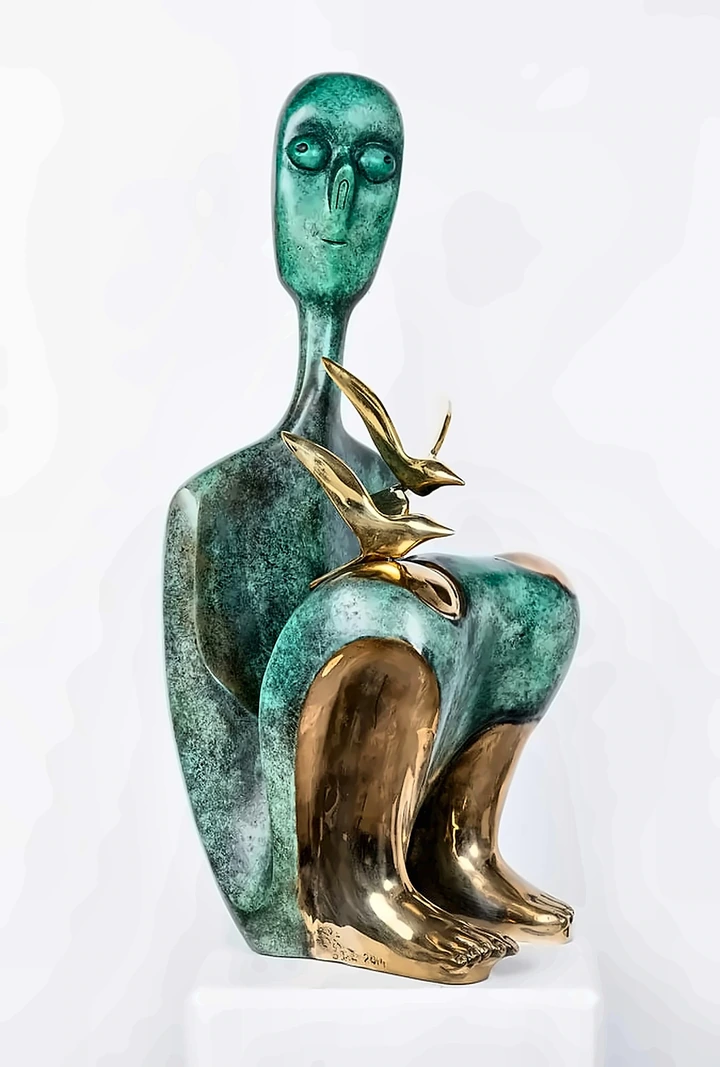
Not all of it is rough. Some of it he takes to a mirror.
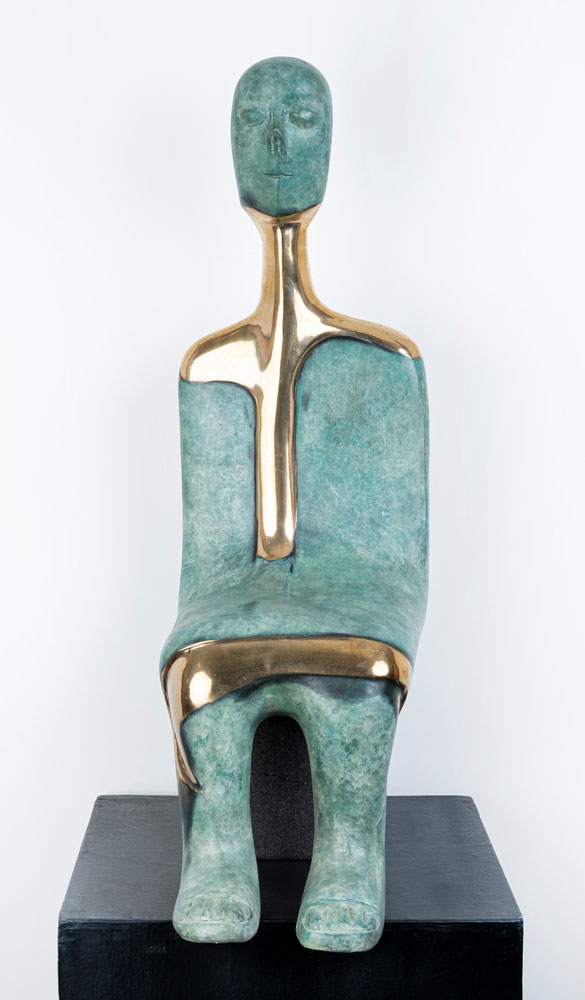
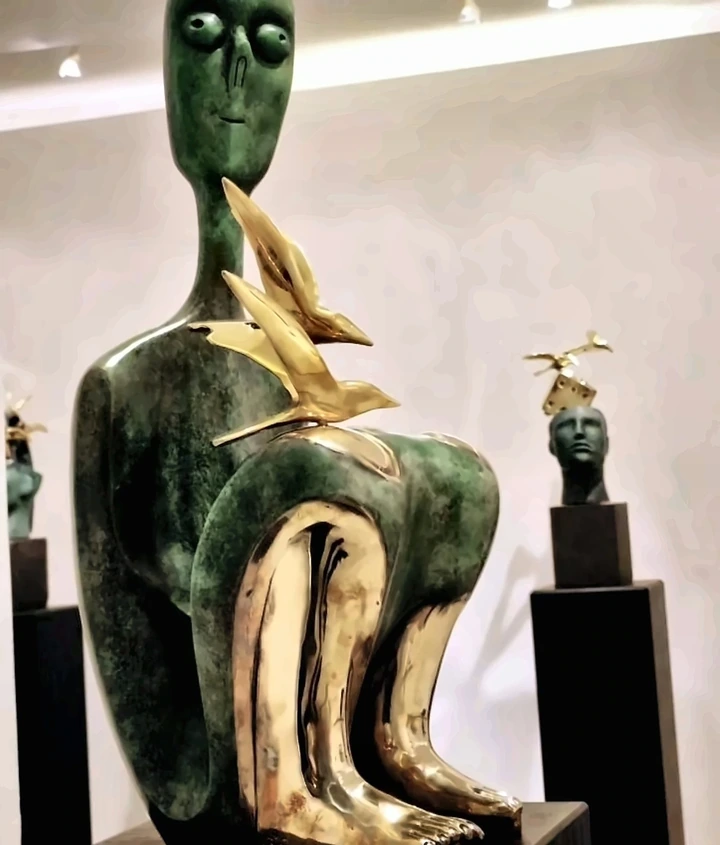
Green patina held against raw polished bronze on the same body — the feet, the shins, the birds burnished until they throw light back, everything else left matte. The two finishes do the work that colour does elsewhere.
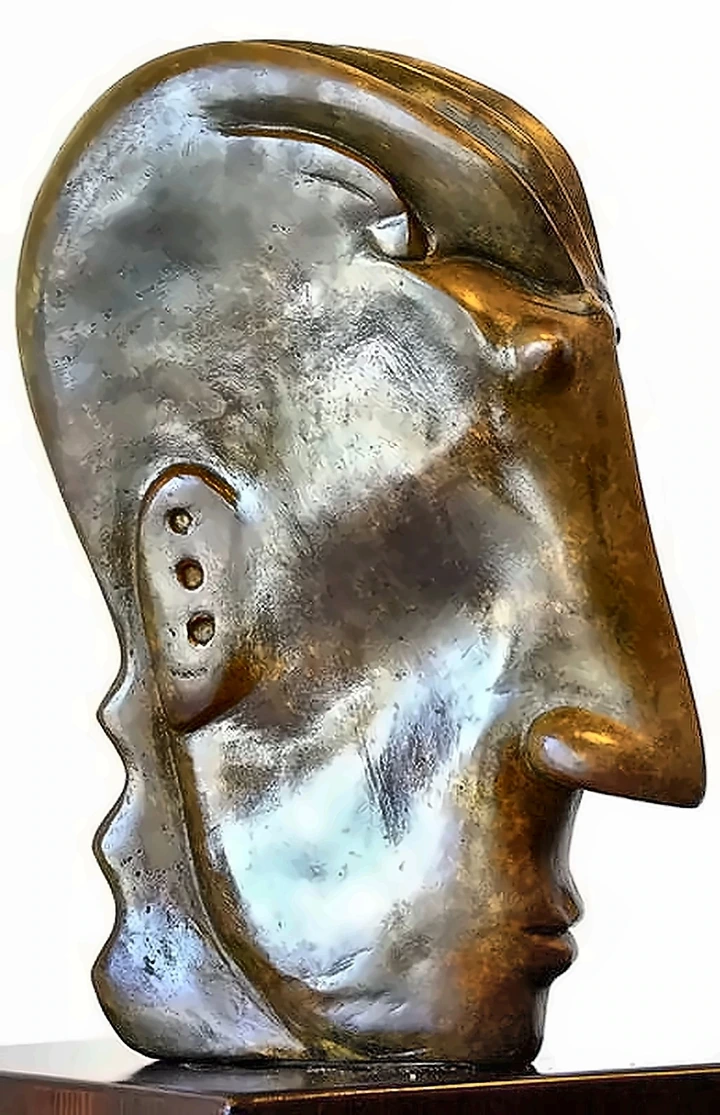
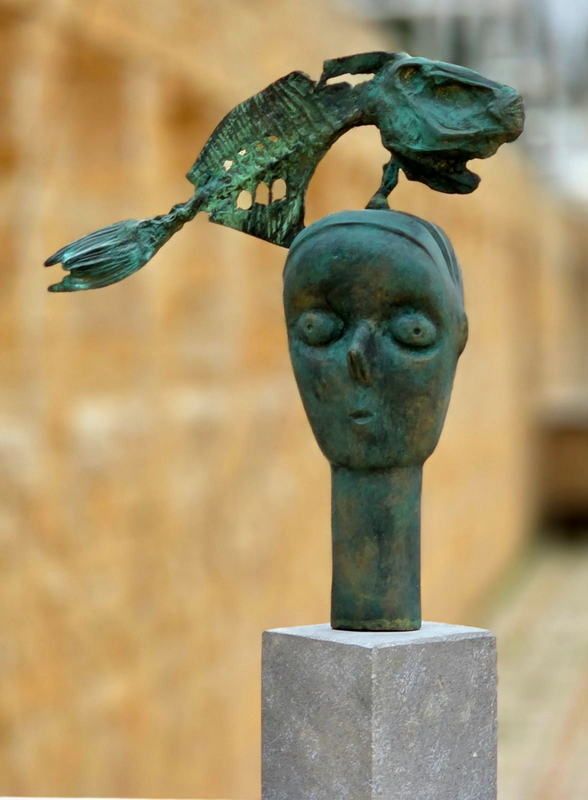
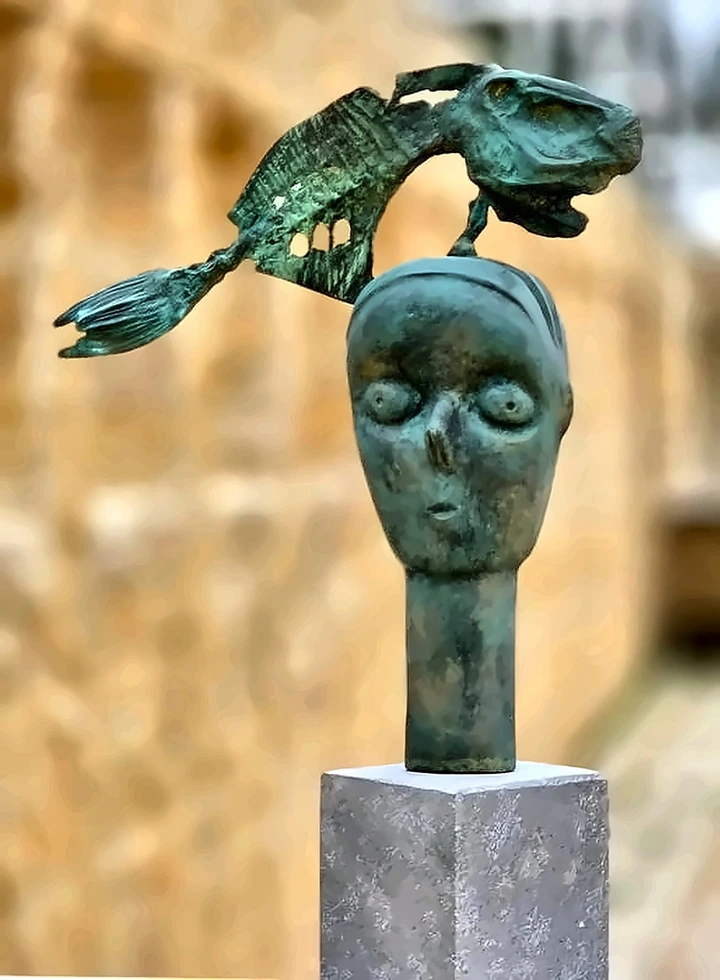
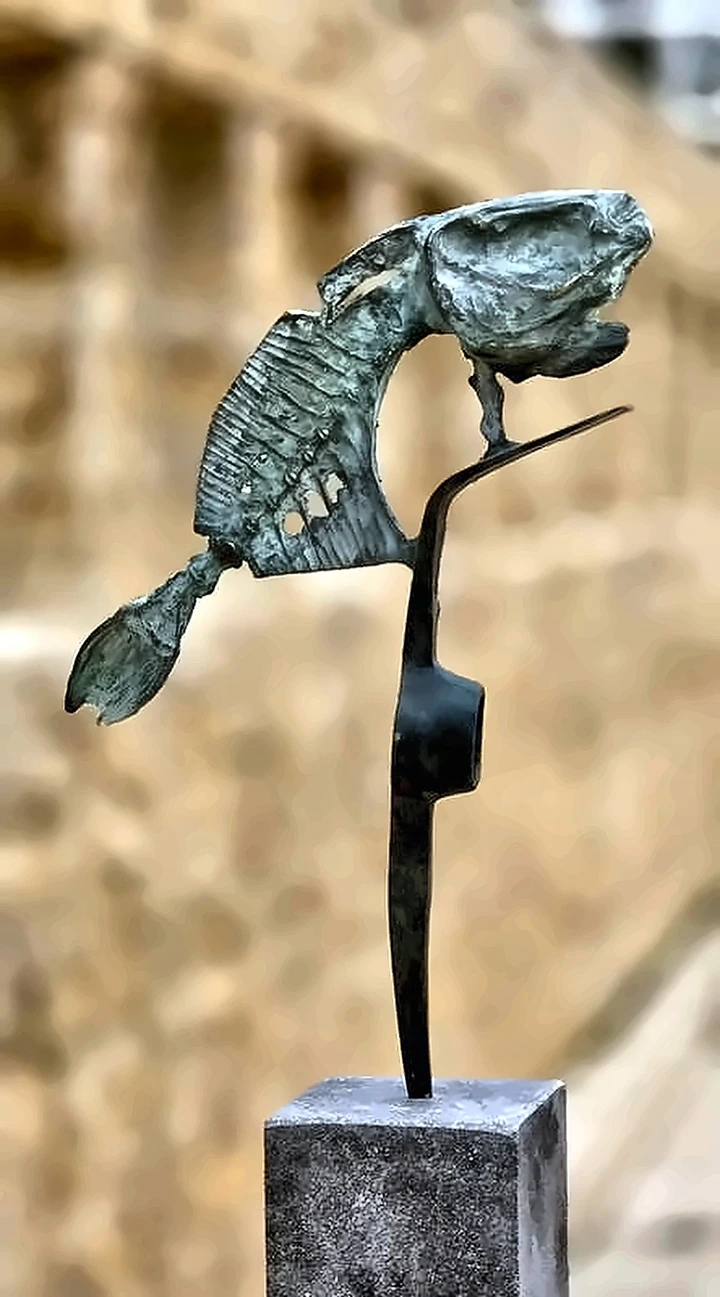
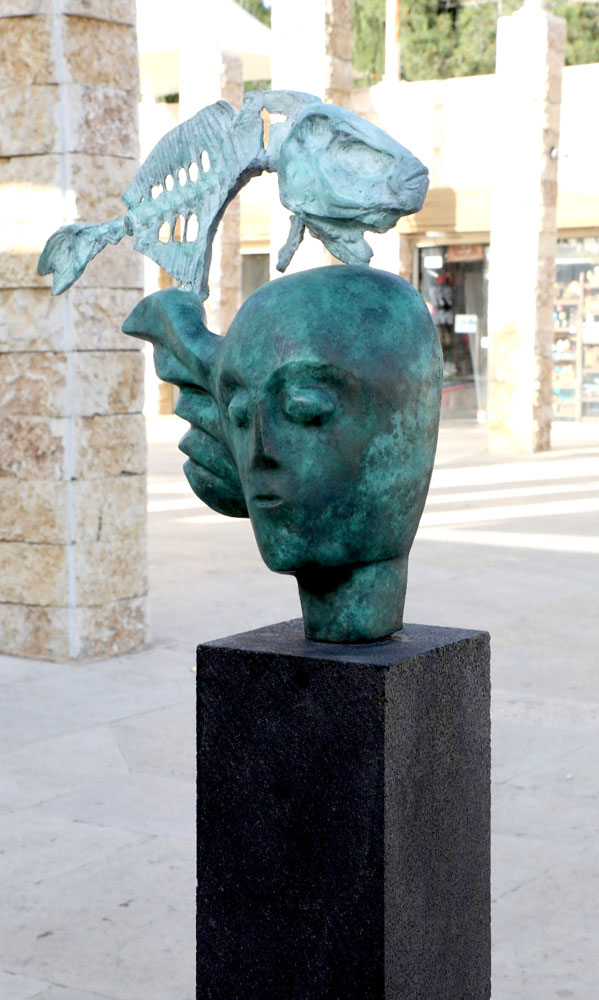
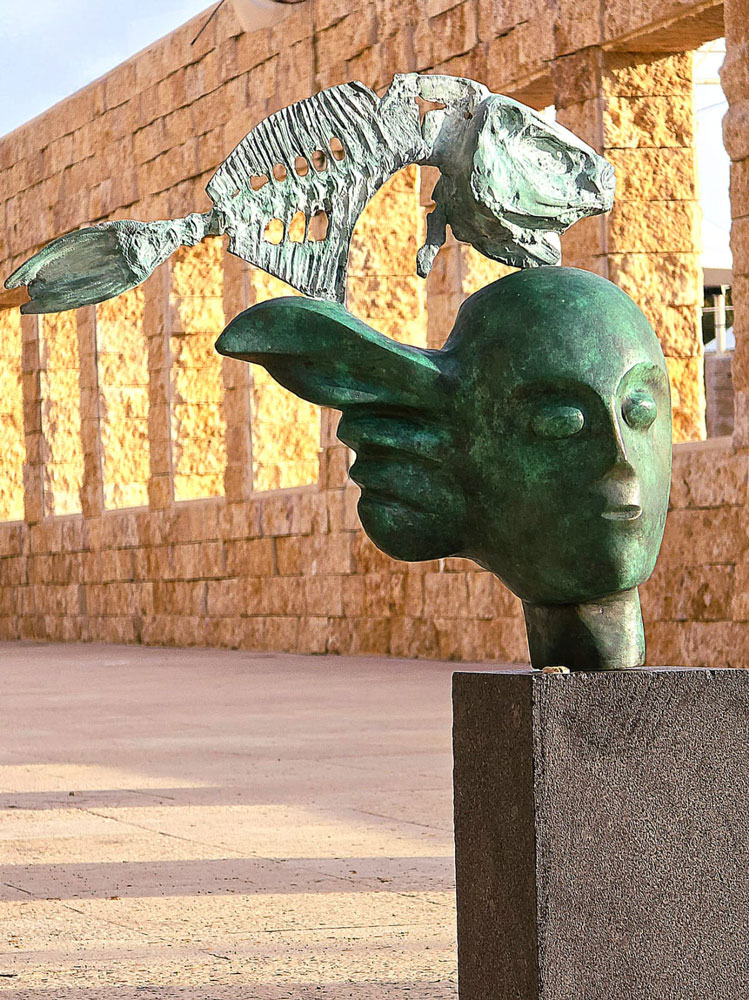
The head is solid. What grows out of it is cut almost to nothing.
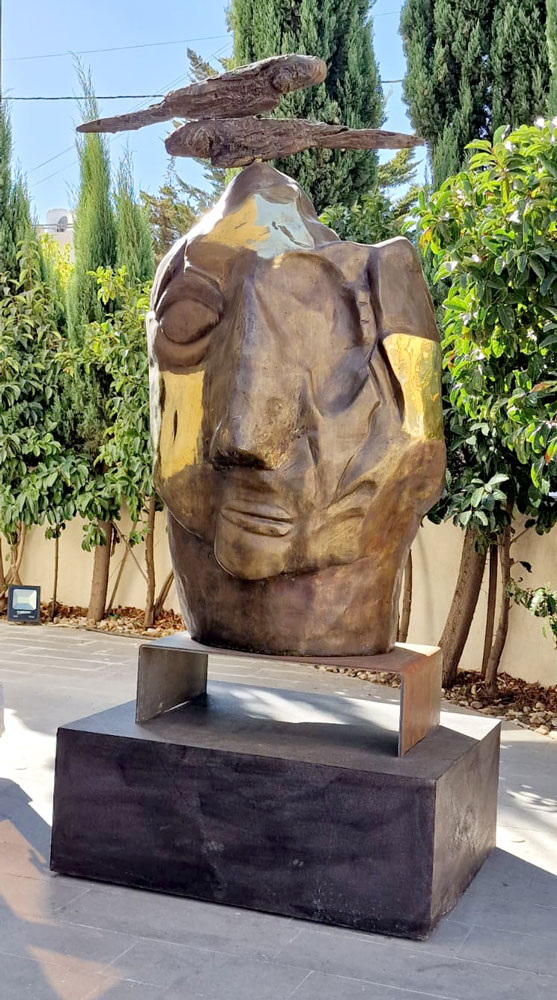
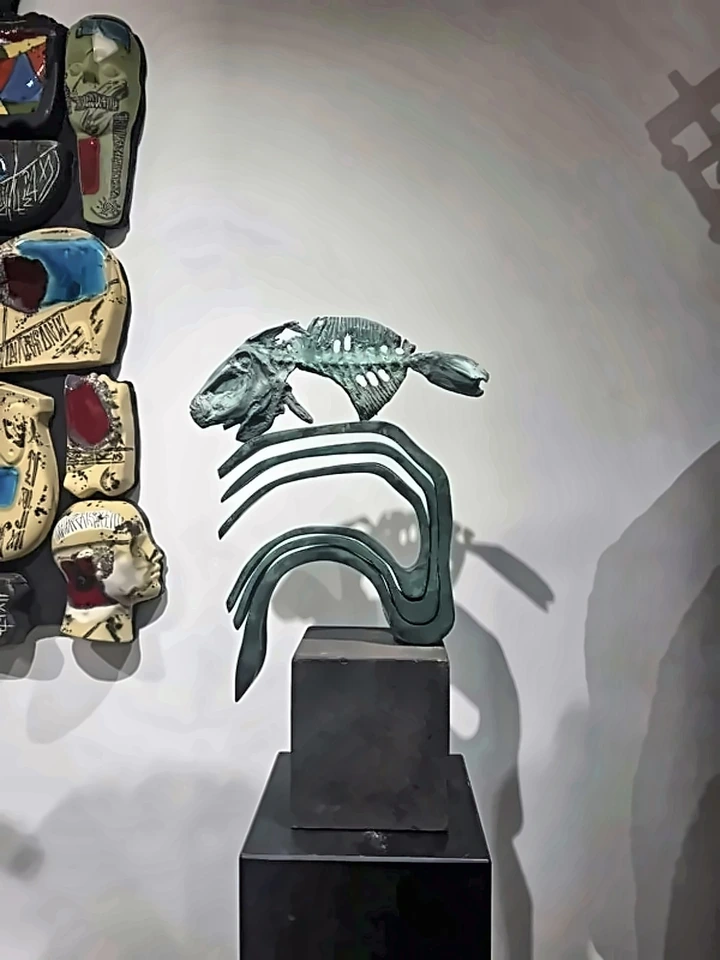
A face closed and smooth as a river stone, and above it a shoal of fish pierced right through, thin as a fin. The two halves are cast in the same metal and finished so differently they read as different materials.
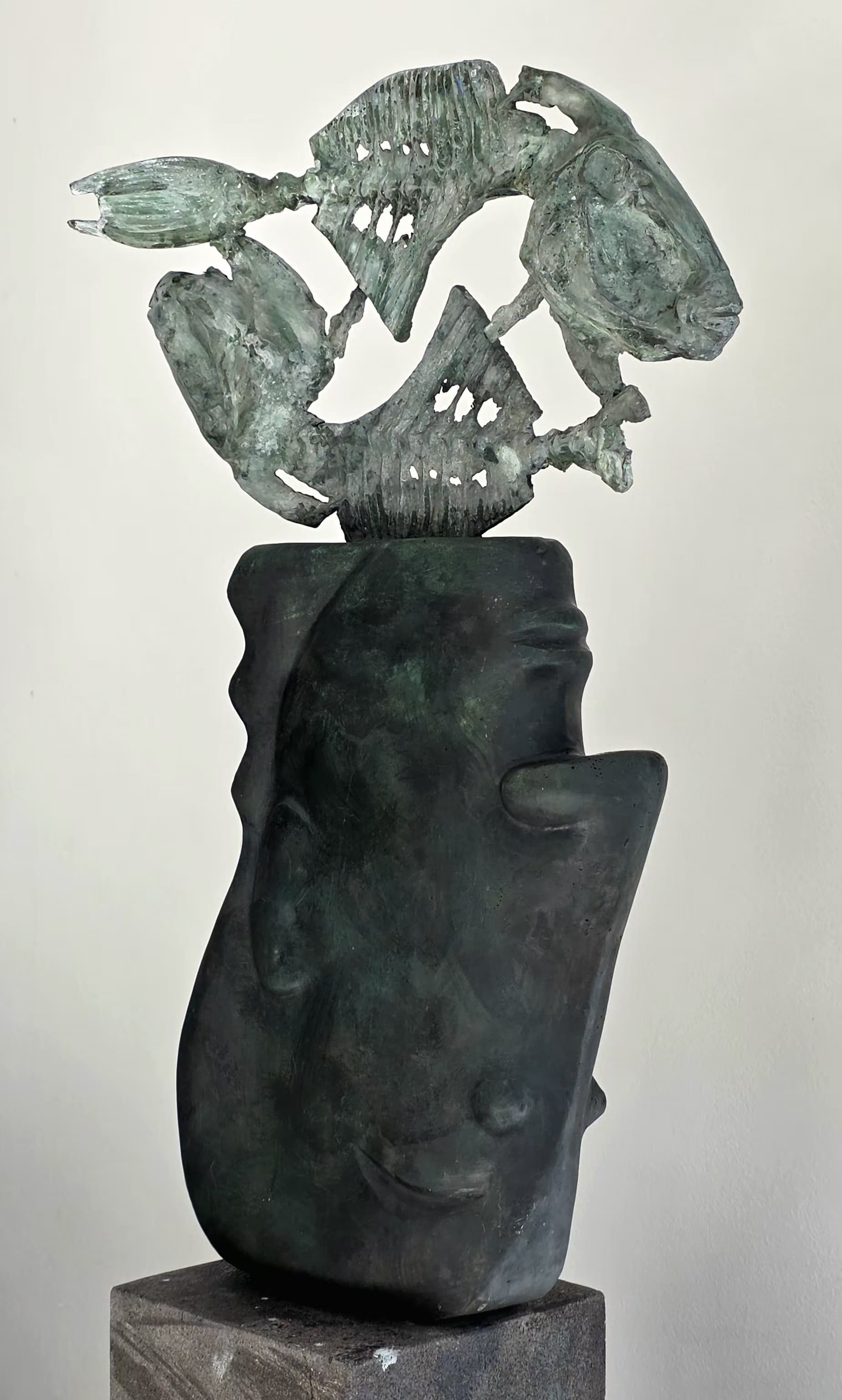
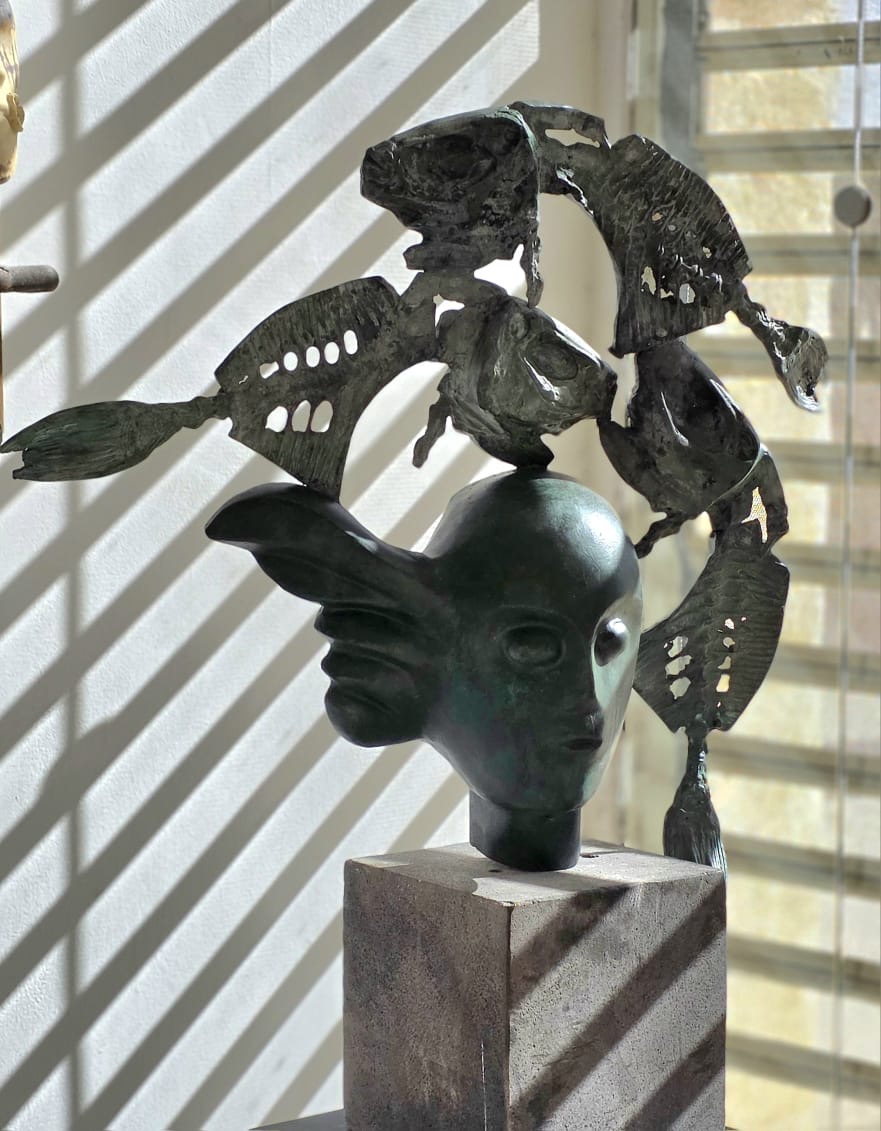
Another photograph of the head and fish.
.jpeg)
Heads and fish.
Different views of the head and fish, and an outdoor photograph of a large head topped by fish forms.
Select any photograph to see the full frame and open the original file.
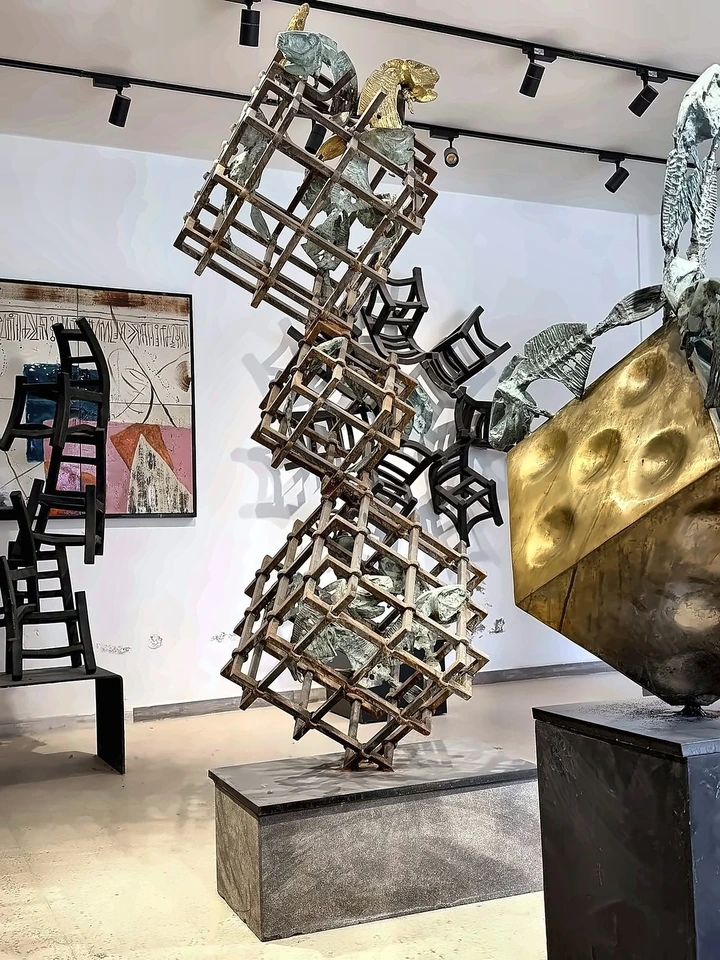
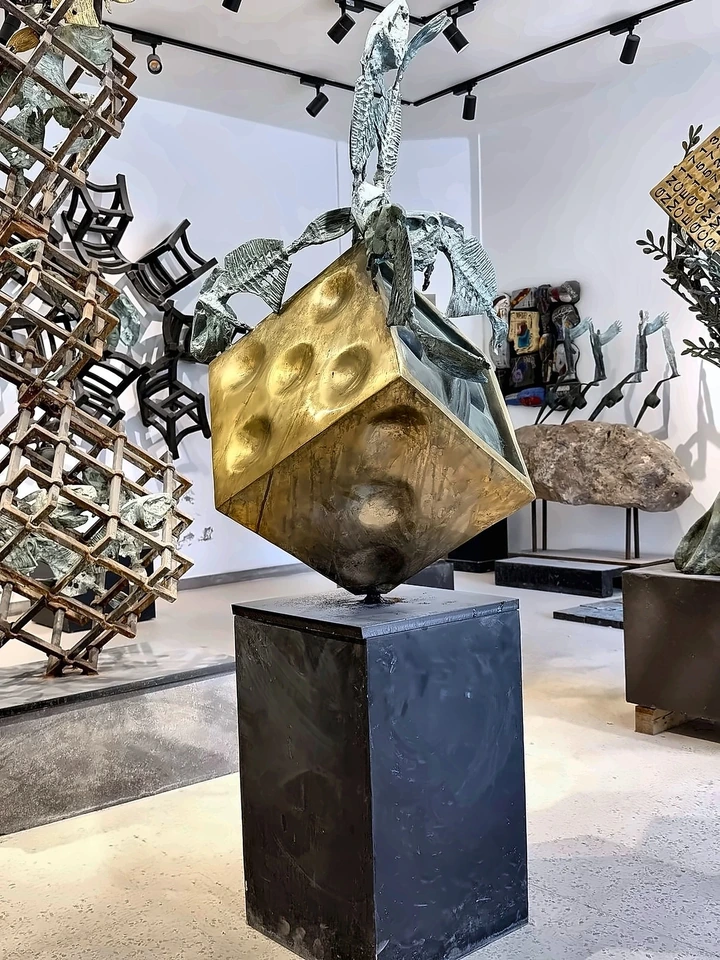
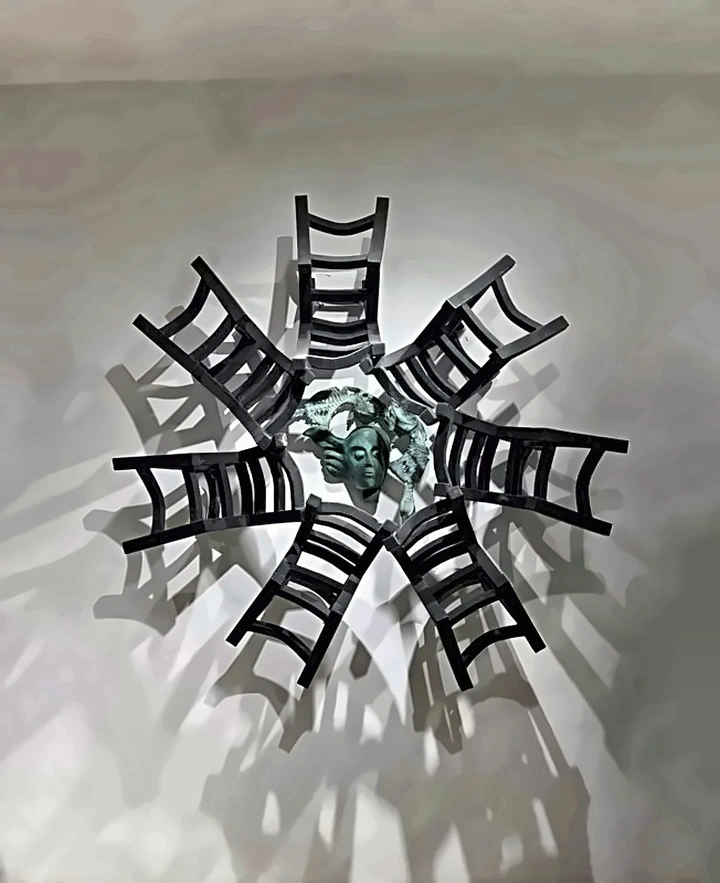
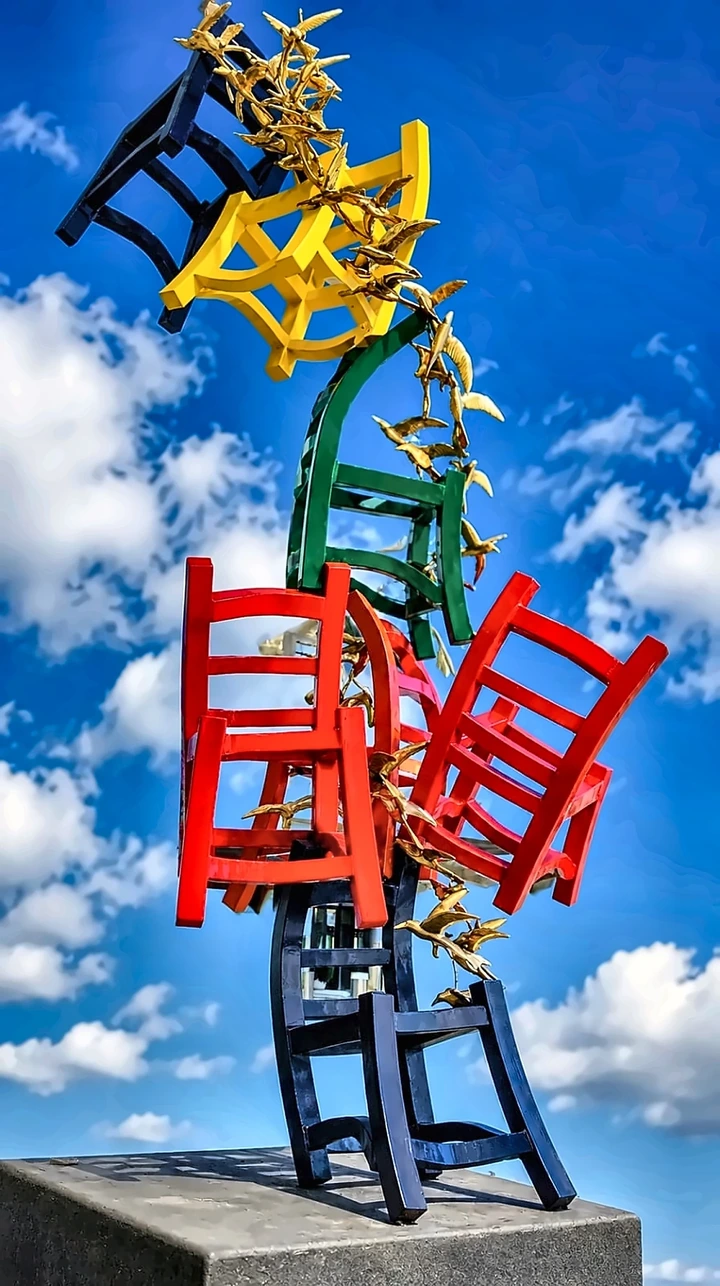
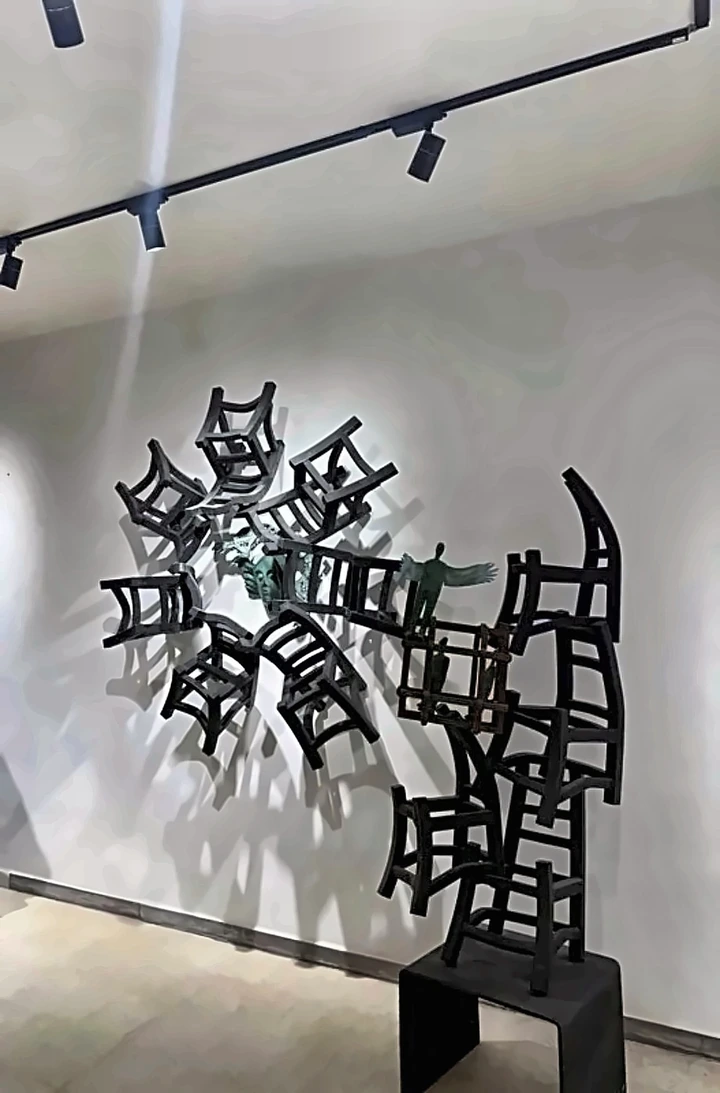
Chairs stopped in mid-fall.
سكون متحرك. Nobody is sitting on them and nobody is going to. They come off the wall in a ring around a single bronze head, and the shadow they throw is half the work.
Then he built it three metres tall and painted it.
Six chairs in navy, red, green and yellow, welded into a column that leans as though it is going over, and the birds are coming through it in gold. The chairs are iron. The birds are bronze. It stands outdoors on a stone block with nothing behind it but sky.
Everything else in this room is patina and dark metal. This is the same argument in primary colour, at the height of a room.
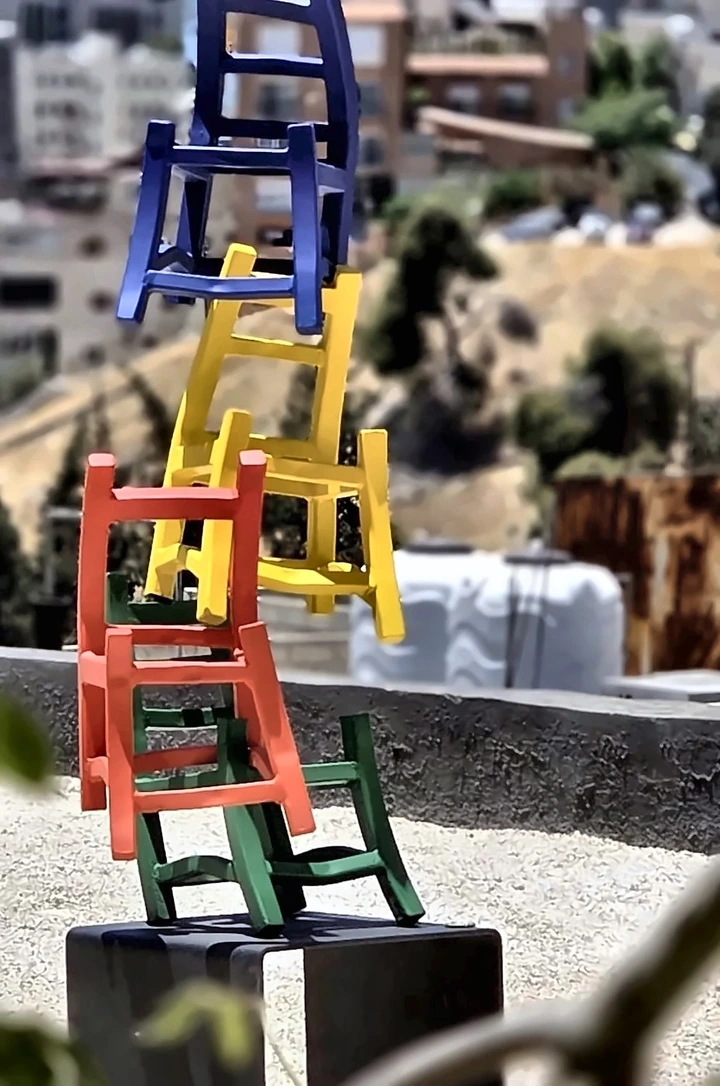
Chairs and figures.
Select any photograph to see it in full and open the original file.
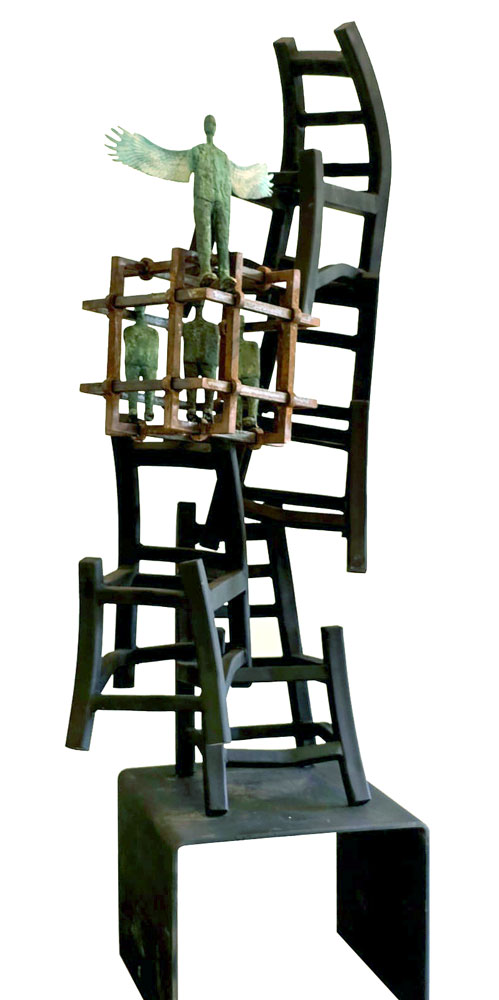
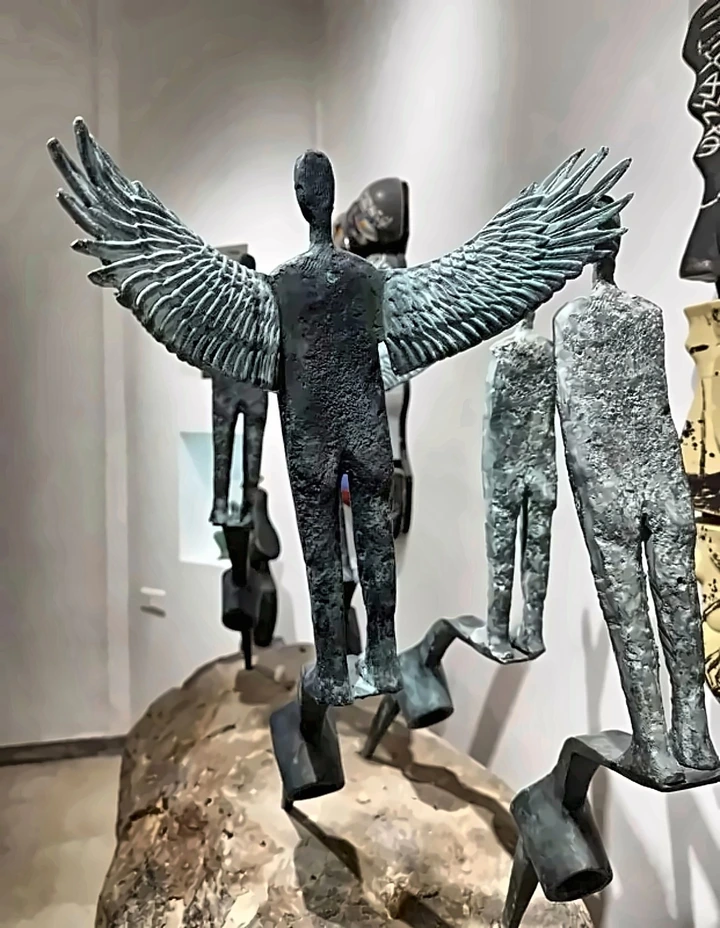
One of them has wings. The others do not.
Casting books from the foundry are being requested. Once they arrive, every bronze here will carry its edition size, cast date and foundry mark.
From the other side.
45 works, measured and sourced.
Recovered from his own published captions, not written here. Dimensions in centimetres as he gave them. Where a year or a title was never published it is absent rather than estimated.
and 27 more in the same room, all recovered with the same fields.
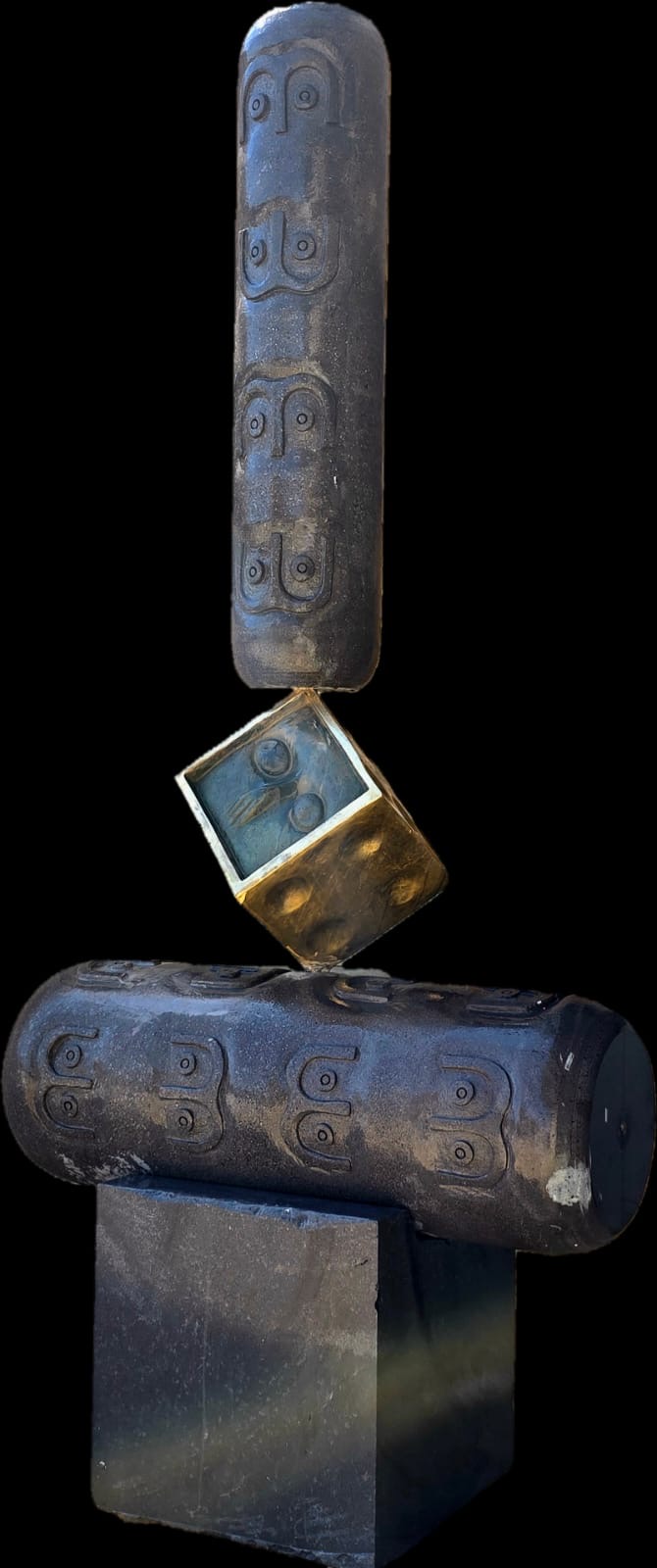
Ten views of one sculpture.
Nineteen additional archive views.