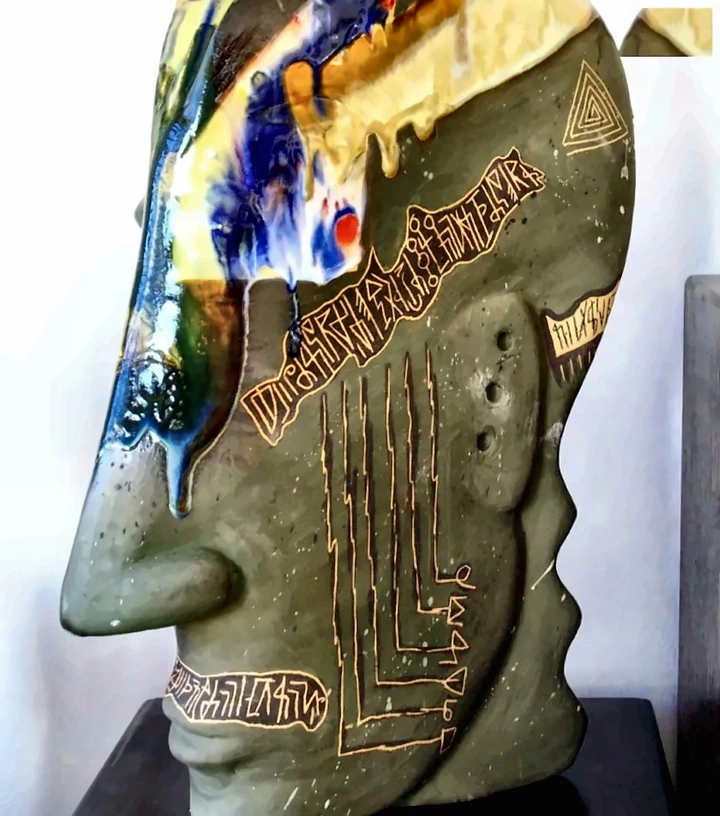
“I love the clay I make with my own hands — the clay of my own environment.”Interview, 2012
03 · The story
Again. And again.
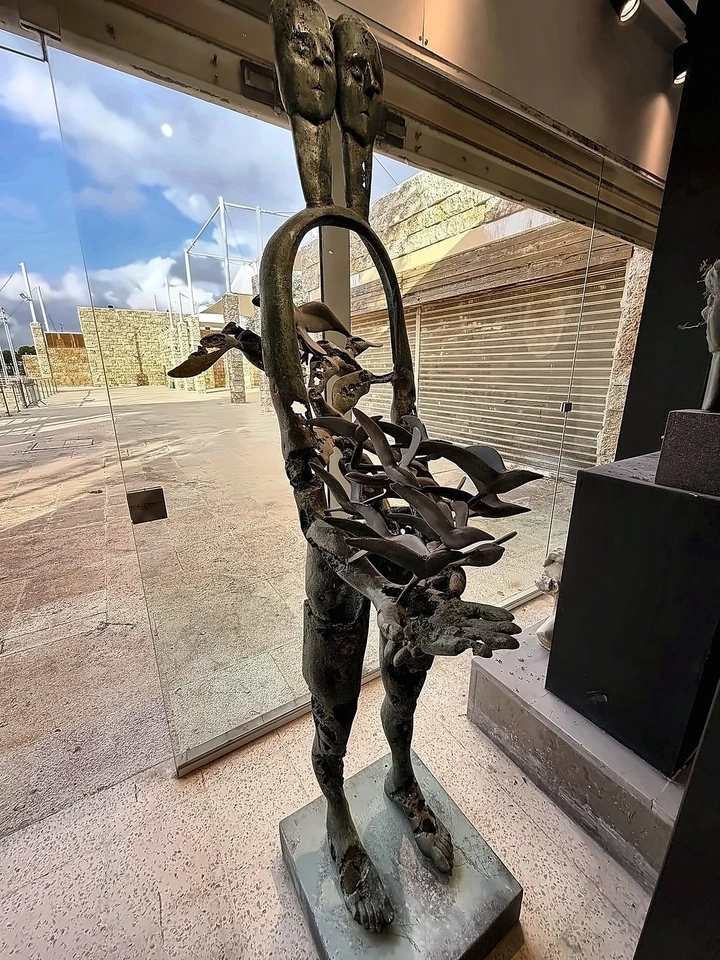
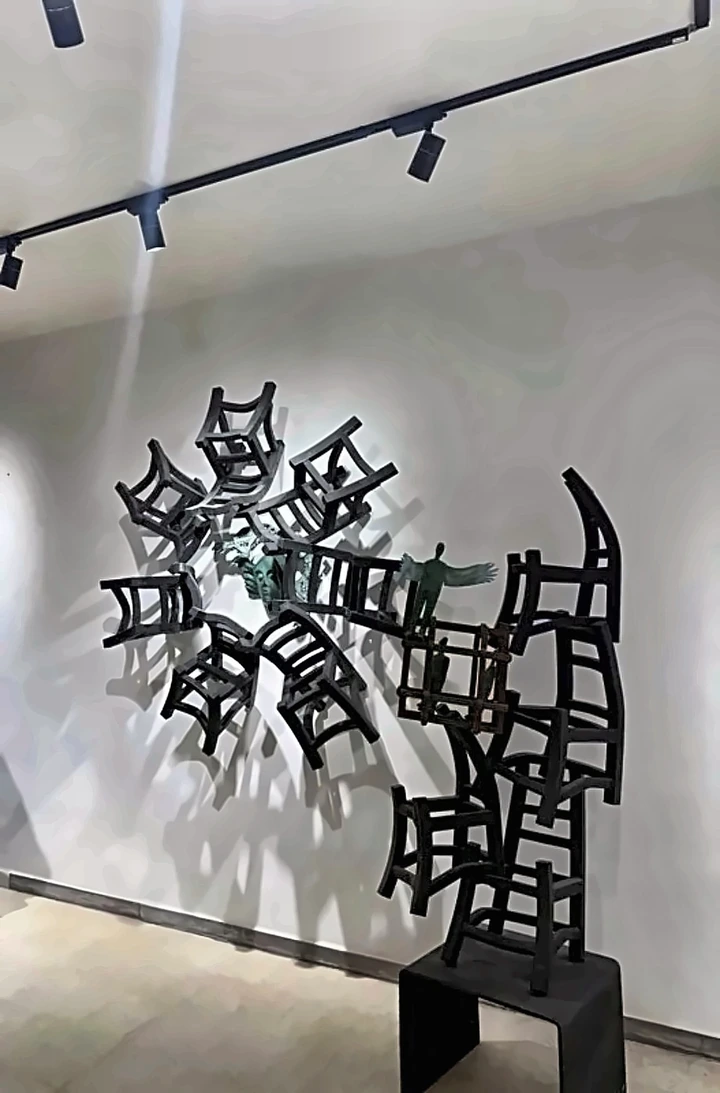
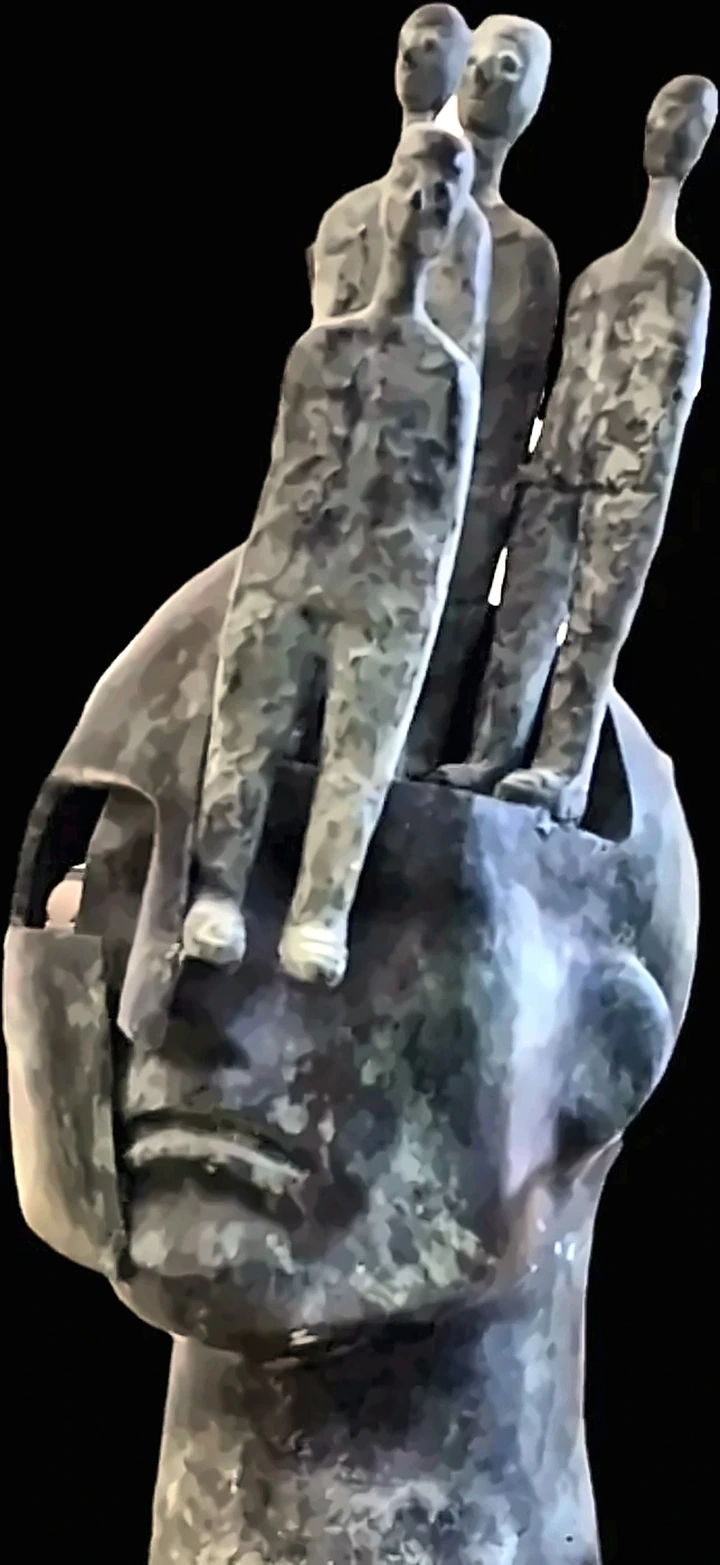
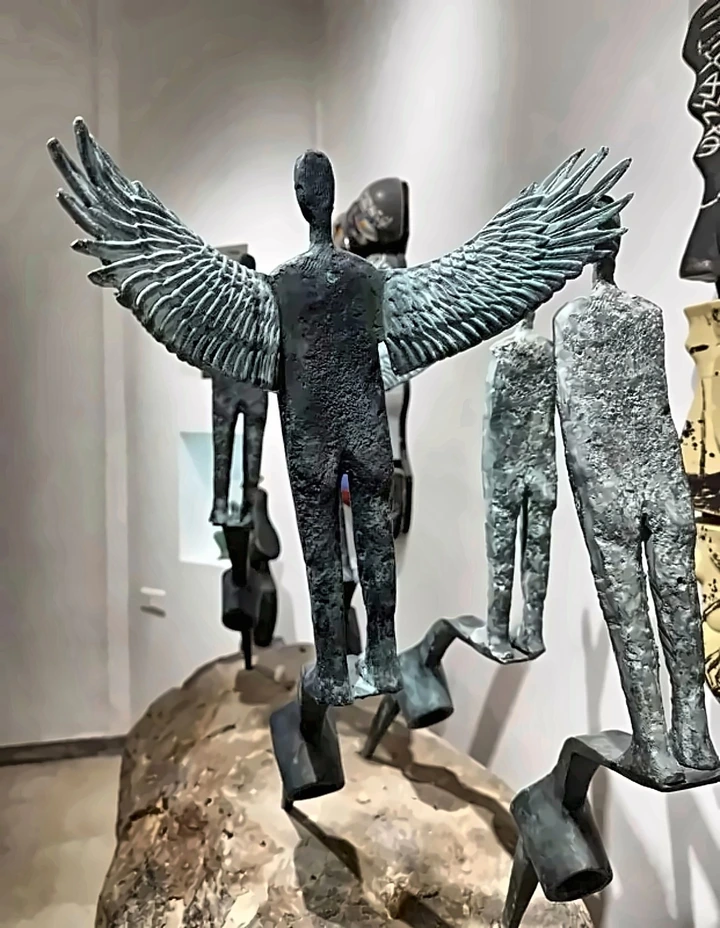

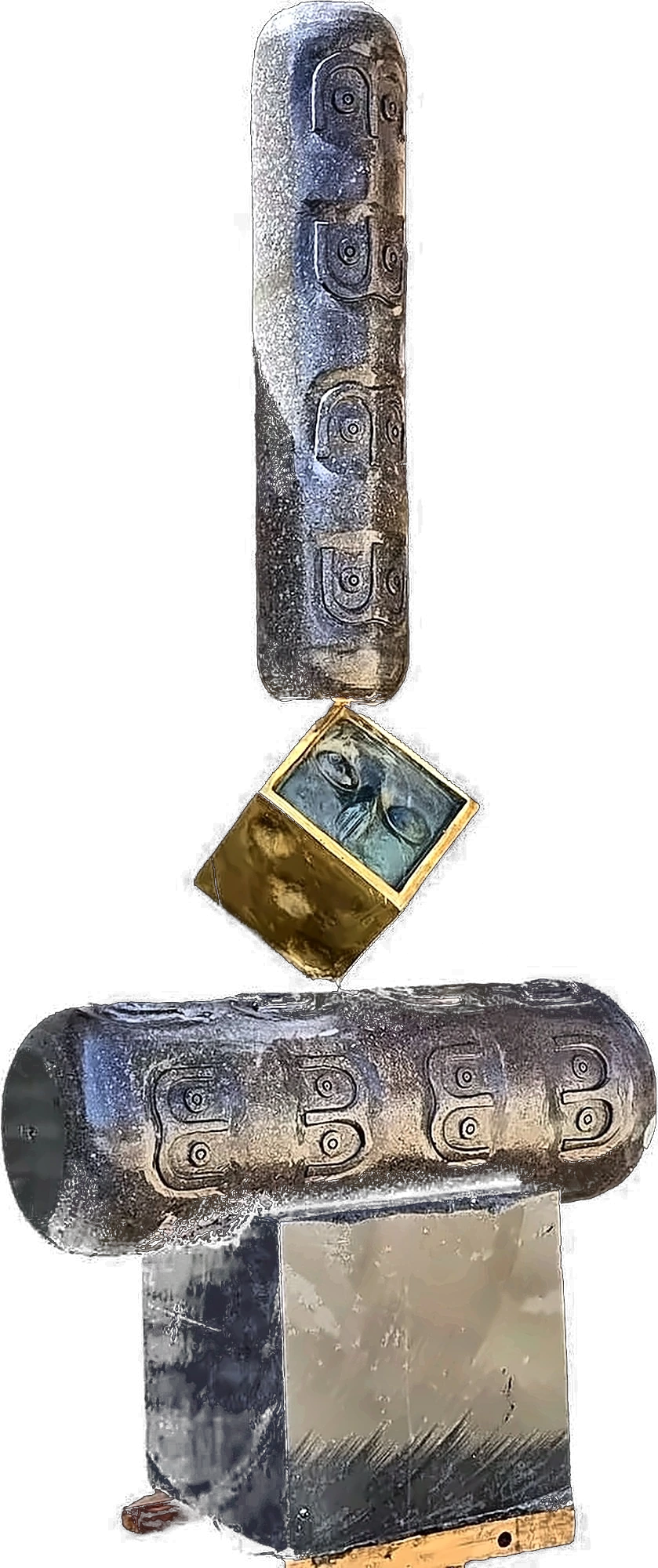
Stone. Weight. Balance. And what finds a way.
02 · The story
03 · The story
04 · Recognition
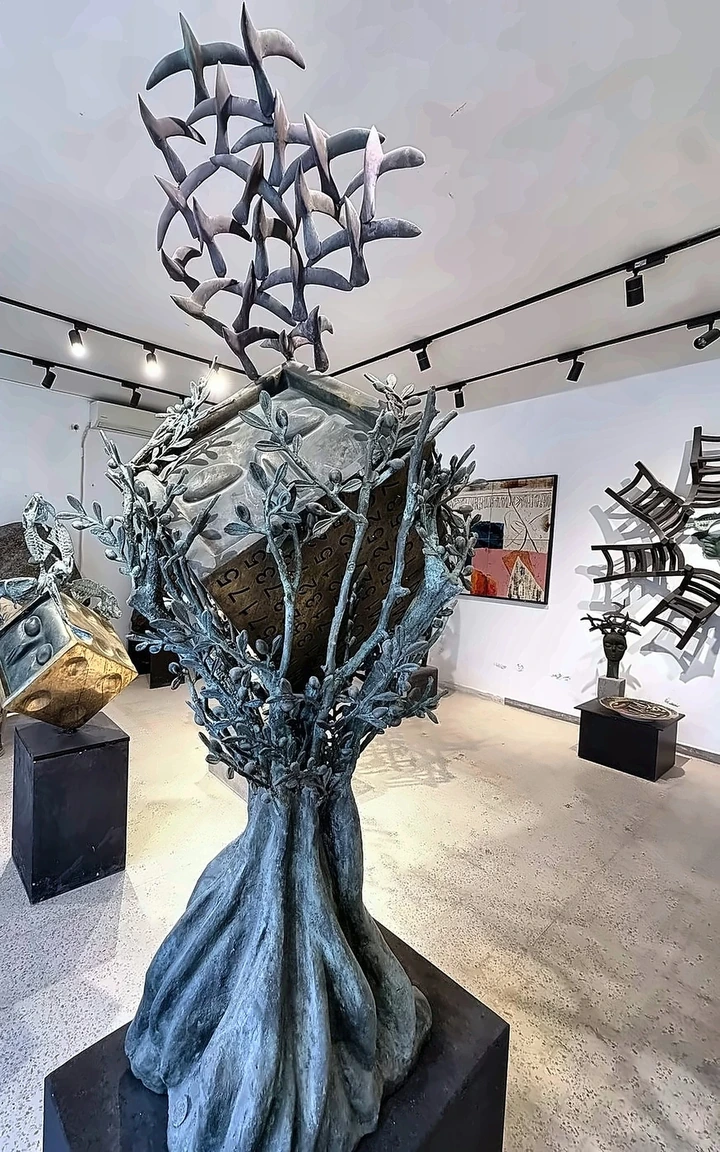
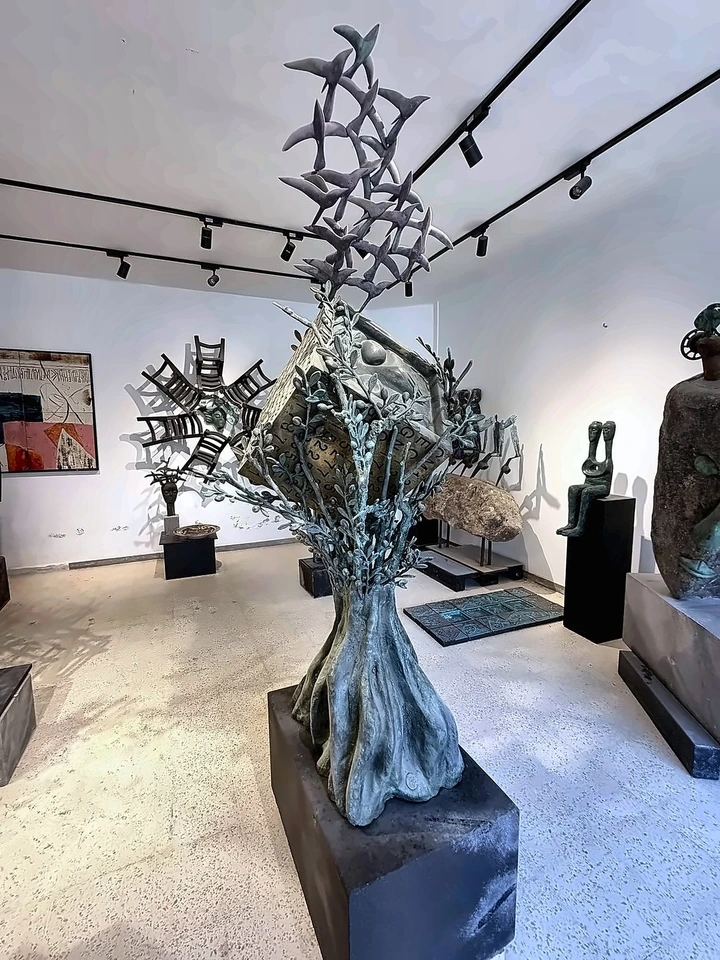
The tree lets them go. They come through the falling chairs. They rise off the head, off the boulder, off the wall.
Forty-three years of something heavy holding, and something light getting away from it.
06 · The record existed
For more than forty years, the record had been accumulating. For more than forty years, his work had been finding a place in other people’s lives. It was time to give that history a place of its own.
07 · Excavation
What it lacked was a place where it could finally be seen as a whole. Every invitation, caption, date and photograph becomes a layer. One verified record reveals another underneath.
08 · Baghdad, 1977–1982
The academy was a family, not a school. Nobody stopped him leaving the theatre hall for the sculpture workshop; they told him to keep going. He was still there when the war began. Five years, two teachers: Saad Shaker in clay, Ismail Fattah in sculpture. He says the second is still in the work.
“I went to Baghdad to study cinematography and turned into a sculptor. A strange accident — but it is the one that changed my life.”
Hazem Al-Zubi · voice note, 2026
Nobody has to claim the lineage. It is simply there.
09 · The line continues
The line doesn’t end here.

09b · Time
A steel chronograph, bought in the academy years, on his wrist from 1977 to this morning. He says the watch, time and the work are one thing.
“The watch, time and art — the three are bound to each other.”
Hazem Al-Zubi · voice note, 2026
10 · The ground
11 · Why Ain Ghazal matters
At Ain Ghazal, on the outskirts of Amman, people made some of the earliest known large-scale human statues: plaster shaped over bundles of reeds, eyes defined with bitumen, and bodies approaching human scale.
Why were they made? Their precise purpose remains unresolved. Ritual and social readings exist, but none closes the question.
Nearly nine thousand years later, the question is still alive.
Hazem Al-Zubi · the answer
As Hazem was beginning his career in the early 1980s, the faces of Ain Ghazal were returning to light near Amman. He sees them as evidence of the beginnings of human settlement and of imagination moving toward embodiment and invention. For more than four decades, he has answered their presence in clay, limestone, basalt and bronze.
Not copying. Answering.
Enter the full Ain Ghazal chapter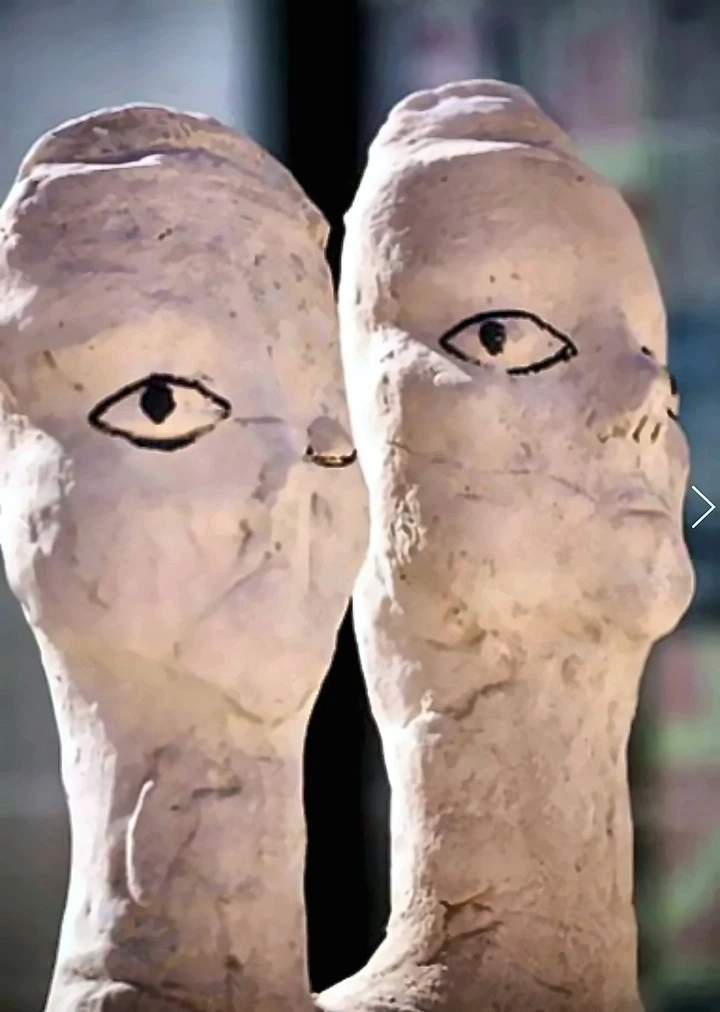
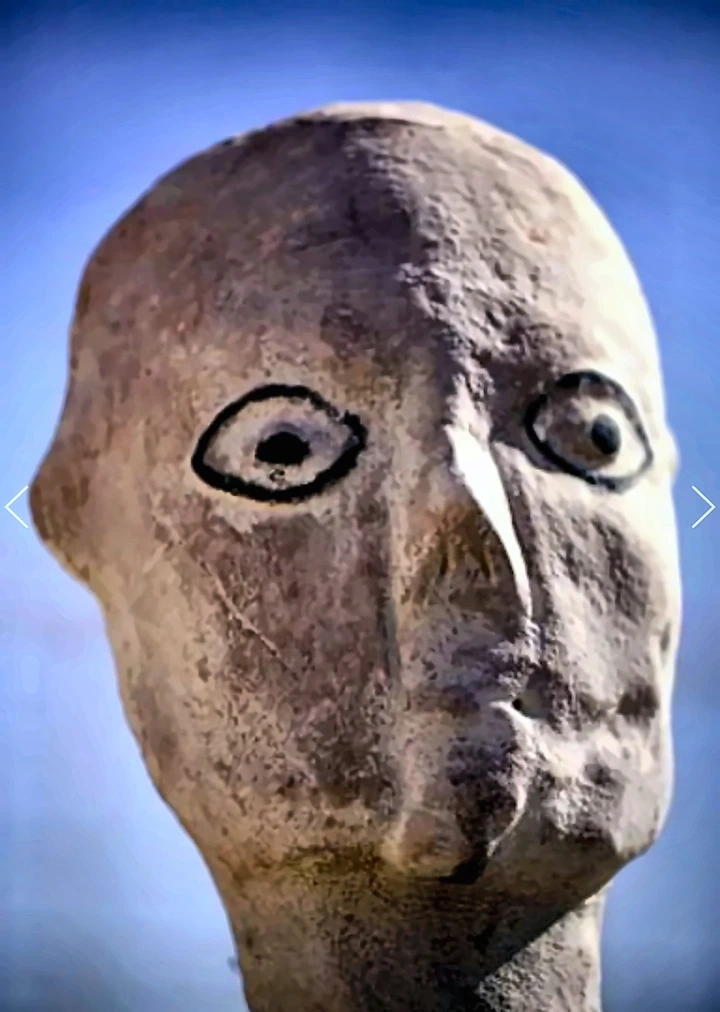
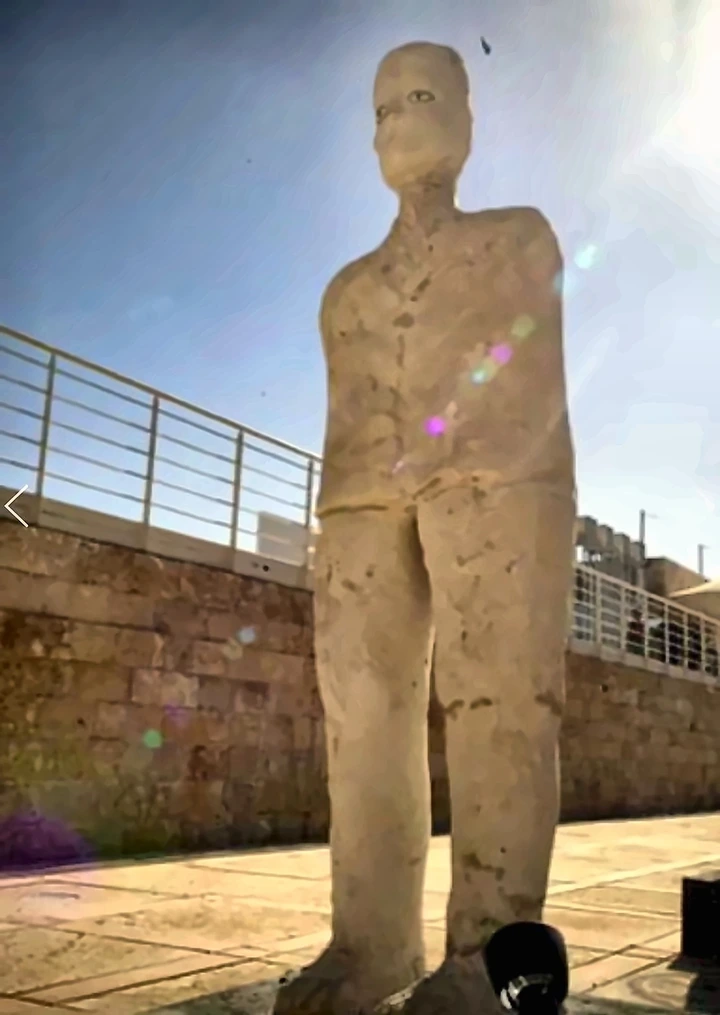
Hazem Al-Zubi · the answer, in bronze
He gave the work the site’s name. The body is an open frame; where a face would be, two heads hang side by side, pierced through. Bronze, 180 centimetres tall, cast in 2019 — thirty-six years after the plaster figures came out of the ground half an hour from his studio.
Read the Ain Ghazal chapter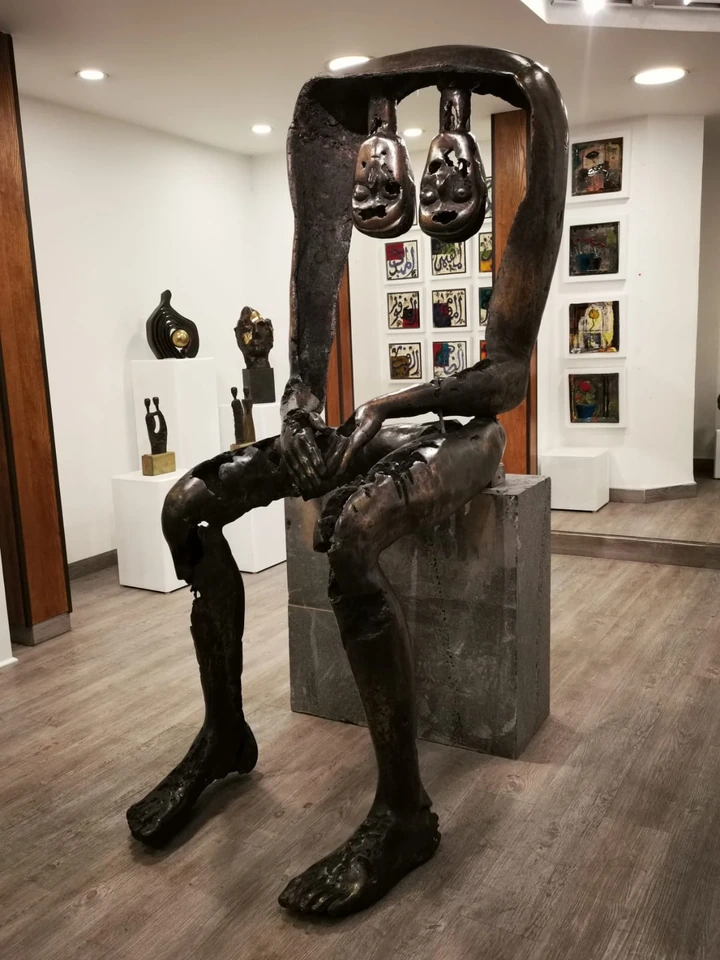
12 · His clay / his words
“I love the clay I make with my own hands — the clay of my own environment.”Interview, 2012
“From the clay of water and earth I open a window onto life, and onto the birds of absence.”Amman, 2016
13 · Materials / colour rupture
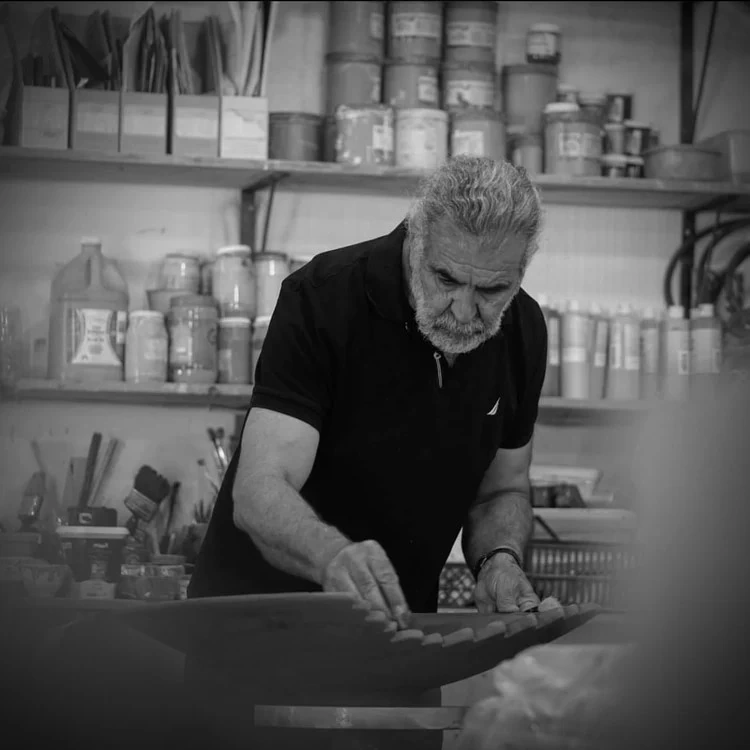
Worked by hand, from ground he digs himself.
Limestone and basalt, cut away until a face is left.
Poured. The one material that outlasts everybody.
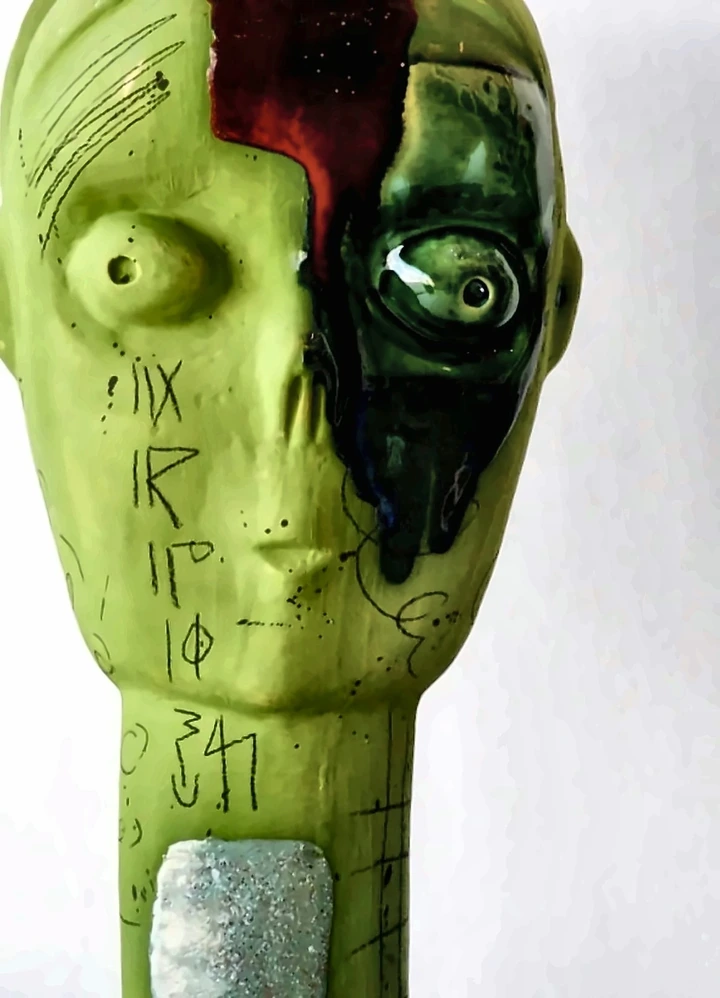
13 · Materials / colour rupture
And then there is this.
14 · Reveal
سكون متحرك
The site moves around the still work. The chairs never fall.
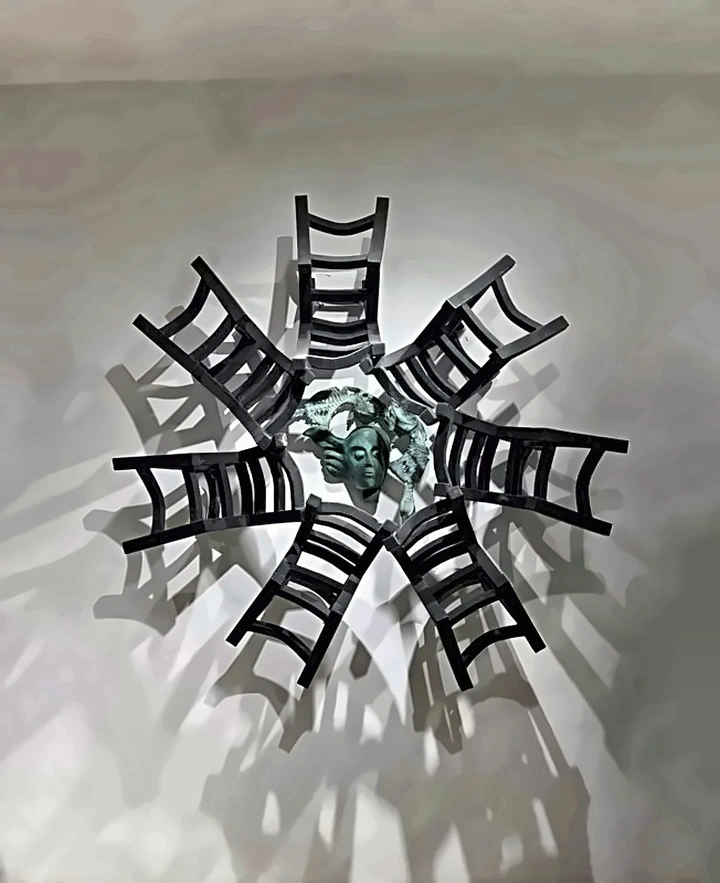
15 · The impossible moment
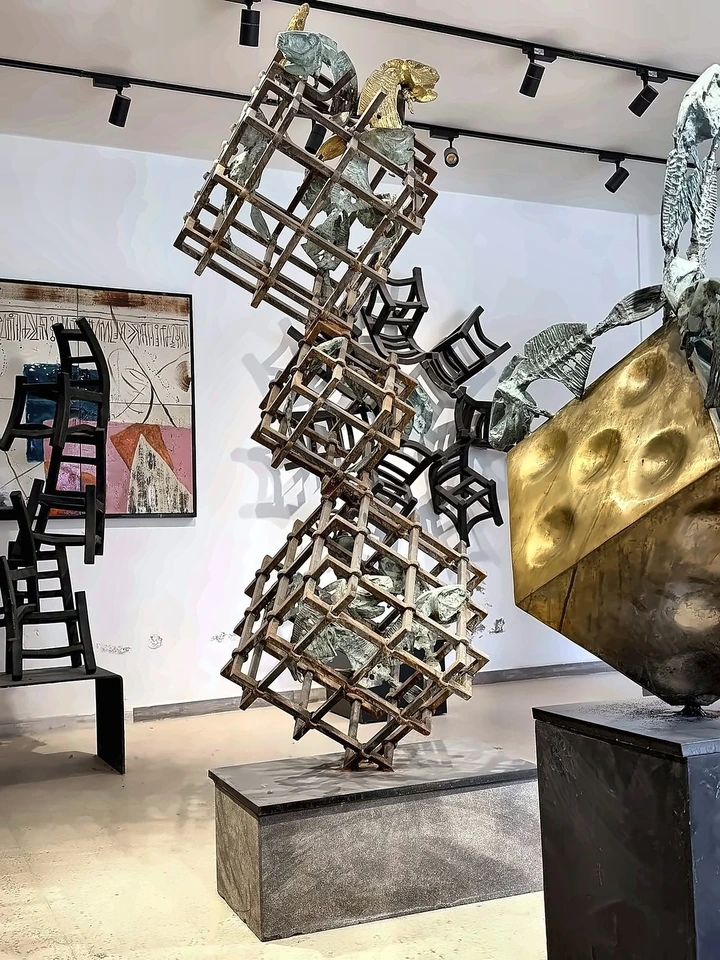
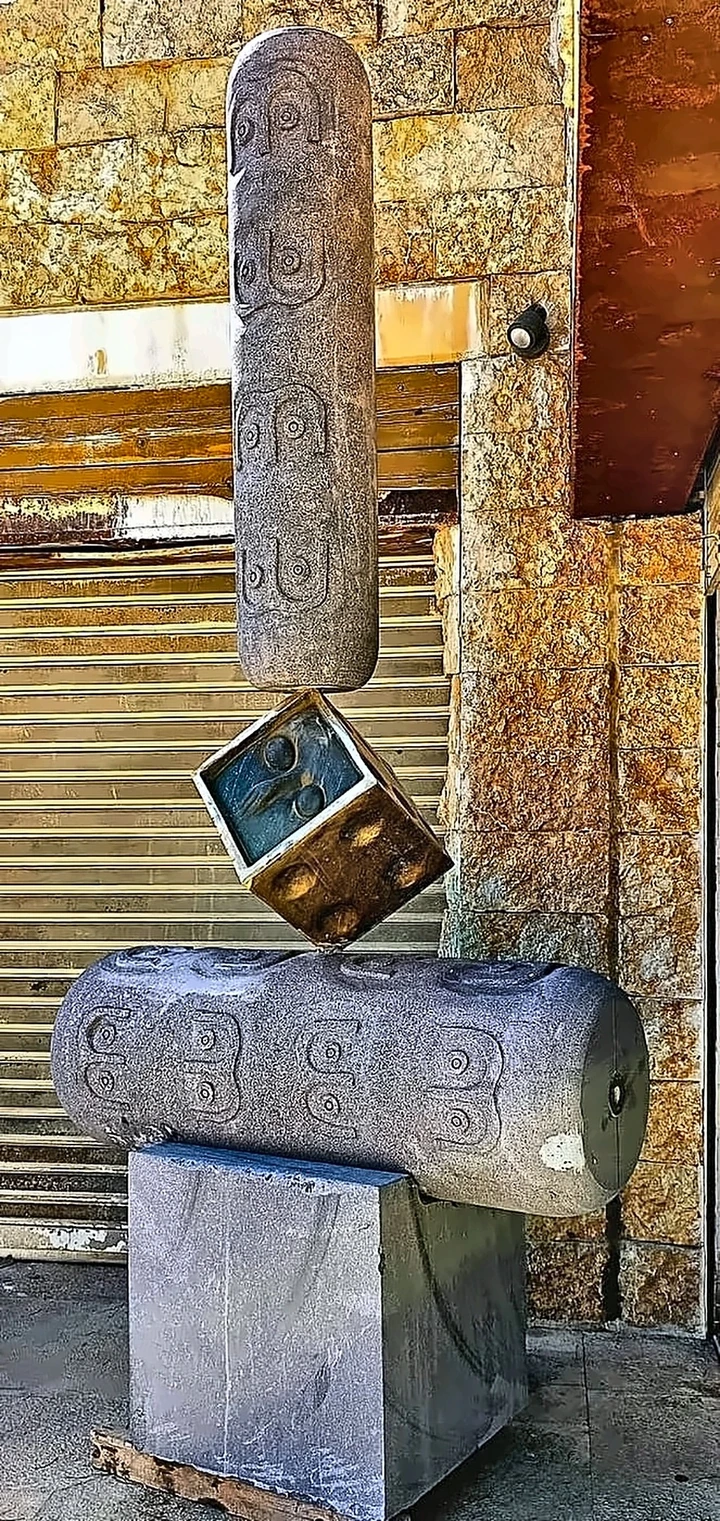
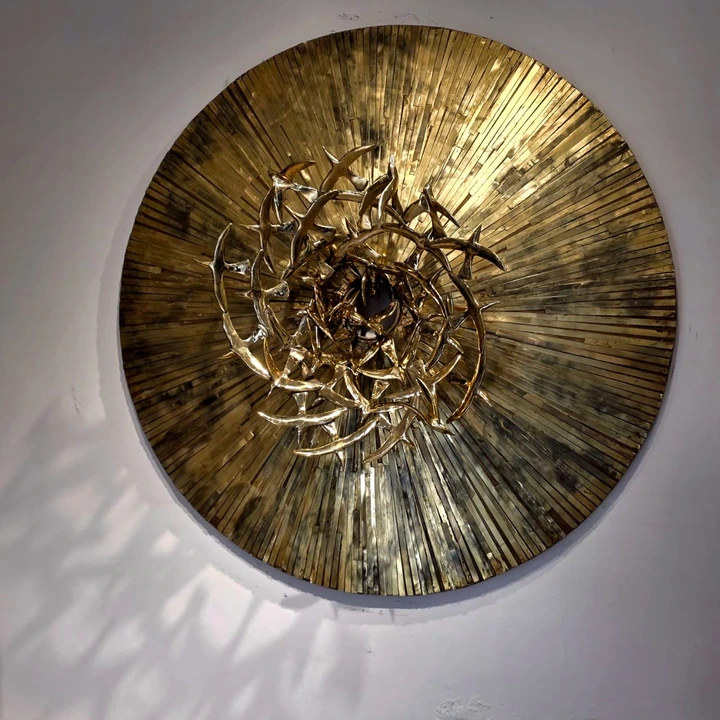
16 · The turn
In every one of them, the birds are leaving.
Here they are going in.
Hundreds of brass strips laid down like rays, darkening as they run out to the rim. And the birds turning inward, tightening, until they disappear into a hole at the middle of it. He has never done this anywhere else.
17 · Quiet release
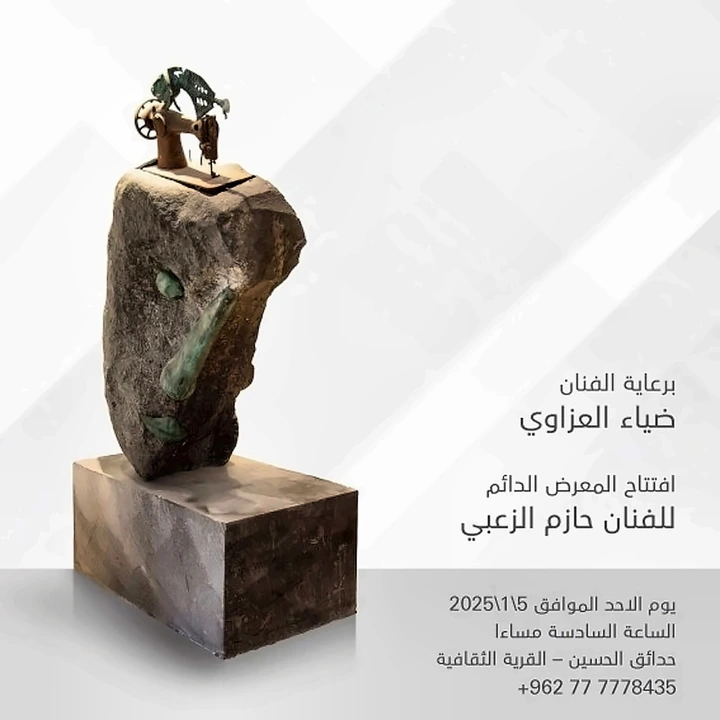
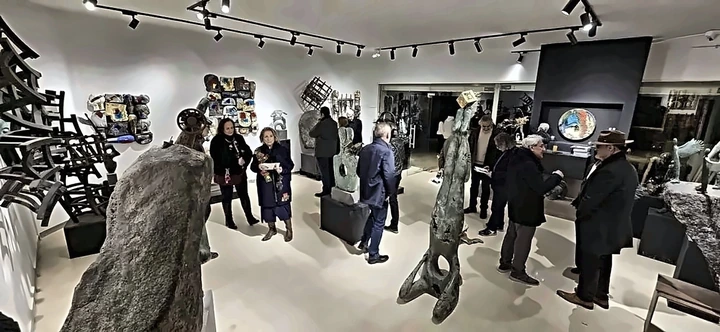
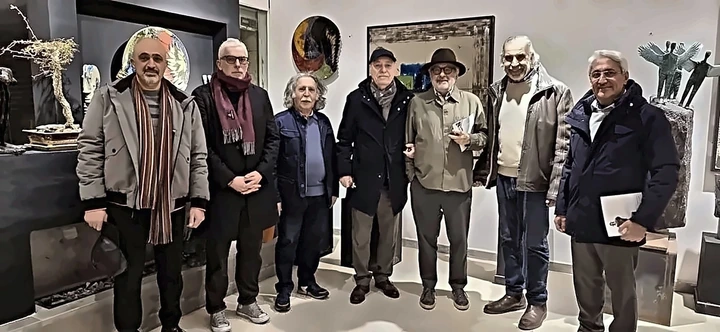
18 · The hall · 5 January 2025
برعاية الفنان ضياء العزاوي
Under the patronage of the artist Dia al-Azzawi. It is the second permanent hall dedicated to Al-Zubi in one city.
19 · The work
Flagship works appear at emotional scale before the catalogue becomes efficient. Every published record remains tied to material, dimensions, year and source status.
20 · The record
Every record is checked against an invitation, a museum accession or his own caption before it goes up. What is here is the beginning of it. Missing facts remain “Not yet confirmed” rather than becoming guesses.
21 · In his words
“I love the clay I make with my own hands — the clay of my own environment.”
“The ego is a human invention.”
“The artist is not outside the frame — he completes it. He is the mirror of what surrounds him.”
“Skill does not make an artist. A man’s philosophy and his belief make him.”
22 · The five rules
Life is beautiful.
23 · The false beginning
Stoneware. Sixty by forty by forty centimetres. The earliest dated work anywhere in the record.
The exact 1979 work remains unpublished here until the studio identifies the correct image and its source. No substitute has been invented.
“Everything that happens to me is fate, and I love that fate.
Hazem Al-Zubi · 2026
I love my life in all its details.”
Some things leave.
The work remains.

25 · Enquiries
Choose the purpose first. The relevant contact route appears only after you have said what you are looking for. Prices are not published.