Stone
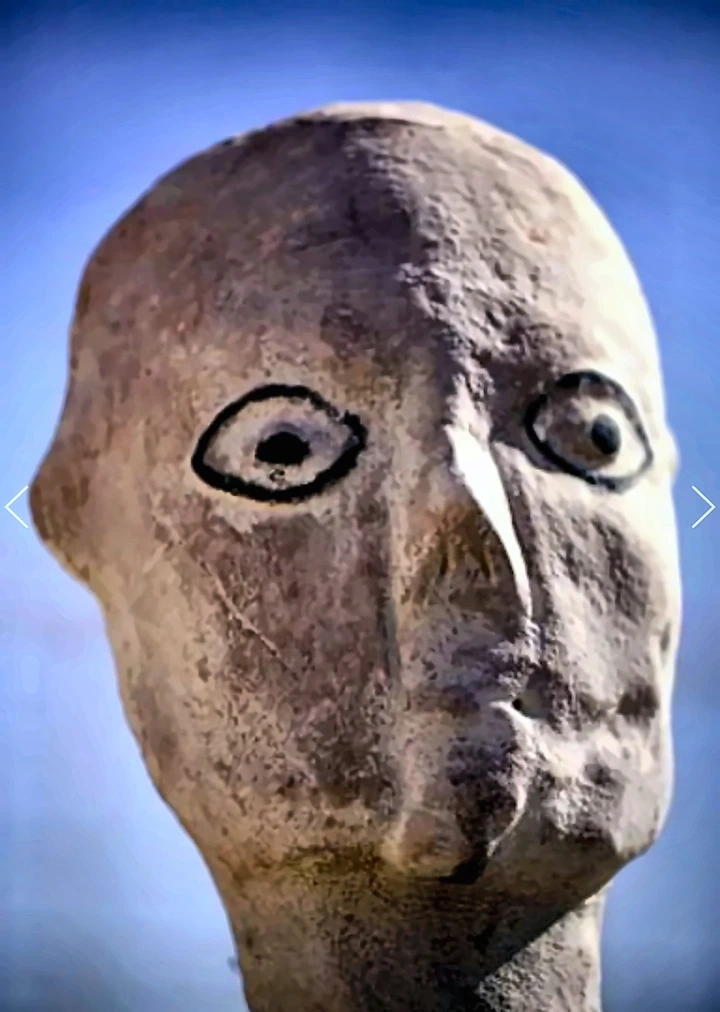
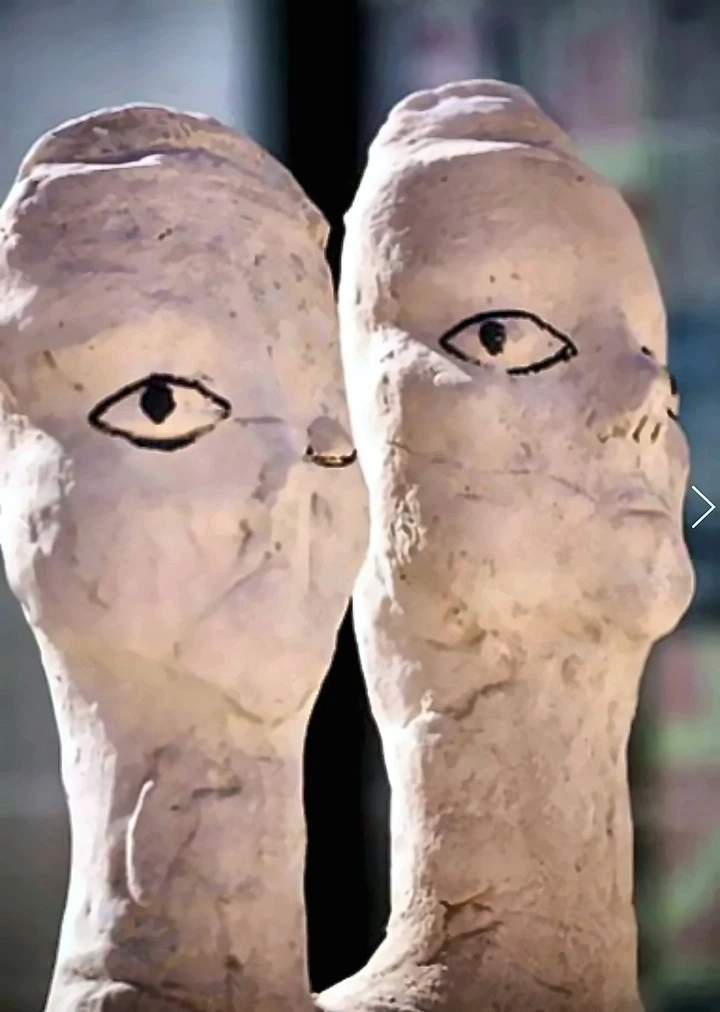
Limestone the colour of the plaster figures pulled out of Ain Ghazal, and basalt — the black volcanic stone of the Jordanian north, quarried whole and left rough.
Thirty minutes from his studio, men digging a road found faces.
Lime plaster over bundled reed. Eyes ringed in bitumen so the figures look back. About nine thousand years old, and coming back to light as his practice began. He has spent four decades answering them.
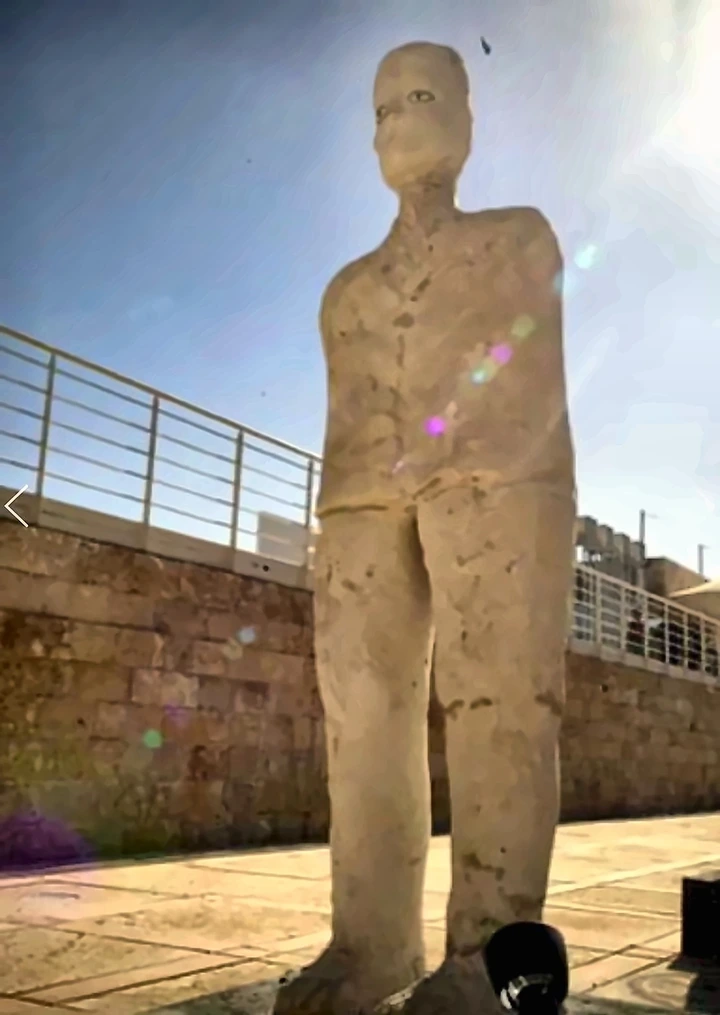
He does not carve the boulder. He answers it.
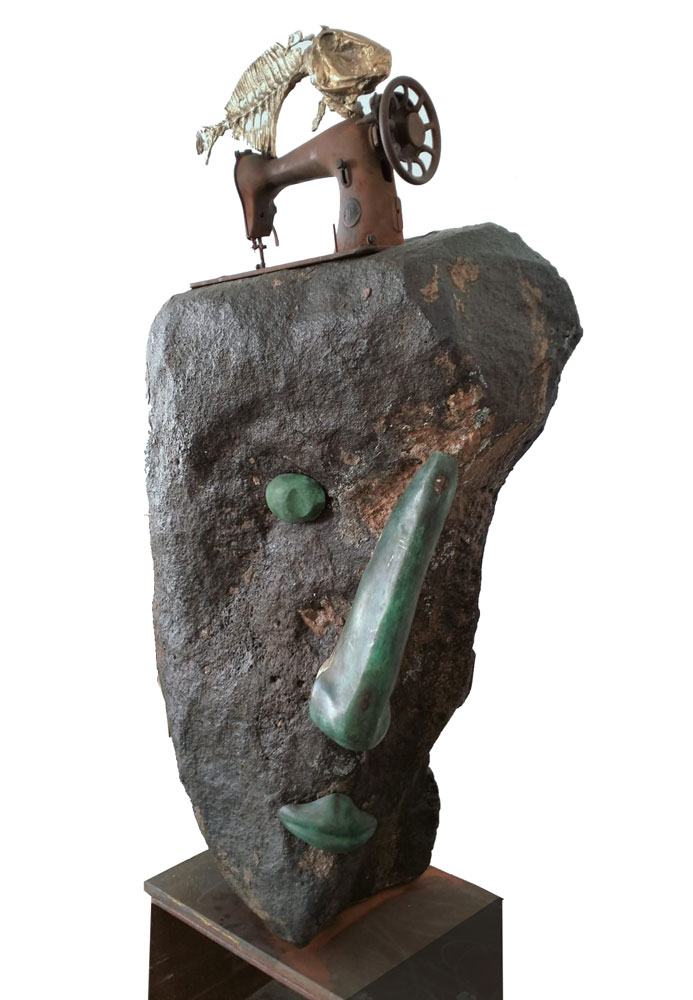
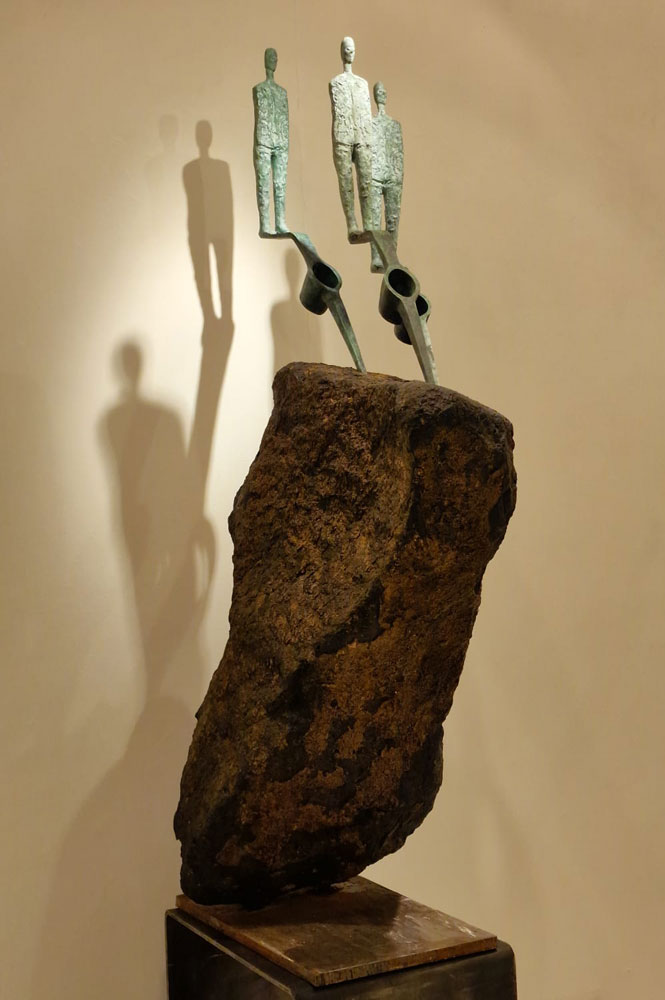
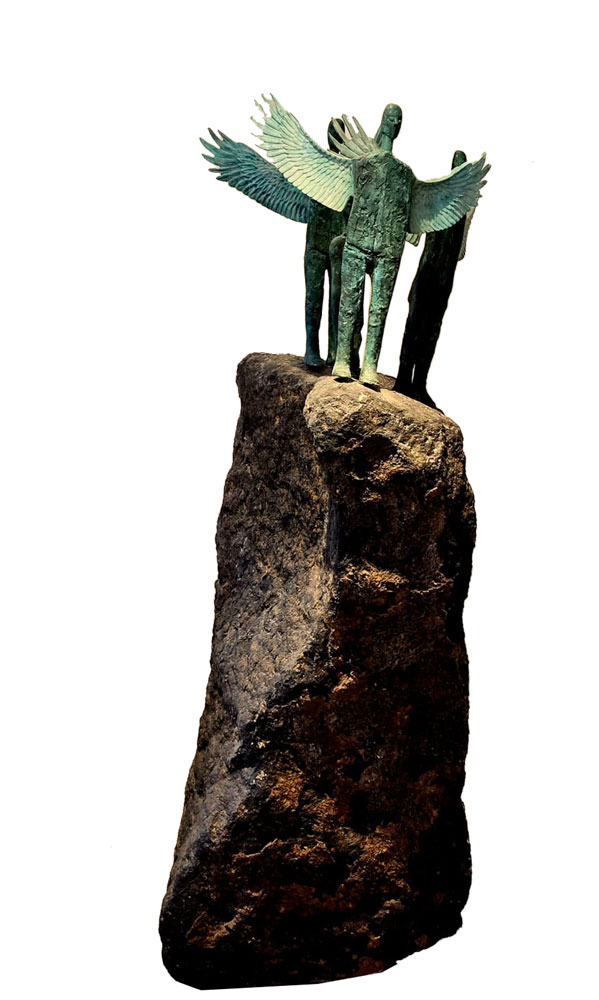
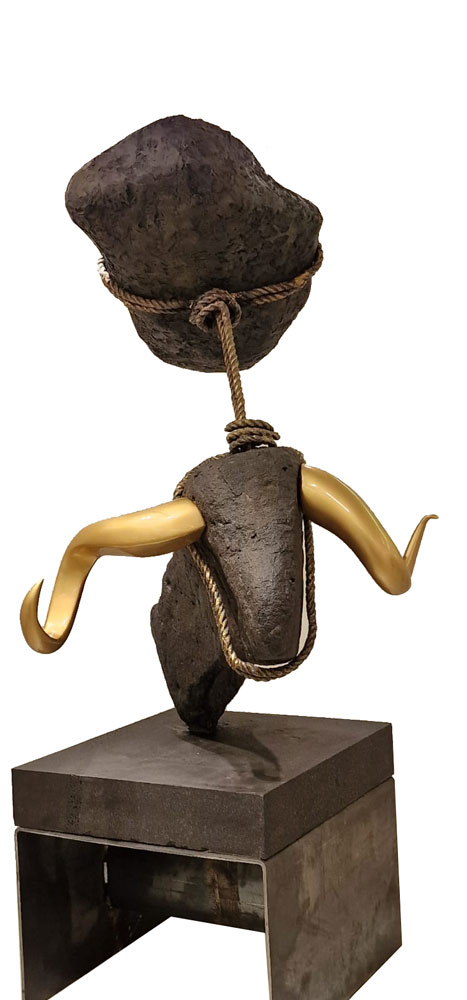
The stone arrives as it came out of the ground. What he adds is cast — a cage, a pair of horns, a cube, a bird — bolted to a surface he has left alone.
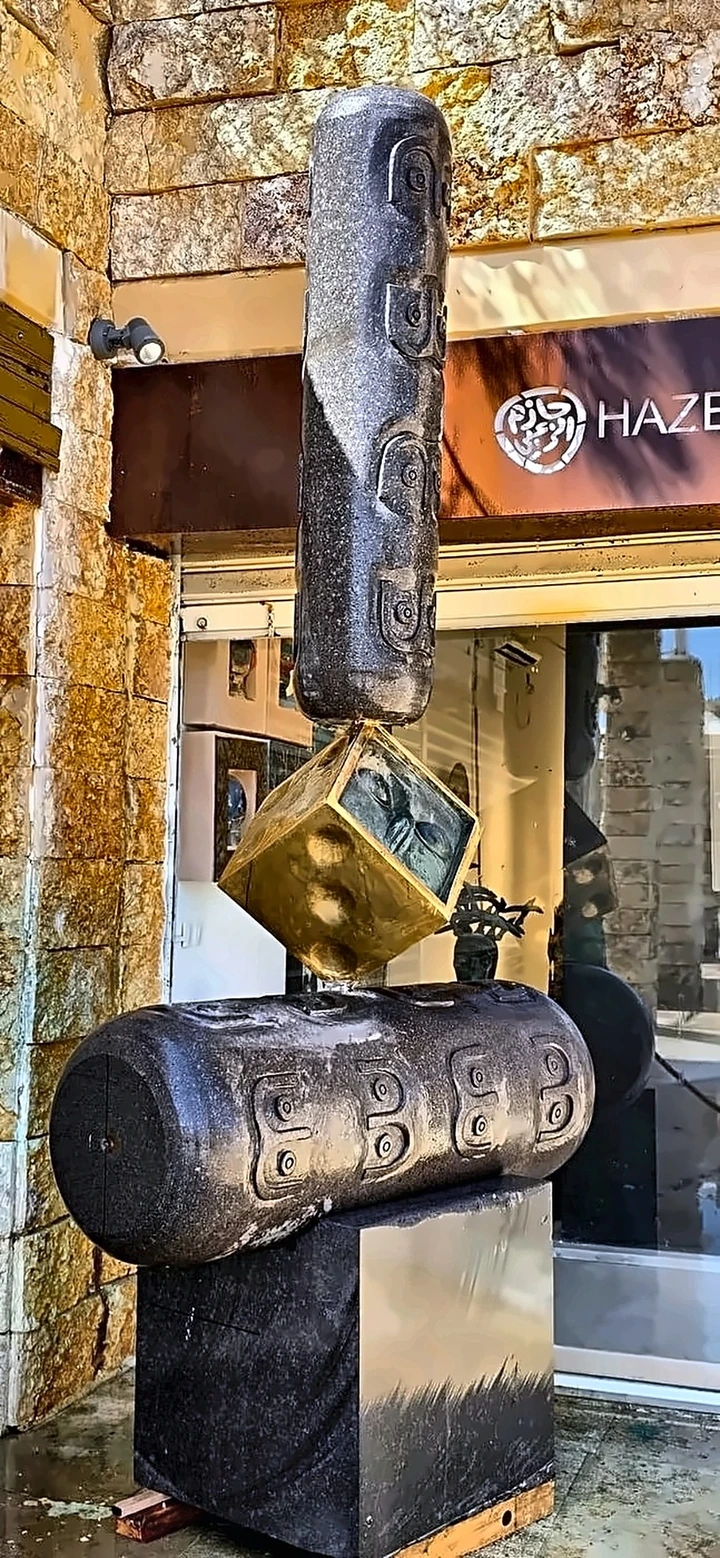
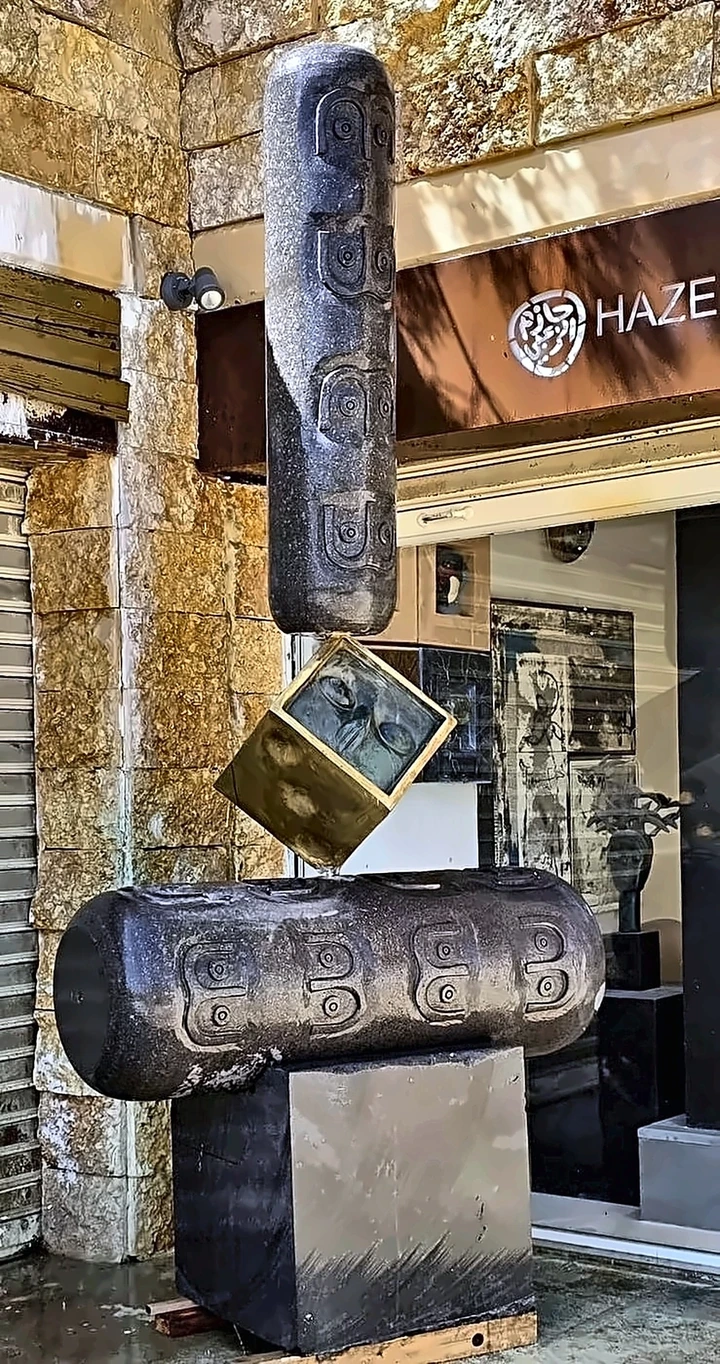
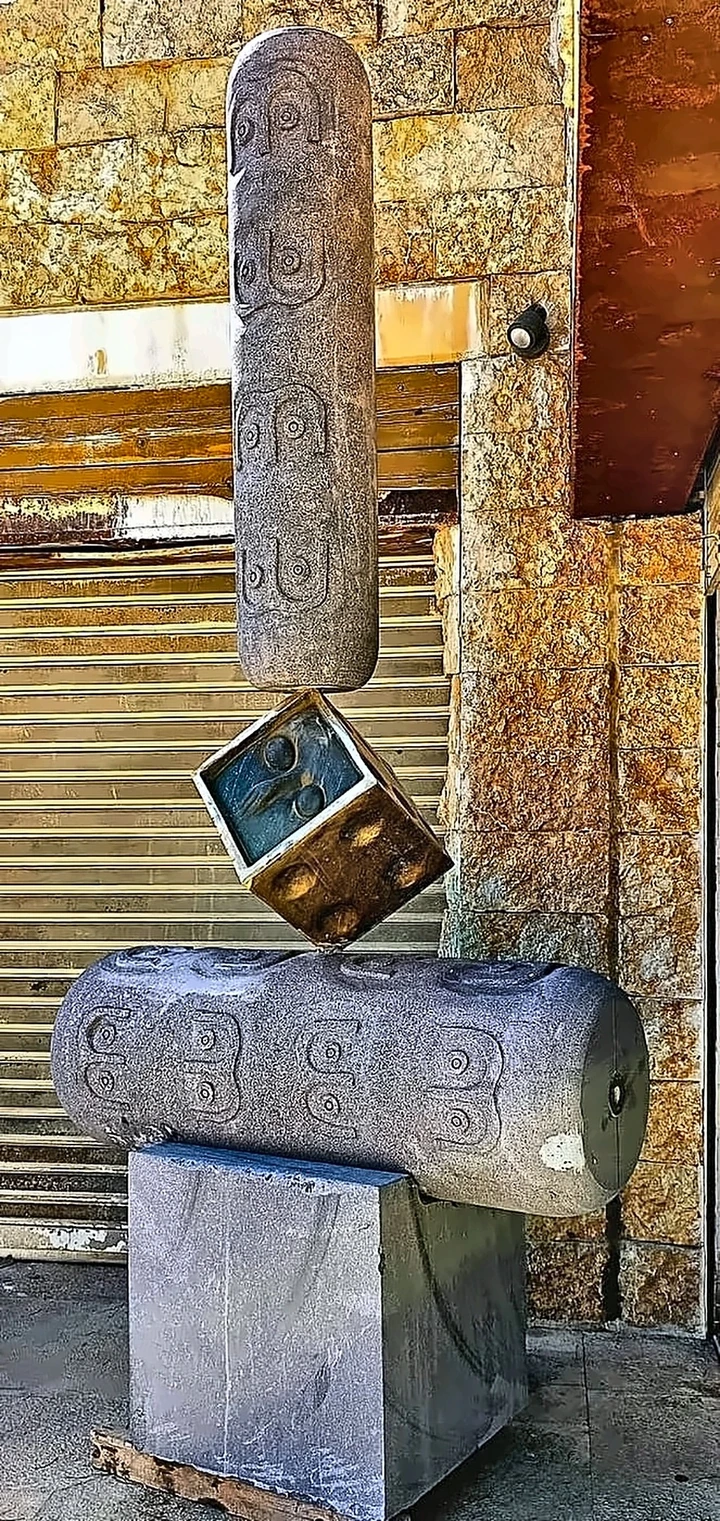
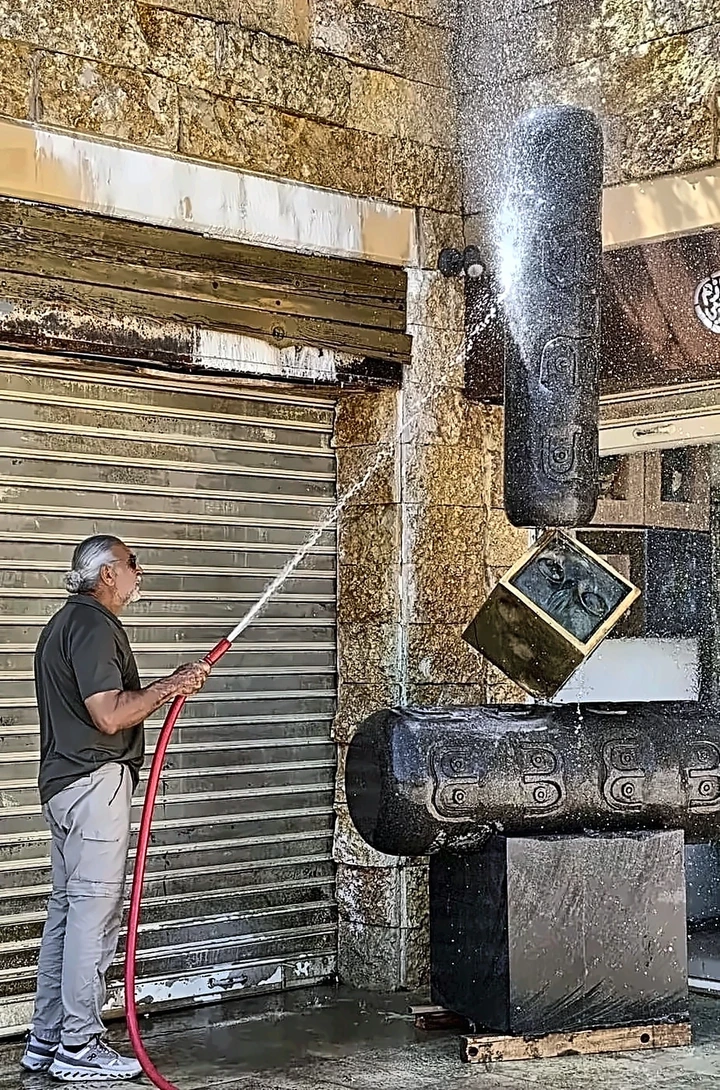
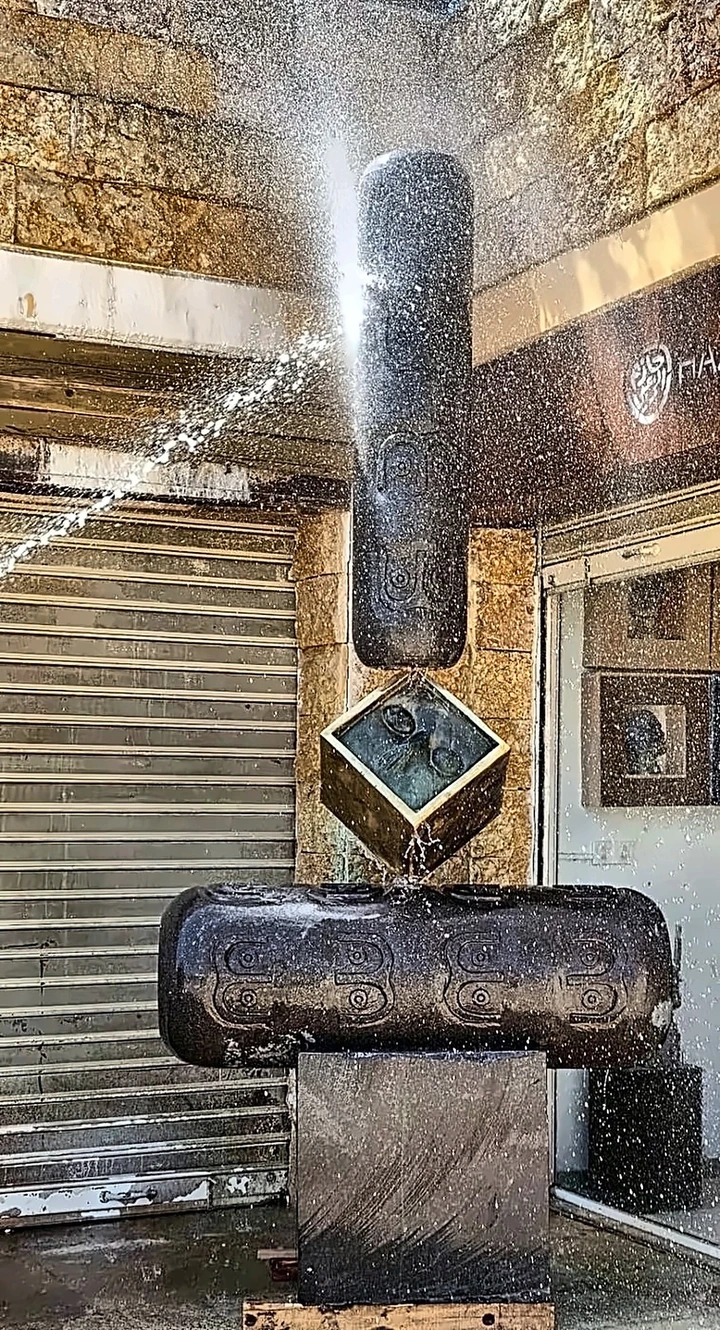
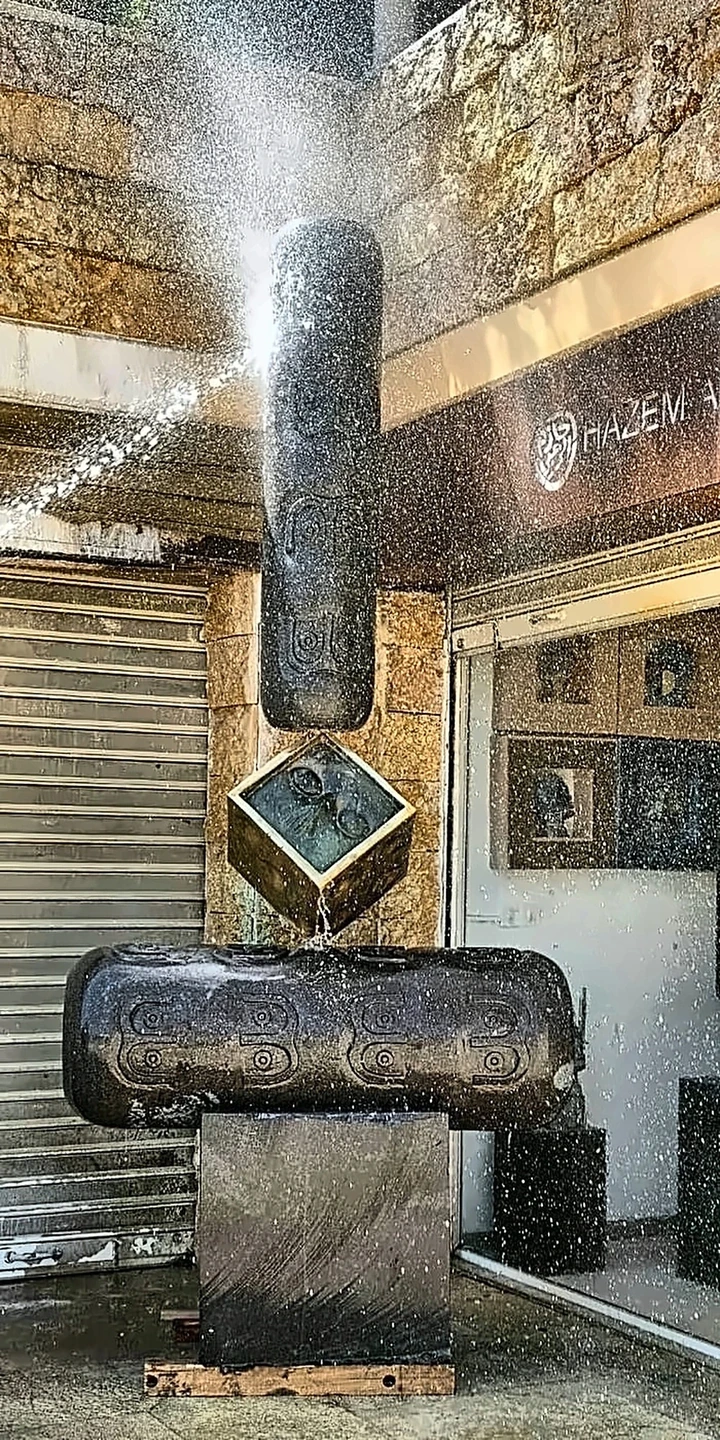
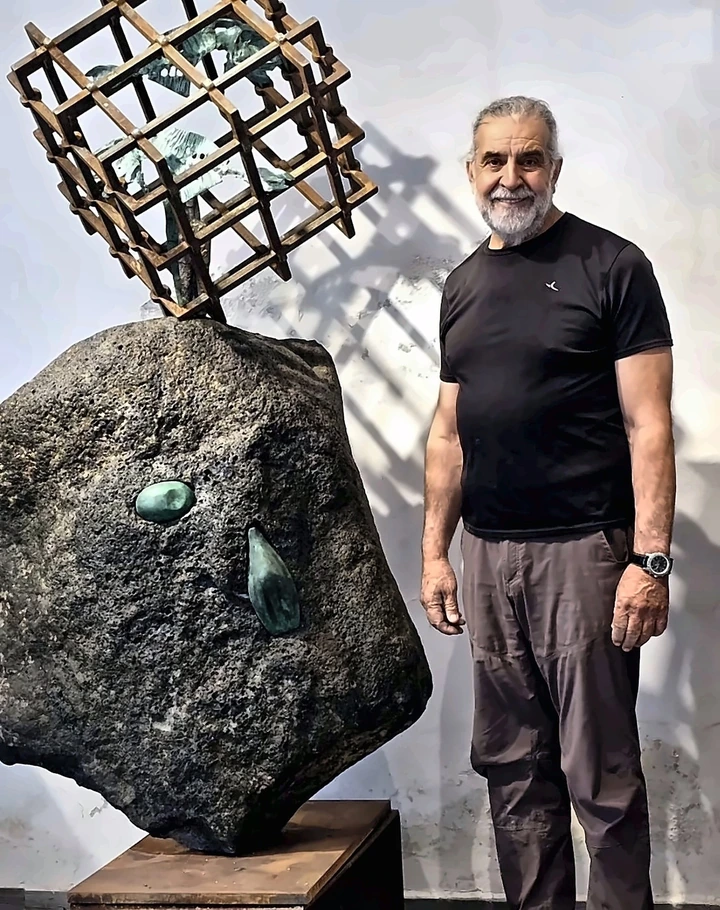
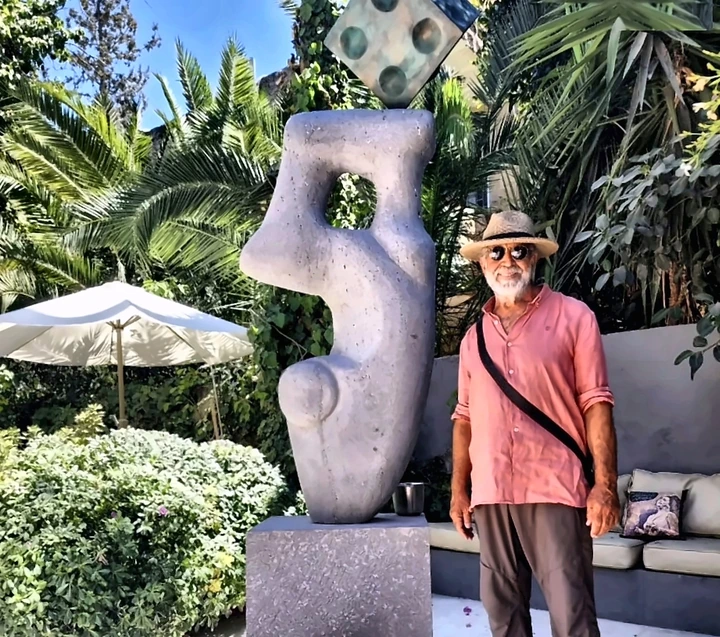
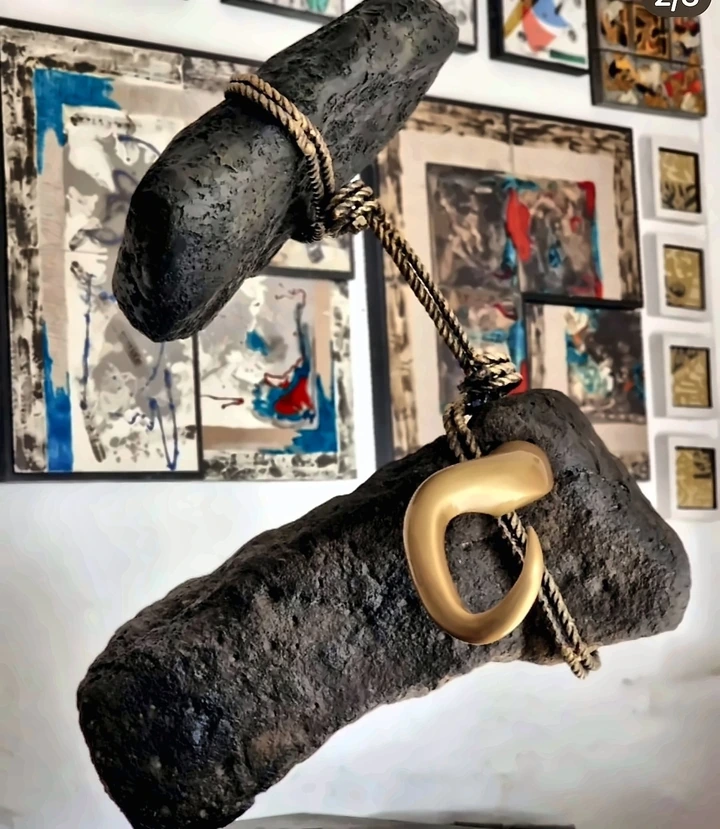
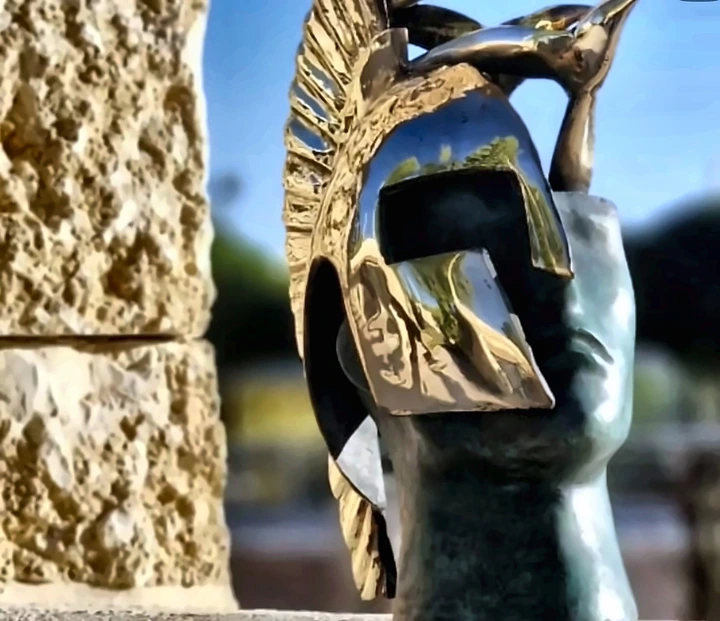
The stone work is the least photographed part of the practice and the hardest to move. A proper shoot is scheduled; several pieces stand in private gardens and are recorded here only once their owners have agreed.
Stone and cube.
Works in the gallery and outdoors: full views and different angles.
Select any photograph to see it in full and open the original file.
The figure and the die
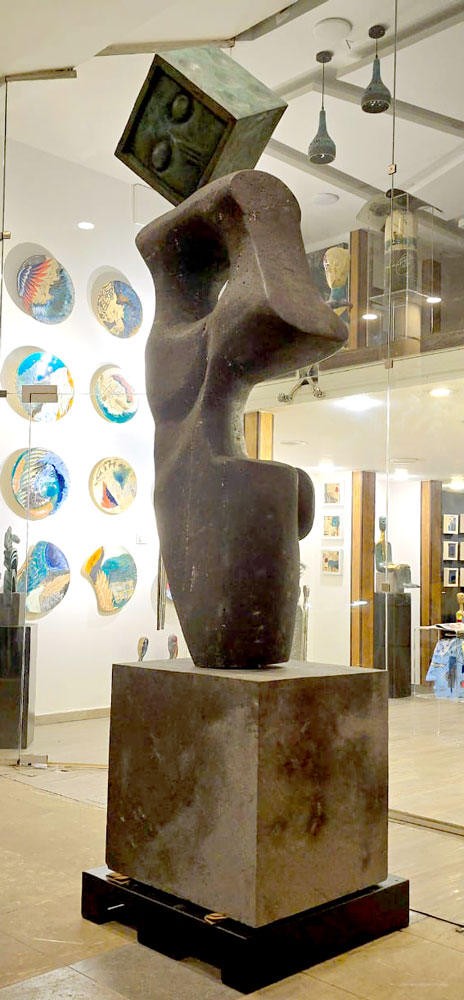
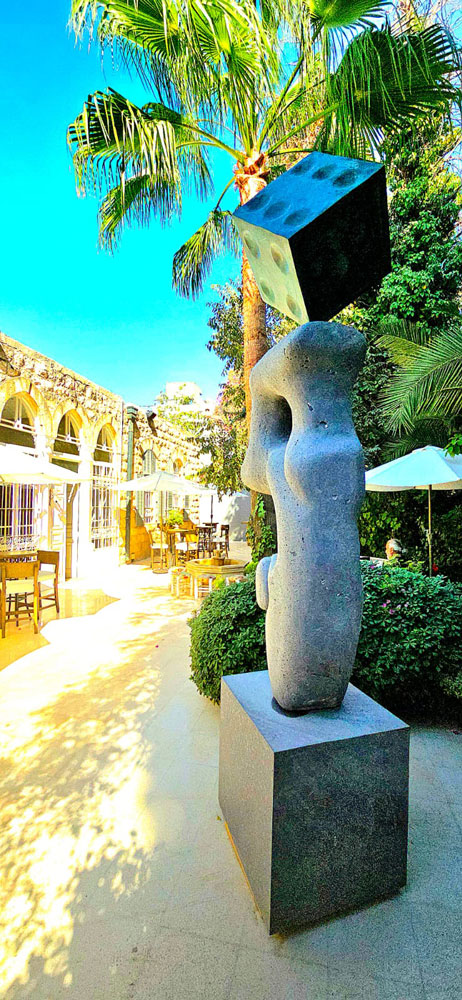
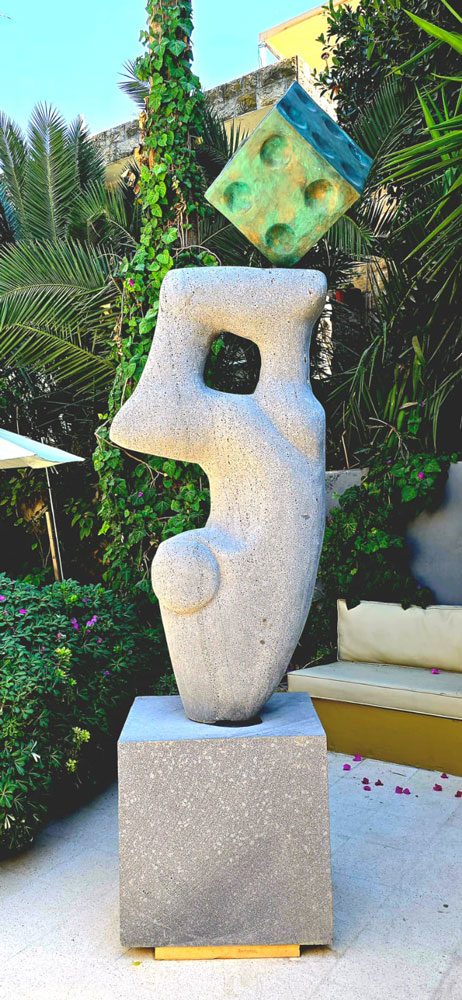
The rock and the lattice
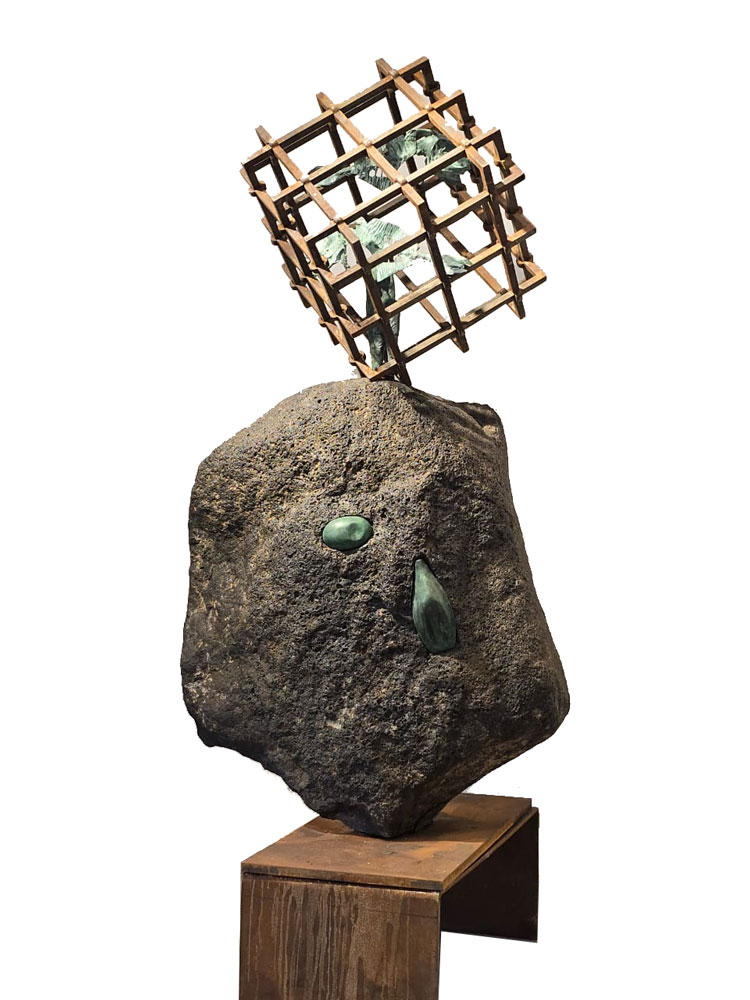
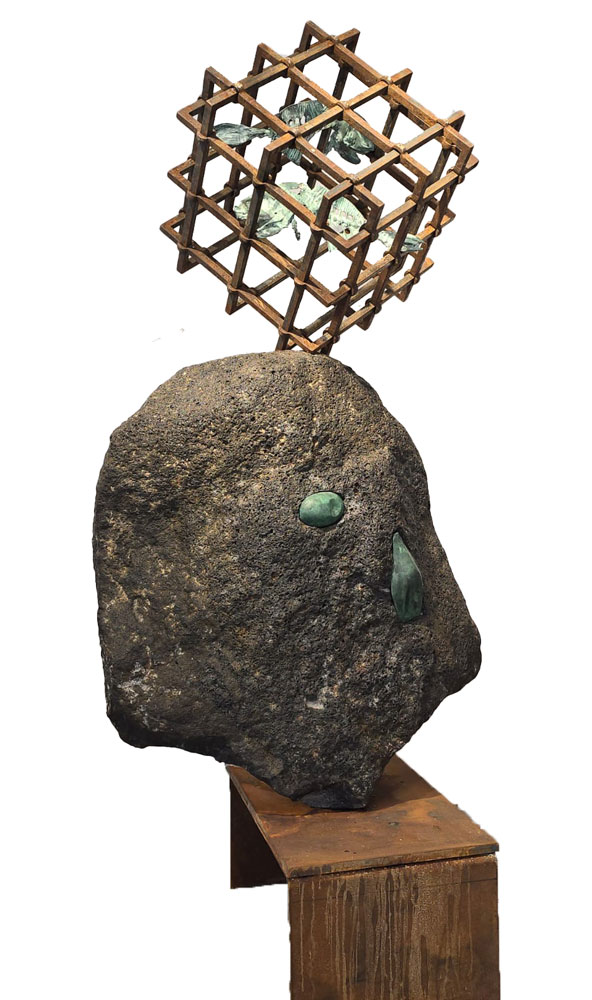
Stone and what it carries.
A sewing machine and a fish, standing and winged figures, and stone bound with rope and paired with horns.
Select any photograph to see the full frame and open the original file.
3 works, measured and sourced.
Recovered from his own published captions, not written here. Dimensions in centimetres as he gave them. Where a year or a title was never published it is absent rather than estimated.
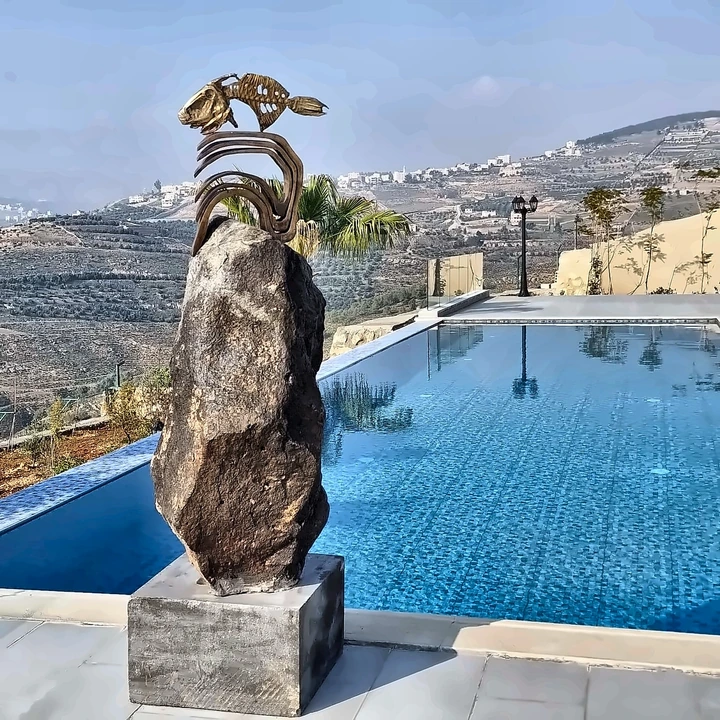
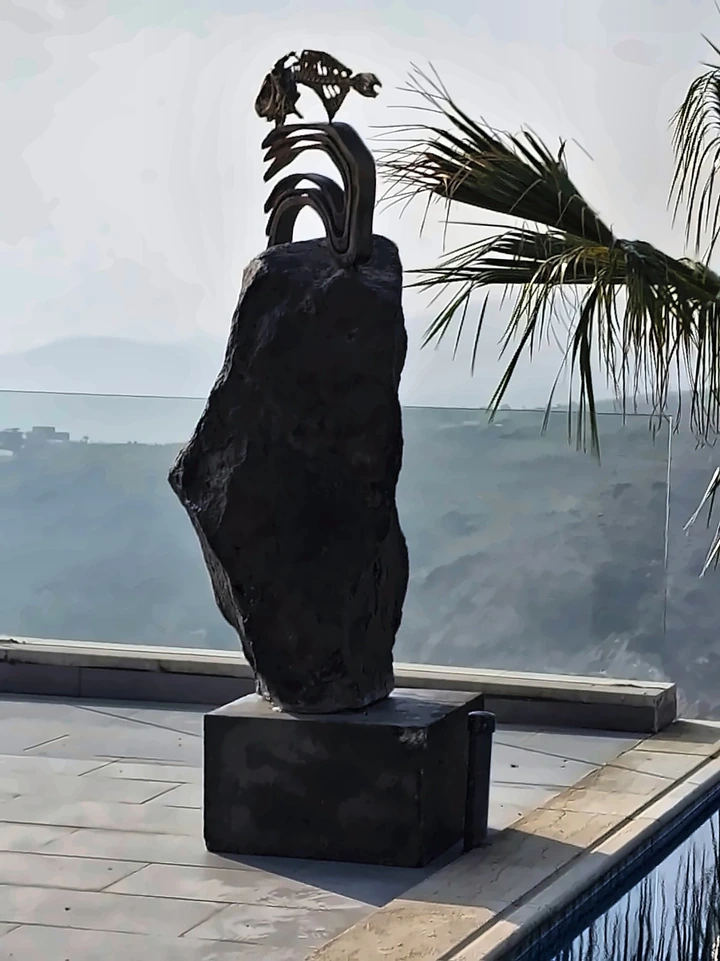
A basalt boulder, and a gilded fish riding the wave on top of it.
The stone is left exactly as it was quarried — one broken face, one weathered one. What sits on it is polished to a mirror. It stands on a black plinth at the edge of a pool, with the terraces and olive groves running away underneath.